Julie Heij
industrial design
eindhoven university of technology
Graduates: 2023
Specialisms: / Sustainable Fashion/Textiles
My location: Eindhoven, Netherlands

Julie Heij
First Name: Julie
Last Name: Heij
University / College: eindhoven university of technology
Course / Program: industrial design
Graduates: 2023
Specialisms: / Sustainable Fashion/Textiles
My Location: Eindhoven, Netherlands
Website: Click To See Website
About
I am a caring person, both for people and for the environment. I find it important that design does the same. I have always liked to use my creativity to come up with boundary-pushing ideas and with those, I like to address complex, environmental problems, raise awareness, and provoke discussions.With the rapid development of technology in the digital age we live in today, things are progressing and getting done so quickly that we often don't consider the impact of our new designs and technologies on the environment. Everything is developing so fast that sometimes we don't look at the bigger picture. Especially in the fashion industry, the consequences of our way of designing and consuming are becoming more noticeable every day. I believe that as a designer, you have a certain responsibility for this impact on the world. Therefore, I want to explore how we can achieve to work more environment-centered as designers, how to involve nonhumans, and what the role of technology will be in this journey toward a more sustainable fashion industry.
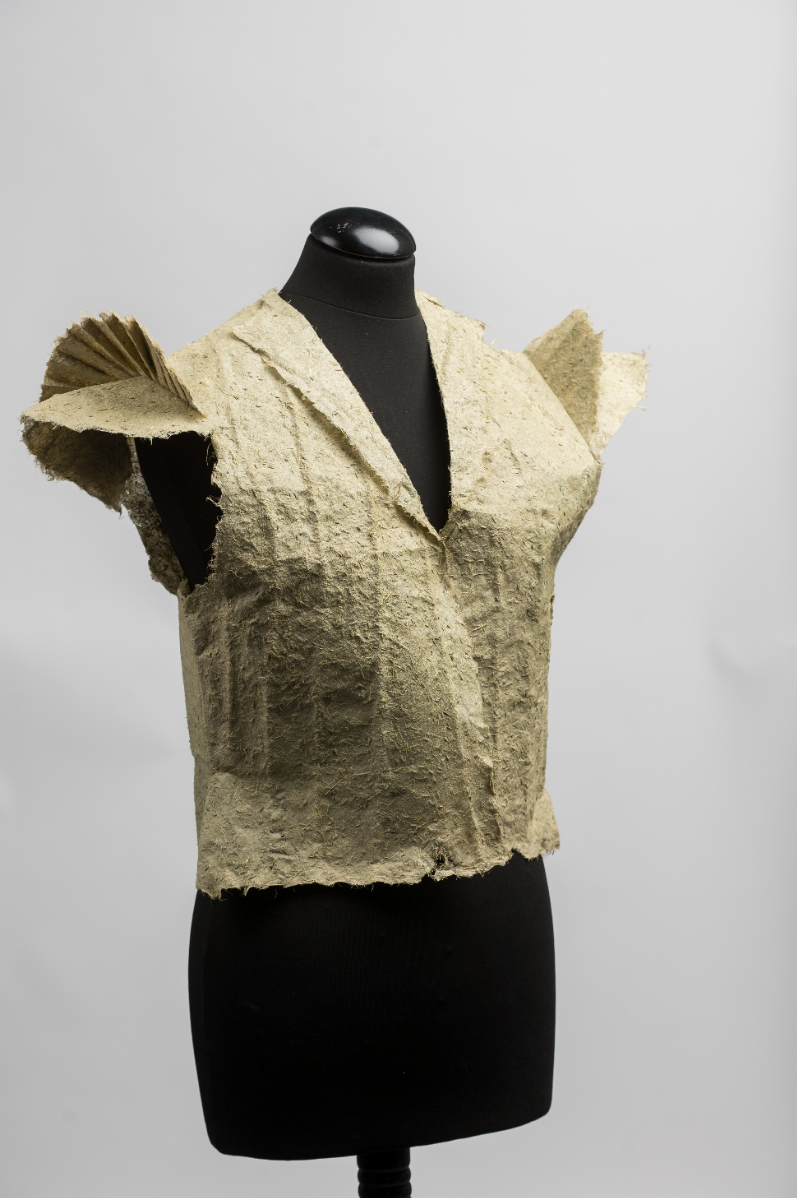
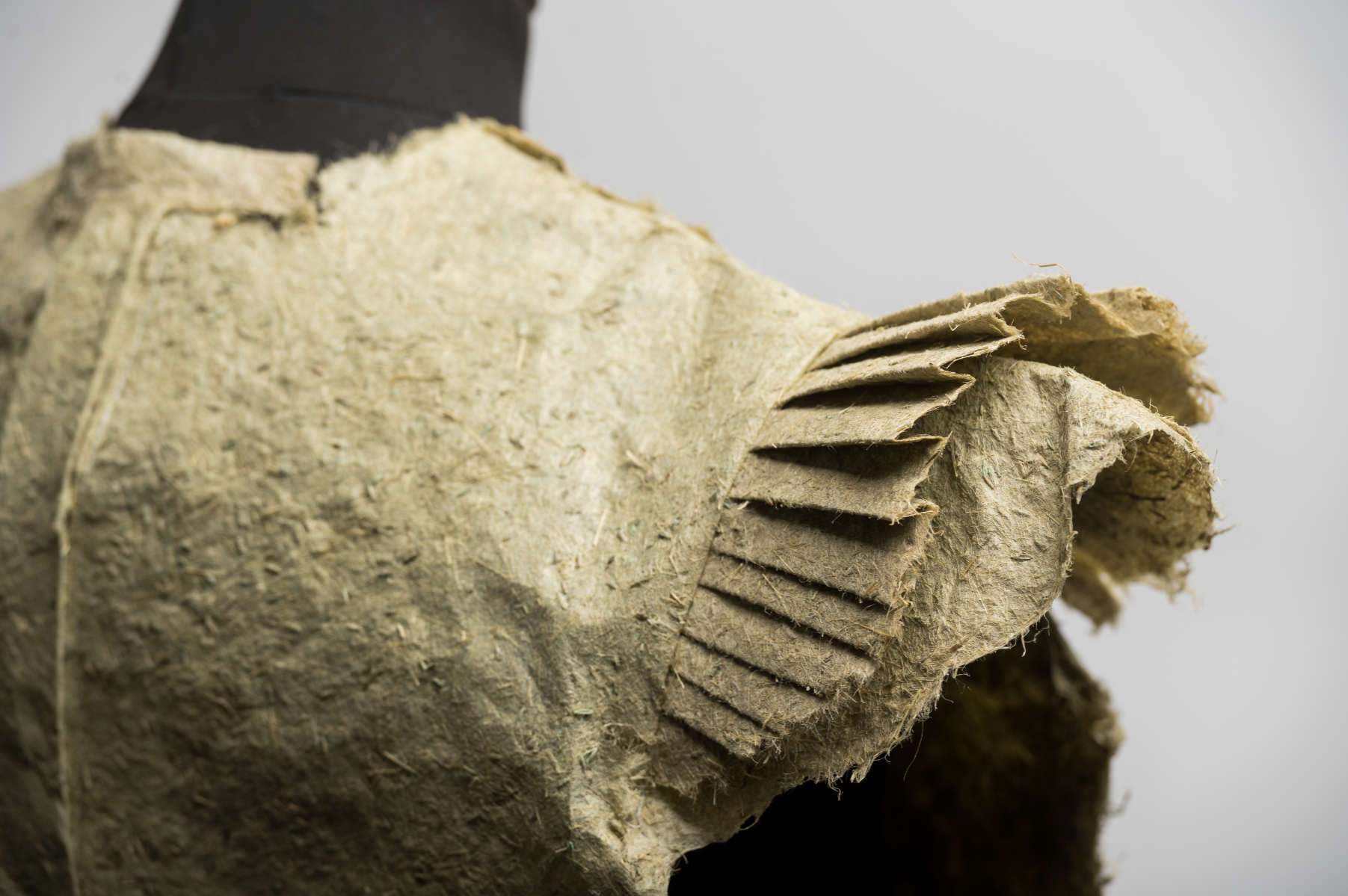
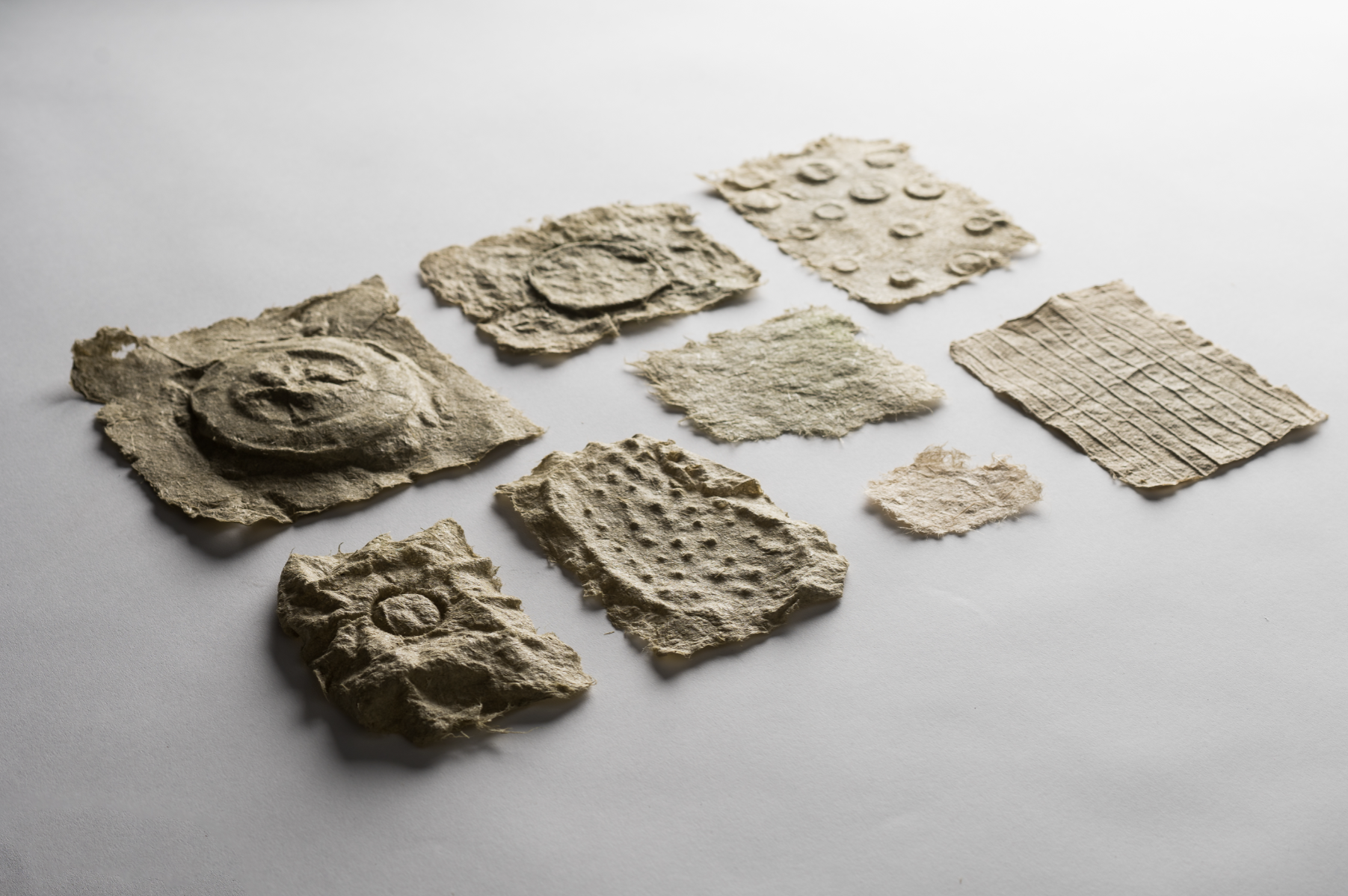
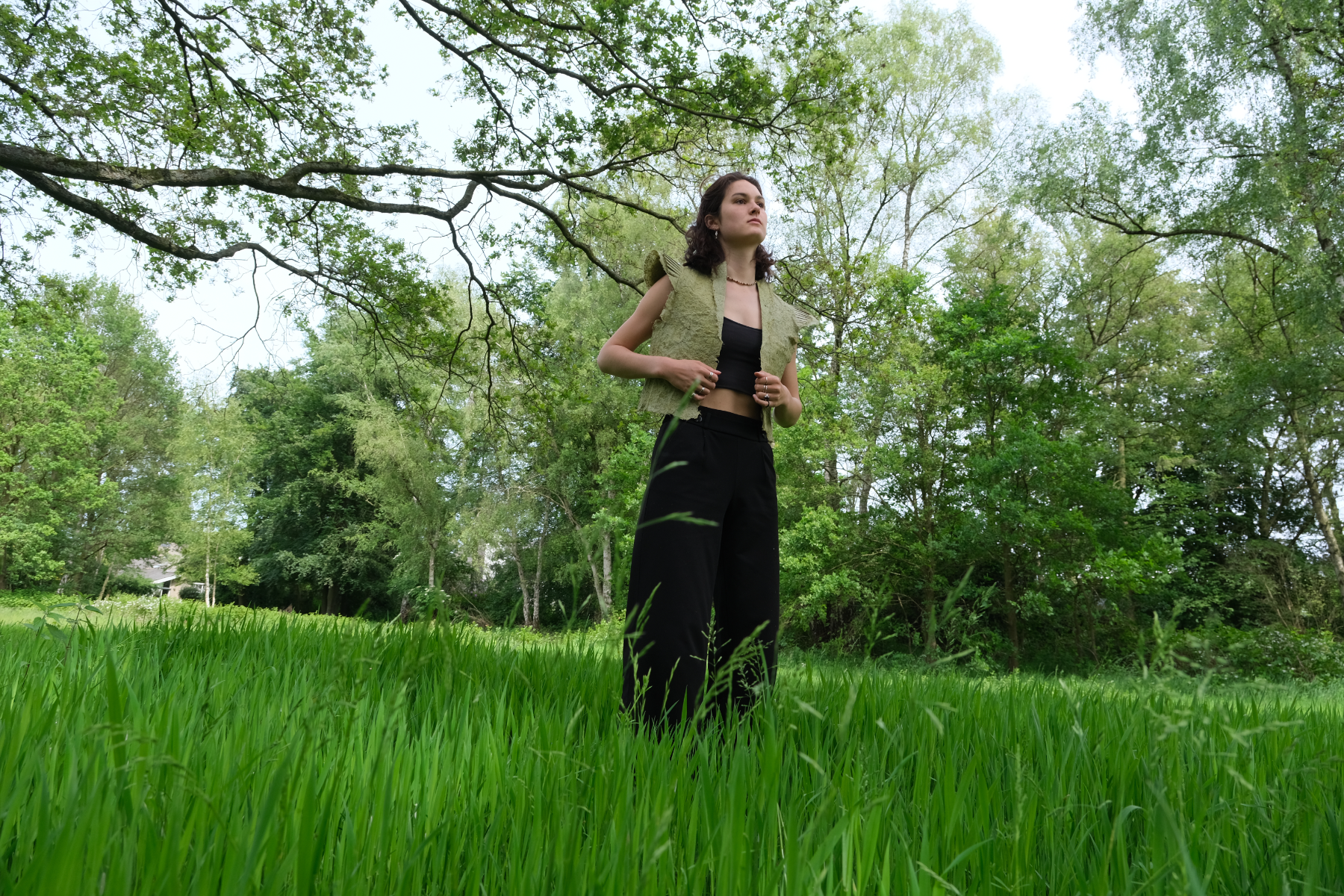
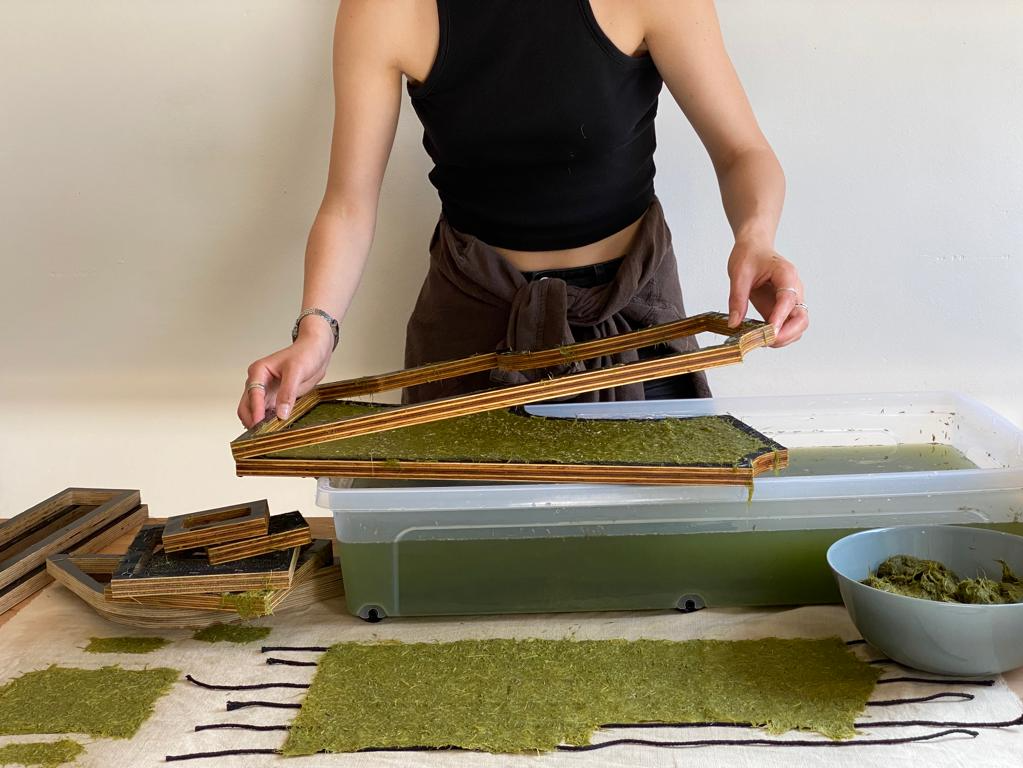
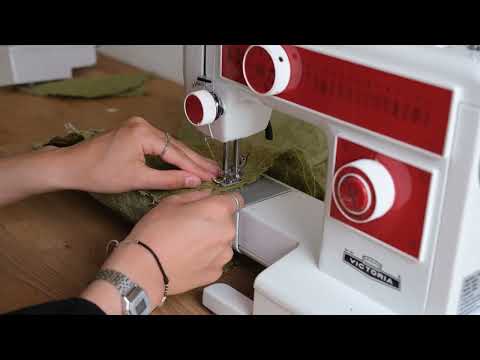
The Grass Garment is an exploration of how one can listen to, and collaborate with grass as a nonhuman co-designer. The jacket is made with a paper-making technique, using grass from the Karpendonkse Plas in Eindhoven, grass seeds, and water-soluble thread, and therefore has a clear before-life. A label on the back of the jacket refers to the location where the grass was harvested, reminding one of the before-life of the grass. The Grass Garment is also designed to have an after-life: it can either be composted into compost as fuel for new life, or it can grow new grass. This design critiques the polluting side of the fast fashion industry; the often chemically dyed fabrics, the microplastics in synthetic clothing, the quick decay and low quality of clothing, and the huge amounts of textile waste. Consumers are often unaware of the journey of their clothing: where do the materials come from, and how have they been treated? What nonhumans are impacted by humans taking these materials? Where does our clothing end up, and how does that affect nonhumans? The purpose of this project is to encourage and inspire (fashion) designers and individuals, including wearers, to become more aware, and ideally engaged in, the before-life and after-life of their things. By doing so, they can develop a deeper understanding of the influence they exert on nonhumans, and recognize the privileged role humans have in relation to nonhumans. The ultimate goal of this would be to inspire a shift in perspective that acknowledges the interconnectedness between humans and nonhumans, fostering a sense of responsibility and promoting sustainable practices.
Competitions