Francis Cheung
Architecture MA
Royal College of Art
Specialisms: Architecture / Design for Social Good / Modelmaking
Location: London, United Kingdom
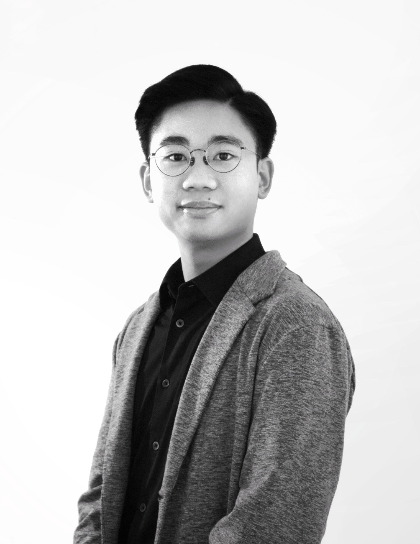
Francis Cheung
First Name: Francis
Last Name: Cheung
Specialisms: Architecture / Design for Social Good / Modelmaking
Sectors:
My Location: London, United Kingdom
University / College: Royal College of Art
Course / Program Title: Architecture MA
About
Francis spent his early years in Hong Kong and pursued his Bachelor's degree at The University of Hong Kong. Being a design enthusiast, Francis has a deep passion for exploring innovative possibilities in architecture, including forms, scales, functions in relation to human activities. He actively participates in competitions and has achieved numerous international accolades, such as the 1st prize winner of Skyhive 2019 Skyscraper Challenge. During the two-year study at the Royal College of Art, Francis continued to experiment with various design strategies while working on radical projects. In the previous year, as part of ADS 1, he focused on the potential of retrofitting a declining post-war mixed-use complex, with the aim of transforming it into a communal hub that revitalises the surrounding neighbourhood. This year, in ADS 10, he sought to challenge the framework of conventional practices through architecture. He delved into the unexplored domain of reverse logistics in online shopping, aiming to find a solution to the prevalent issue of the Return Culture. His proposal, the Re-fulfilment Centre, tackles excessive consumerism by collecting unwanted return products from Amazon, while fostering collective engagement through the establishment of a local community of making.
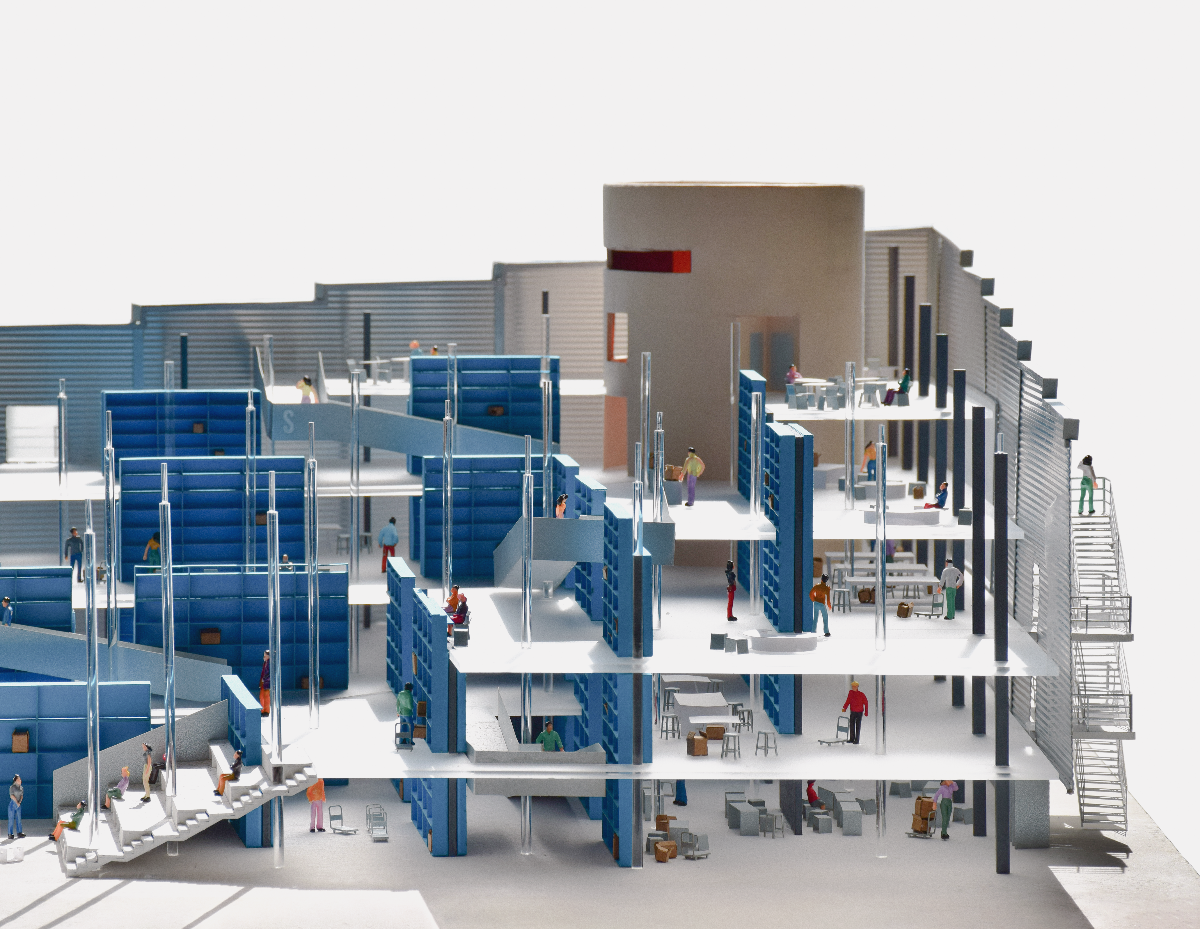
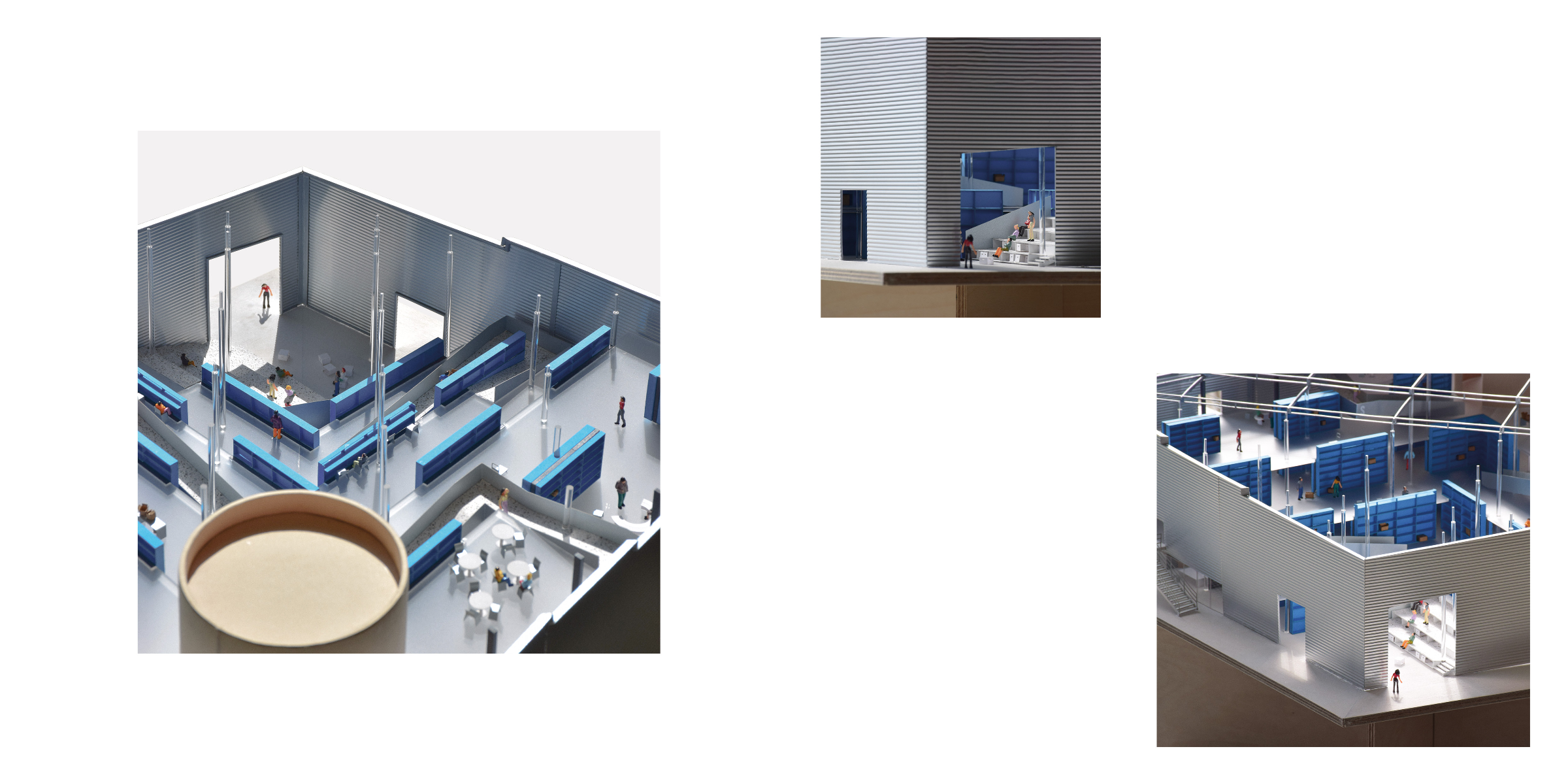
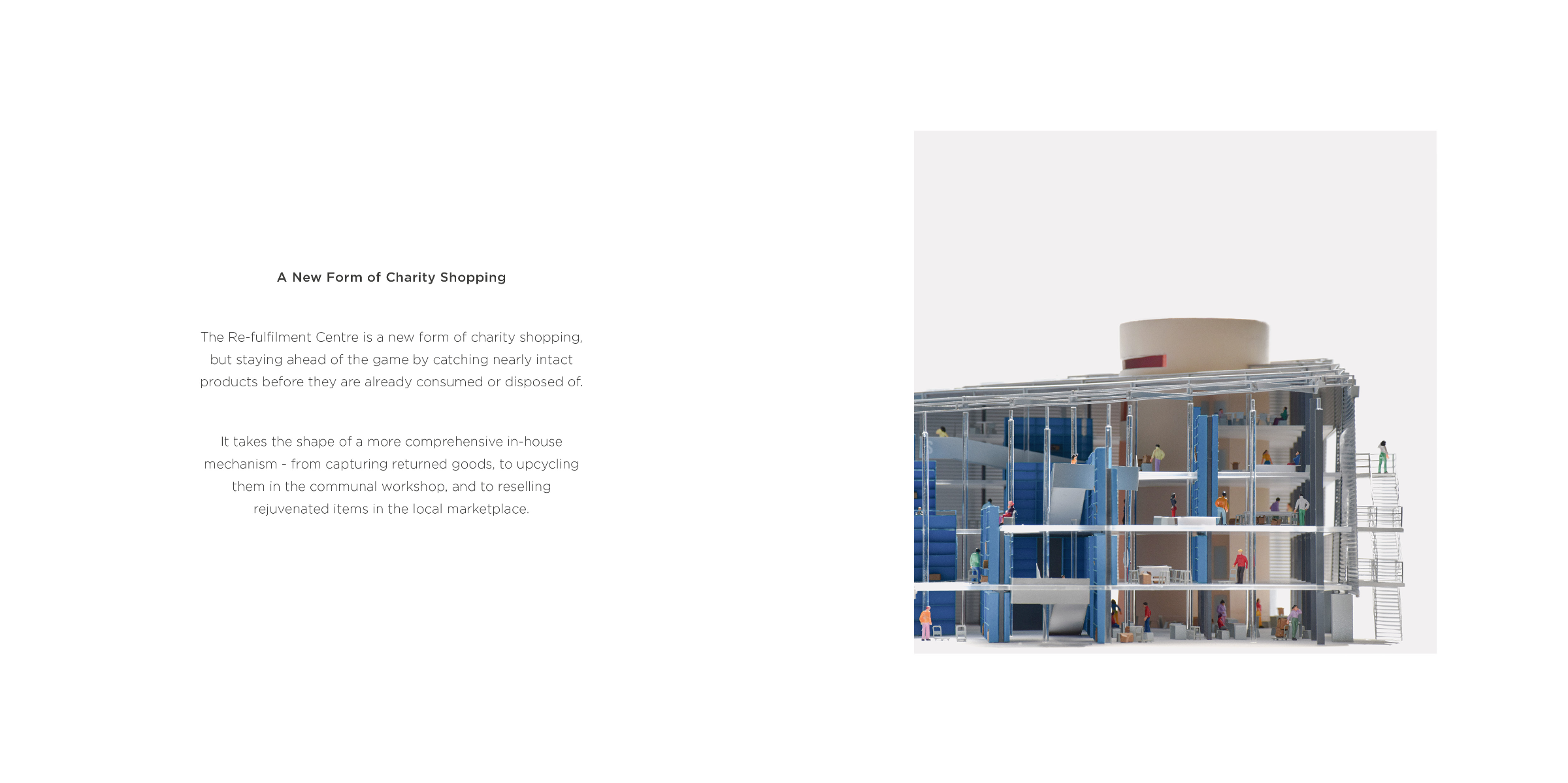
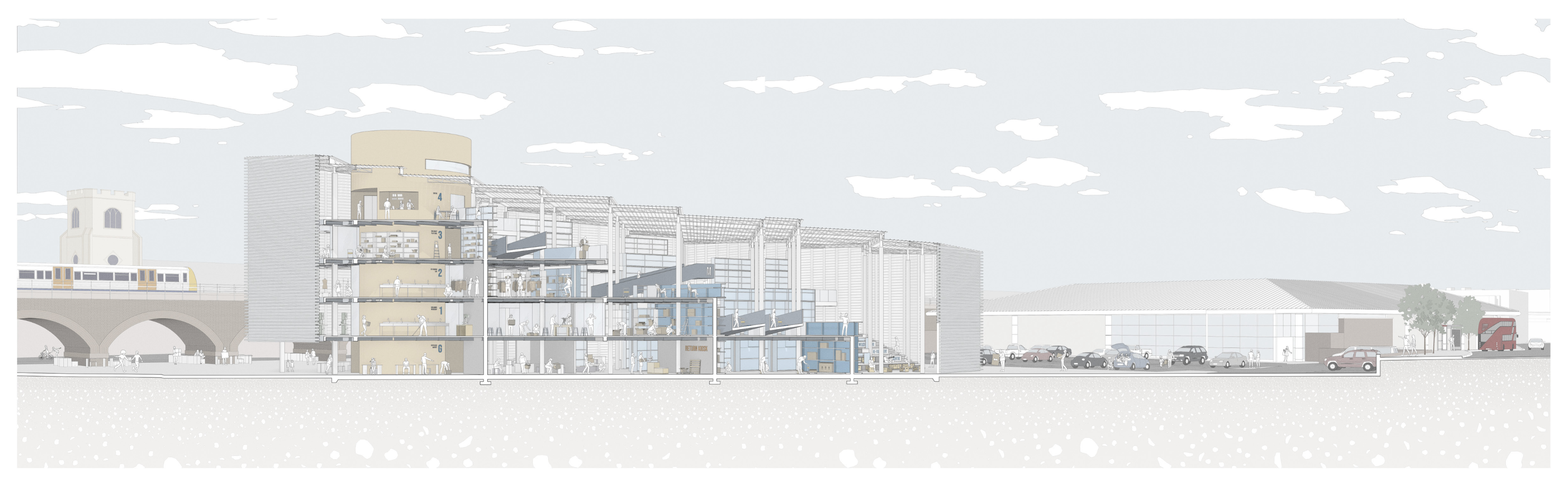
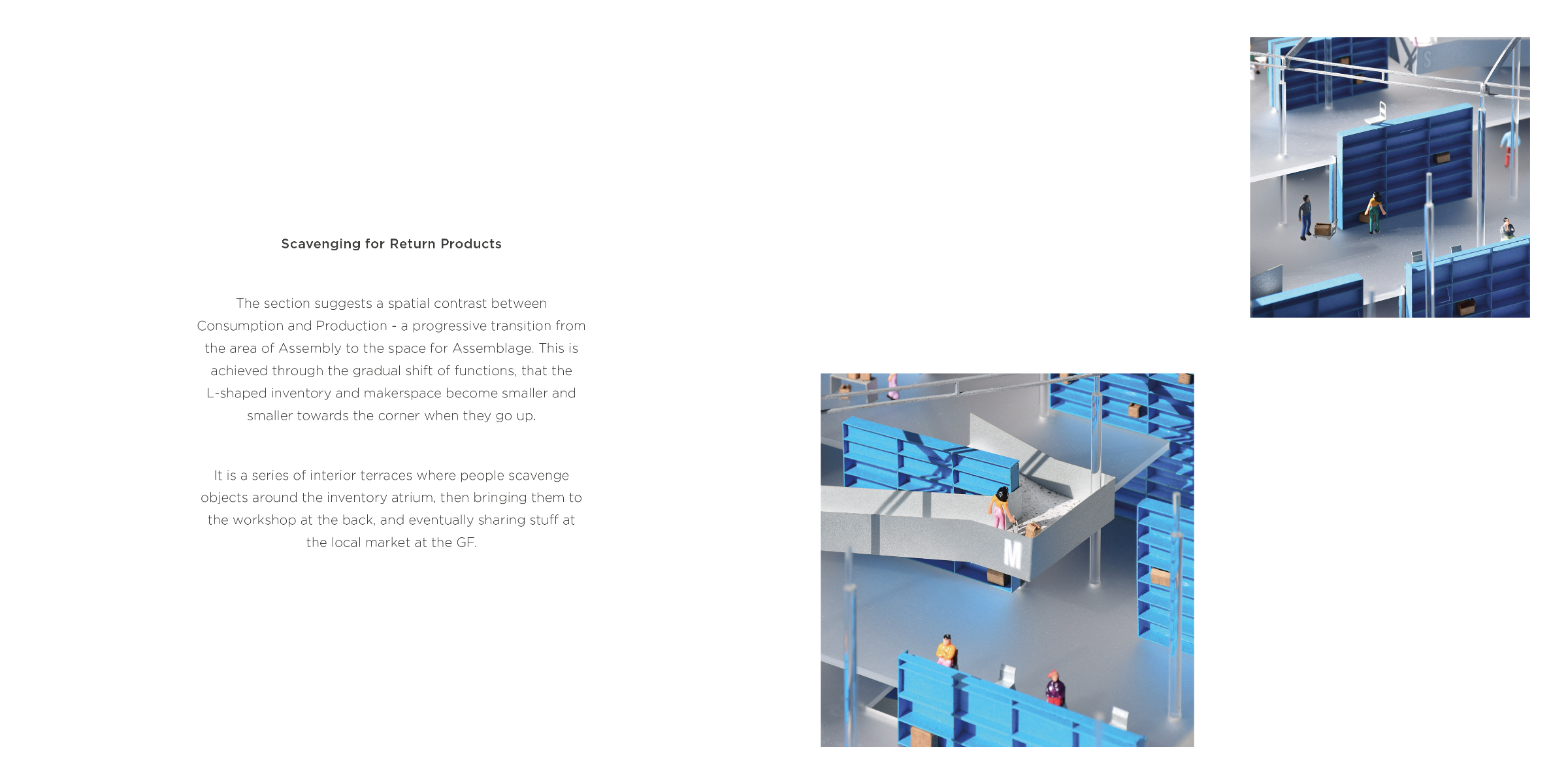
The Re-fulfilment Centre - Theatre of Return Products
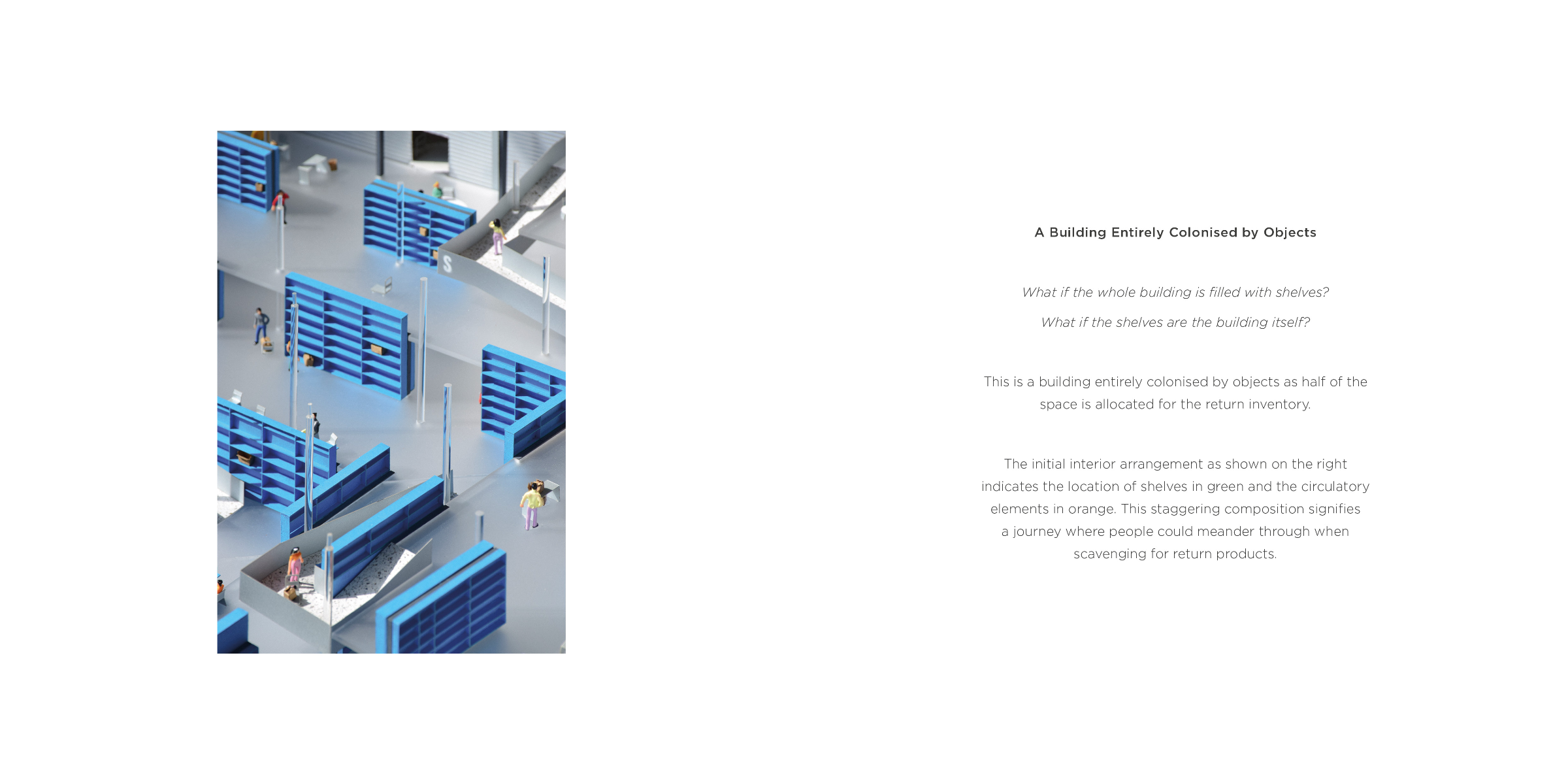
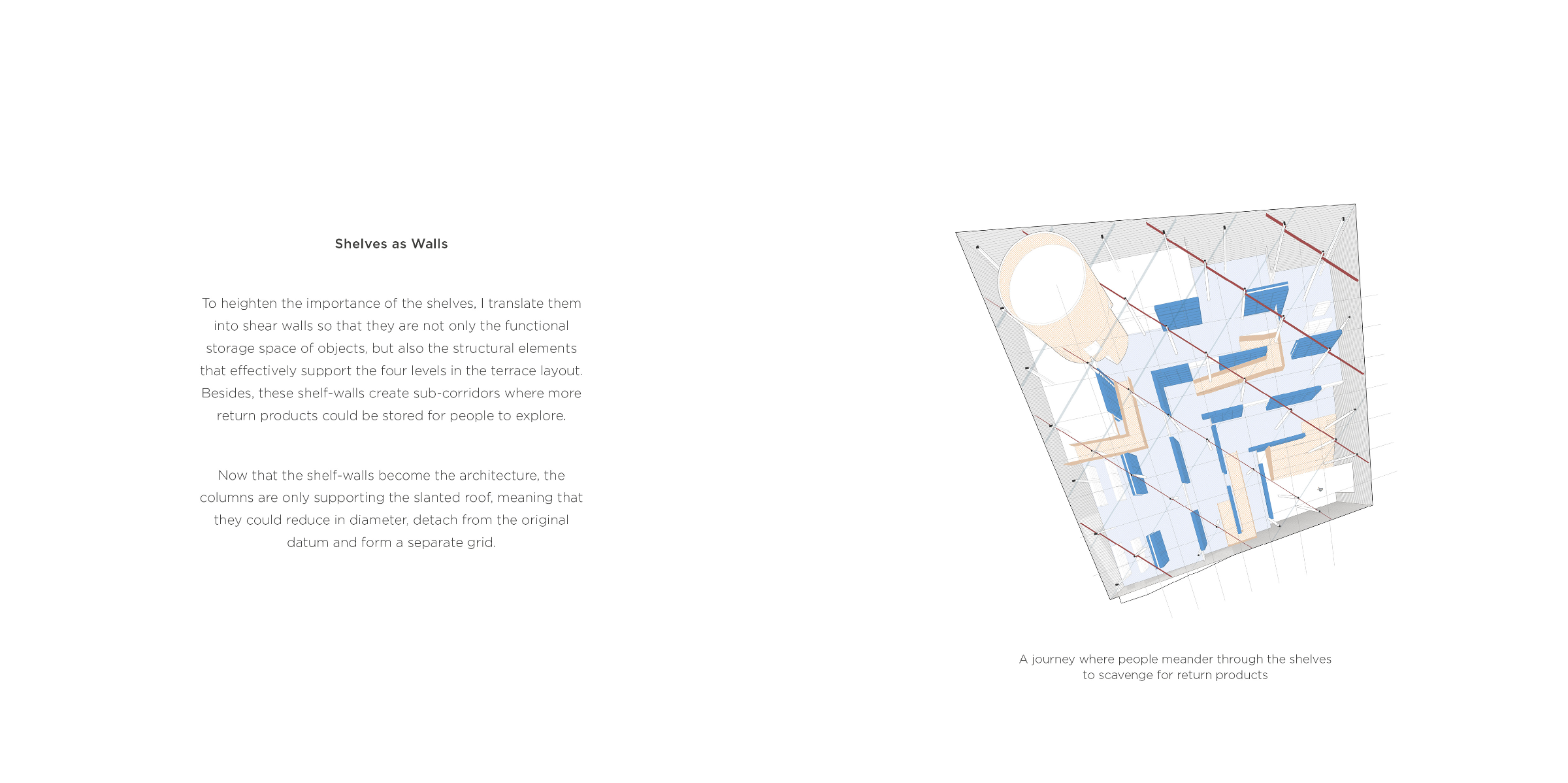
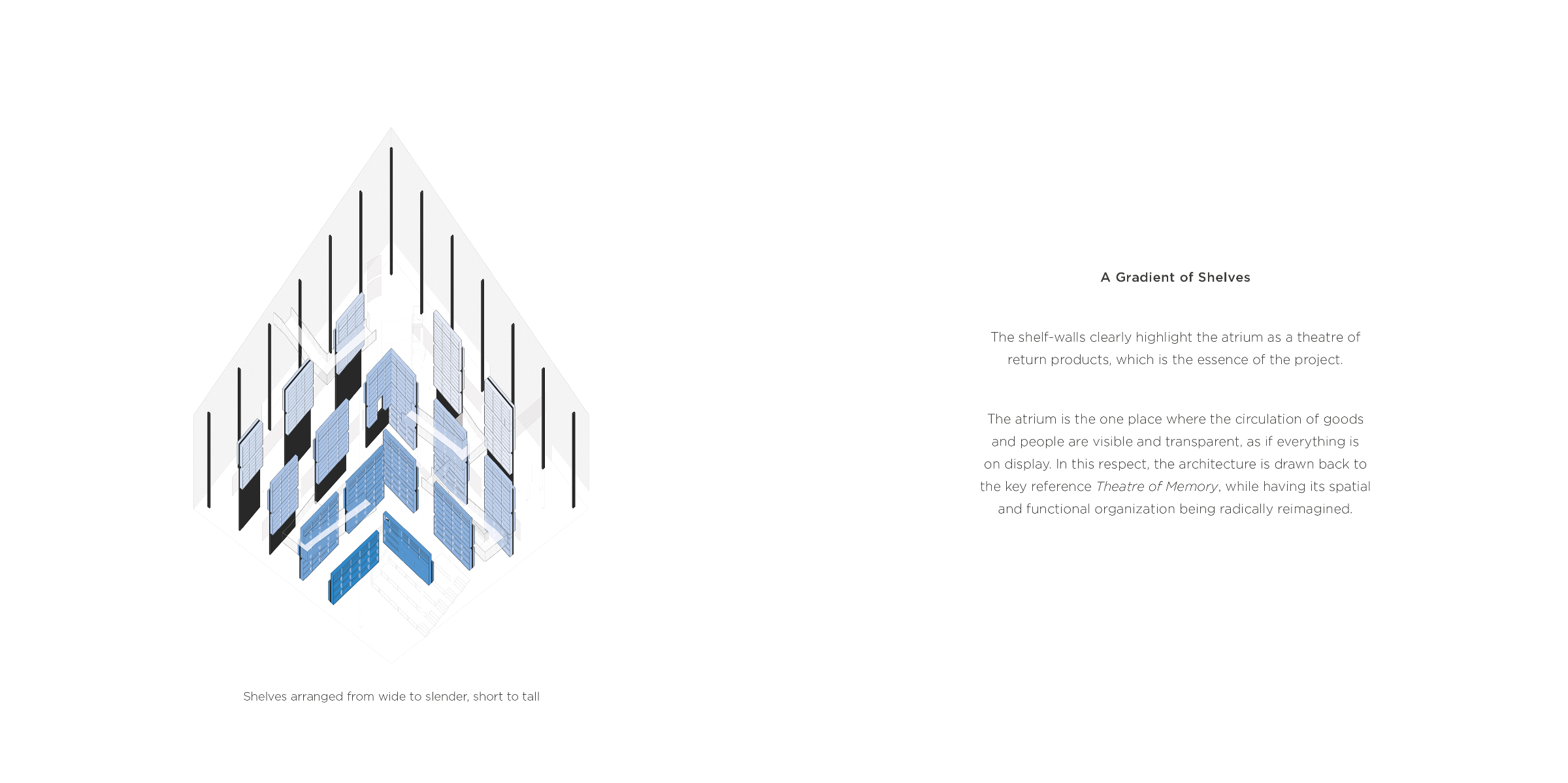
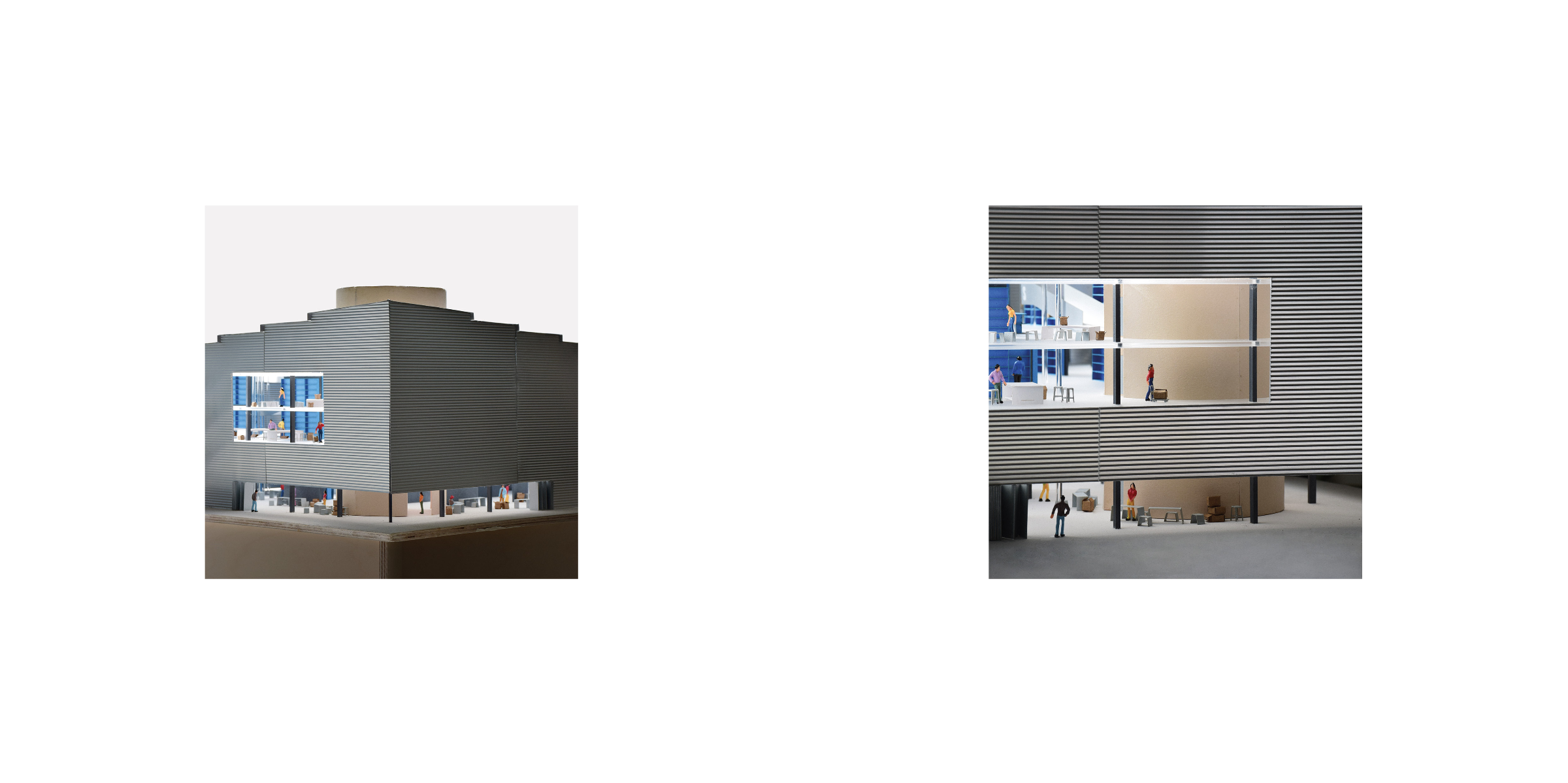
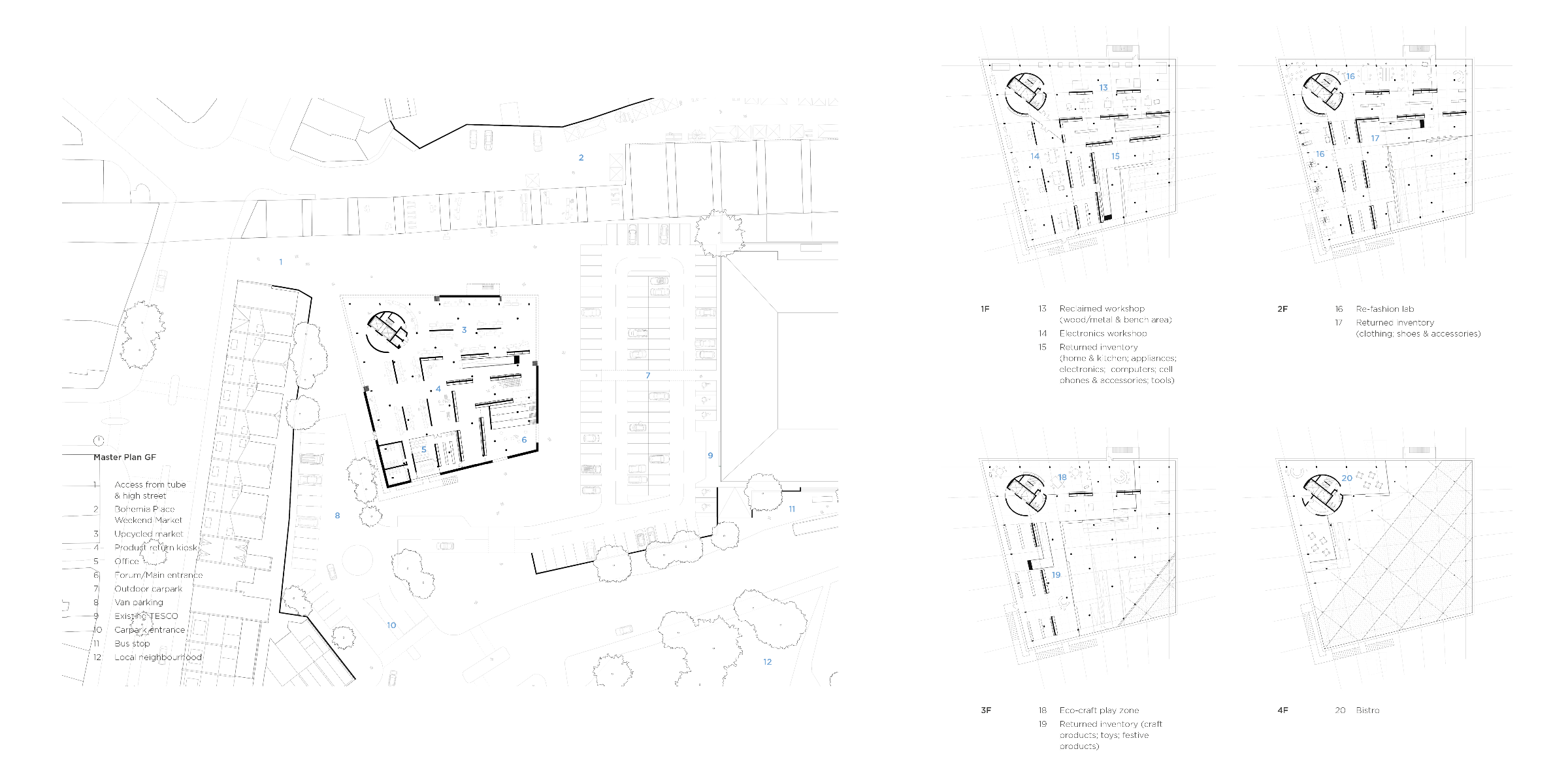
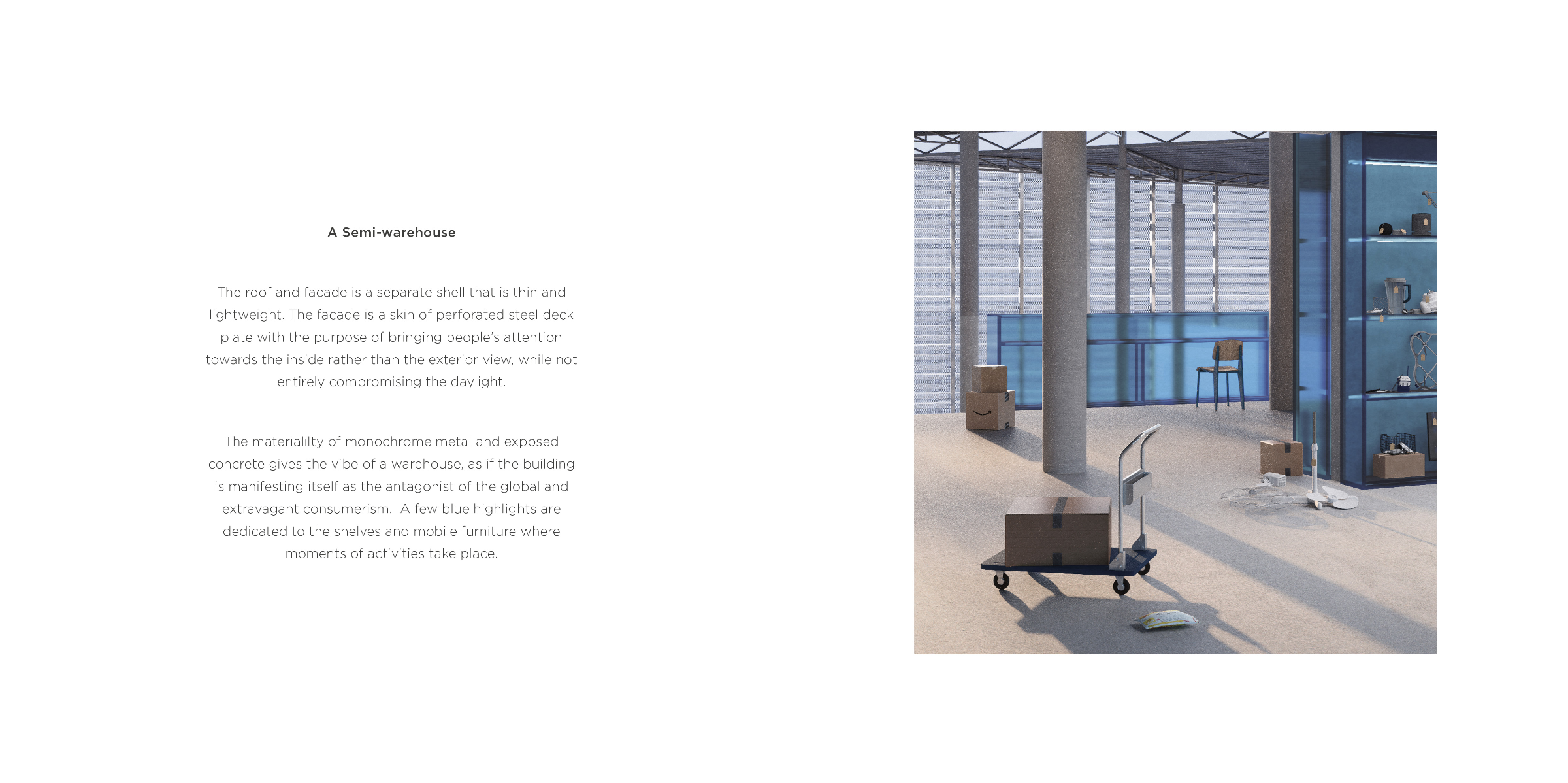
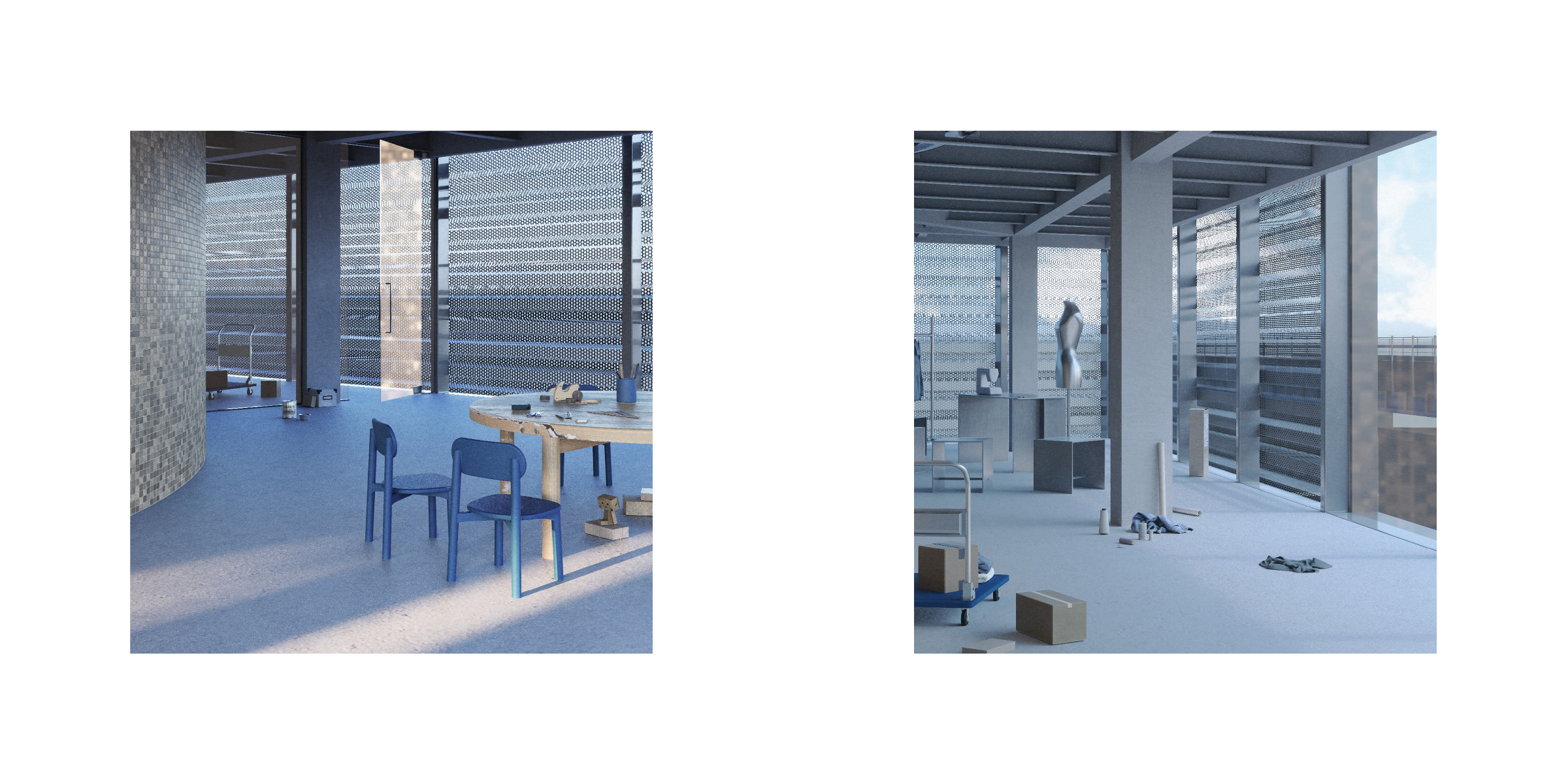
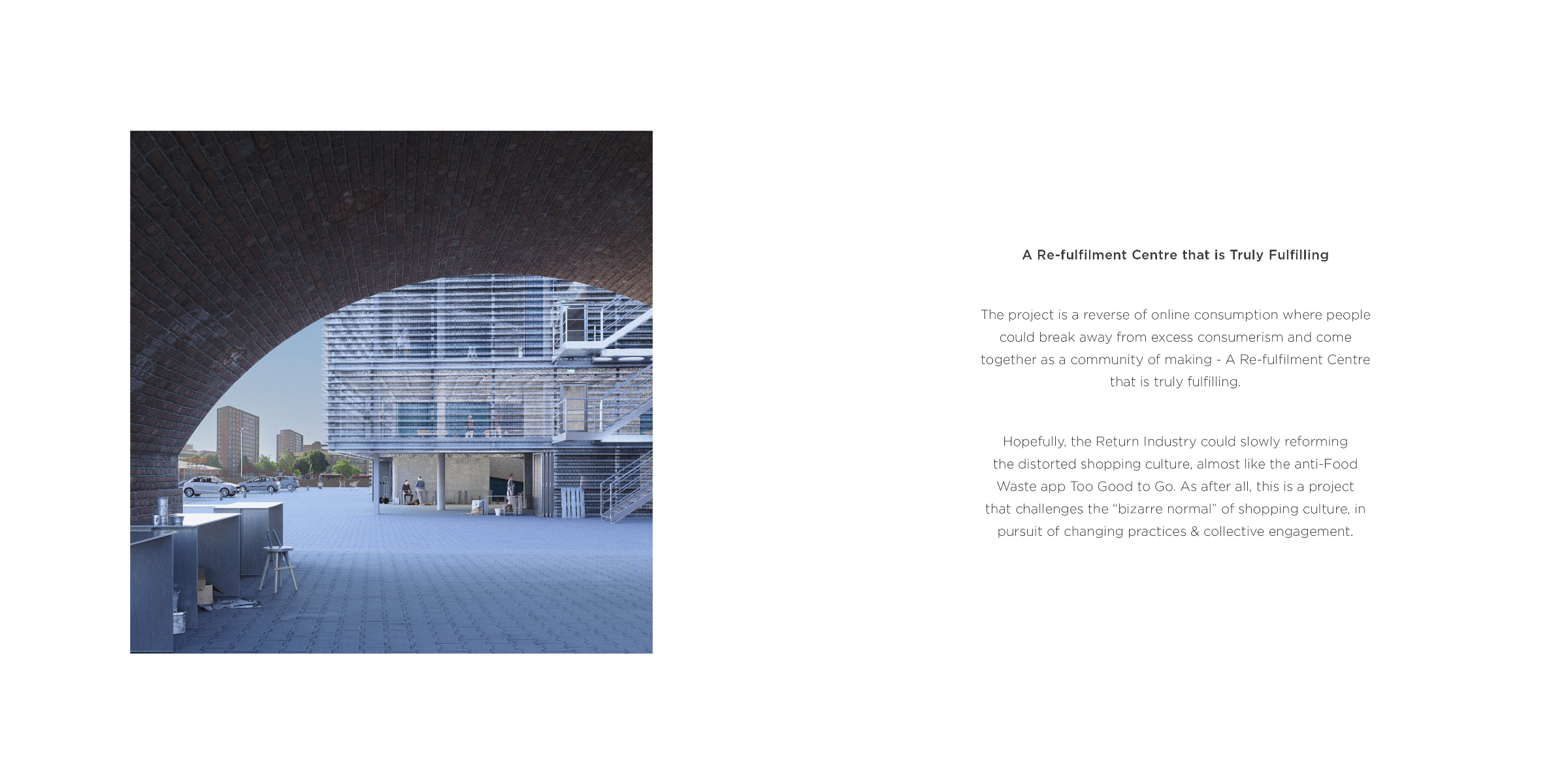
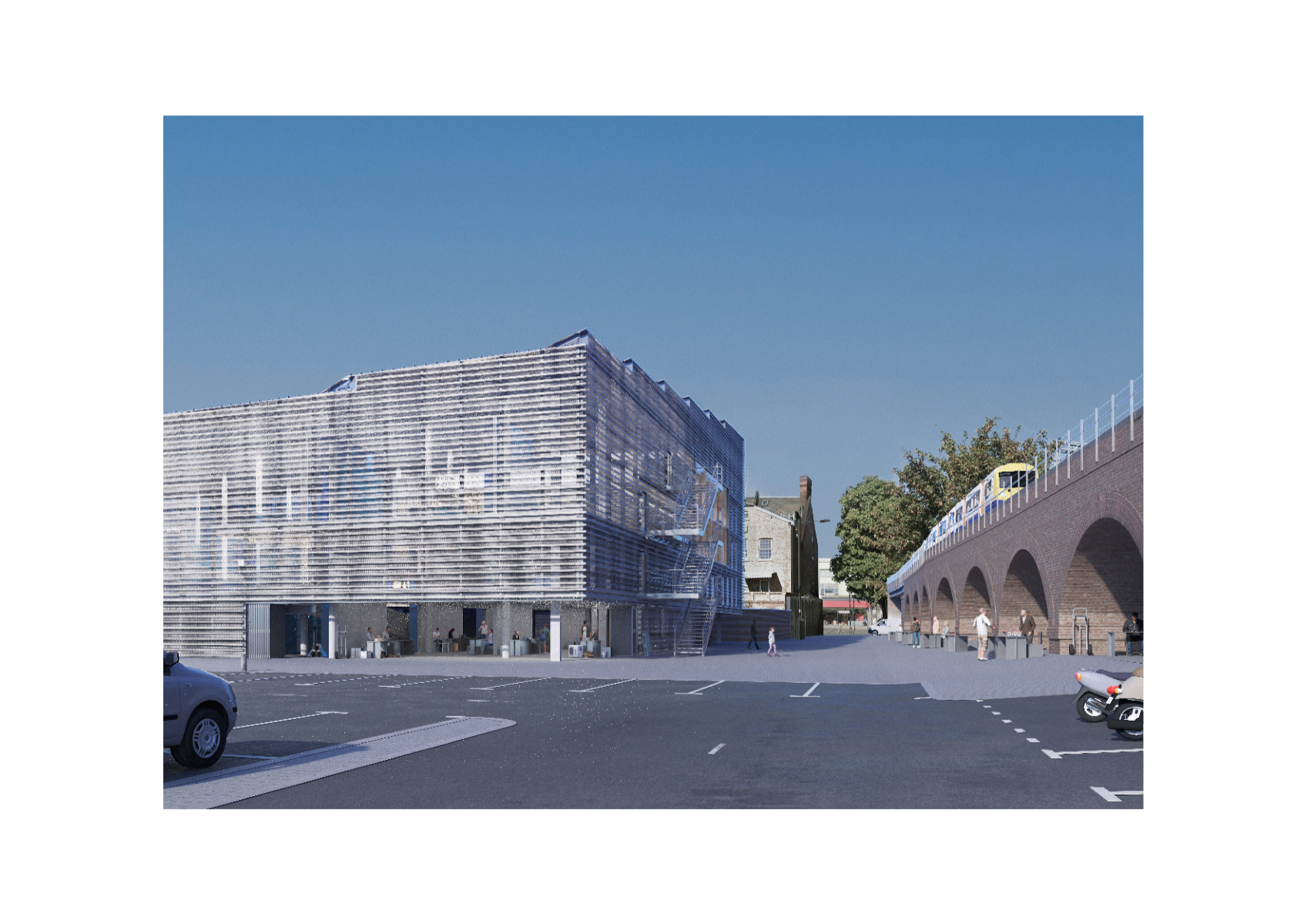
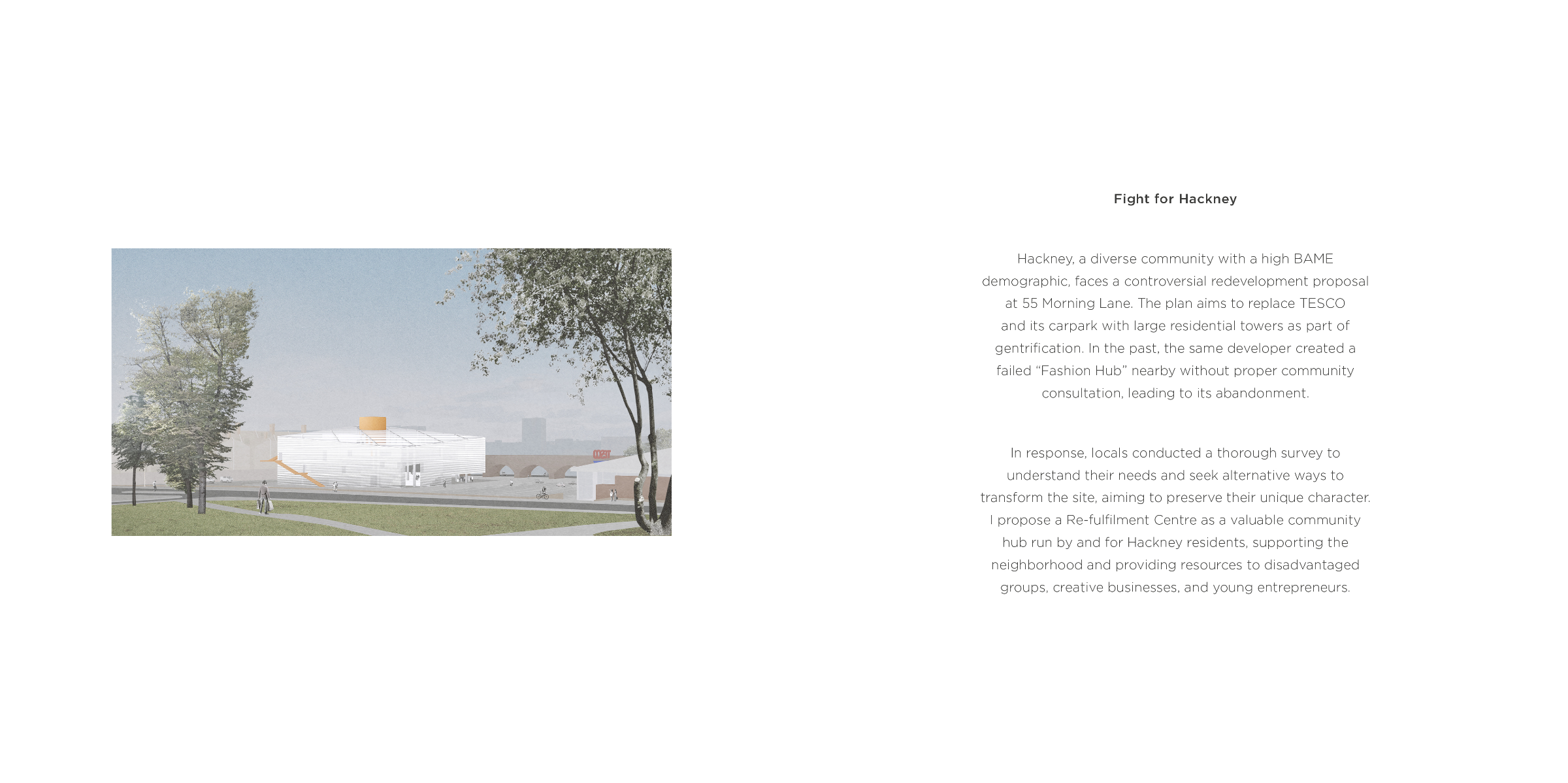
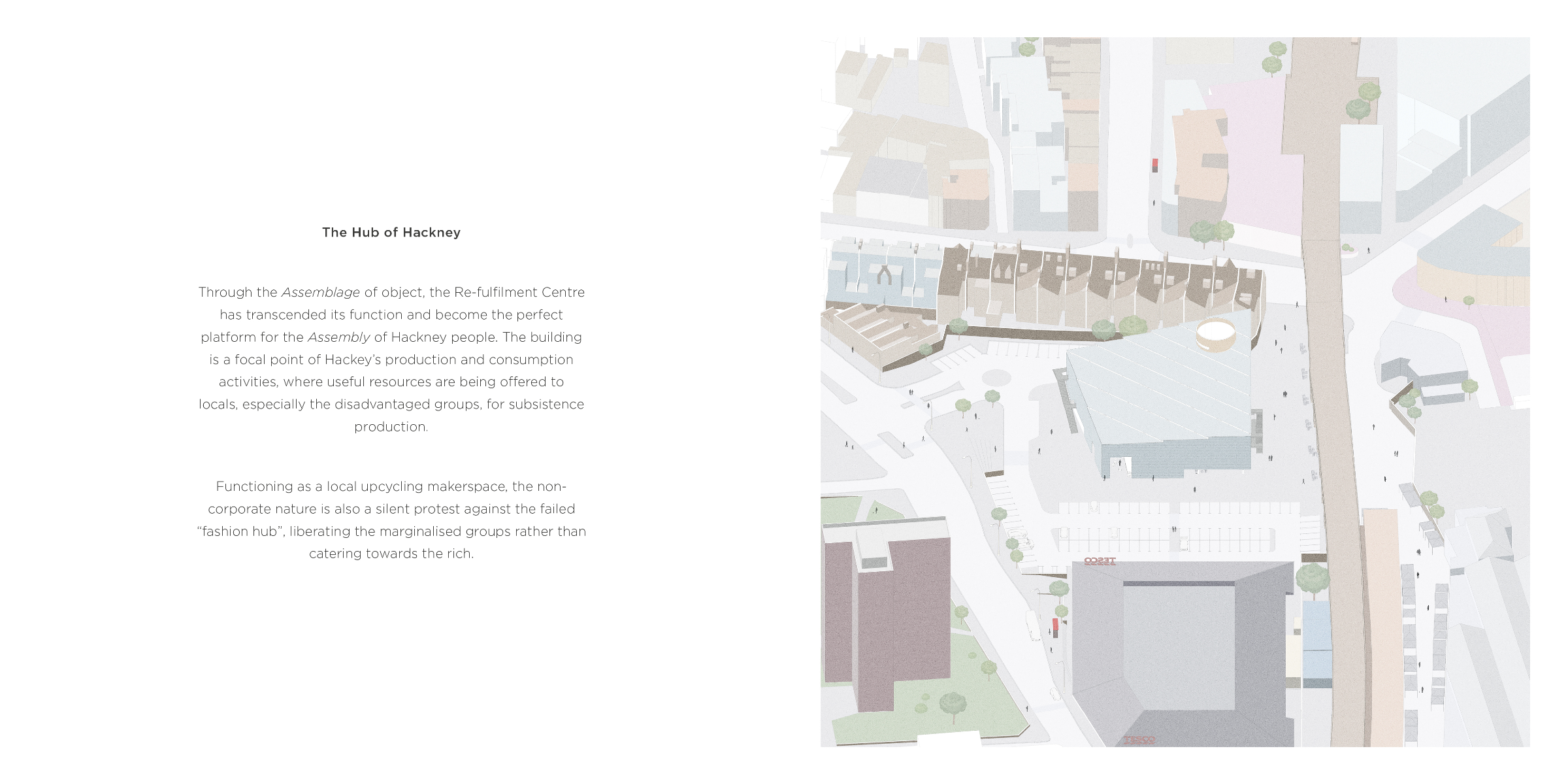
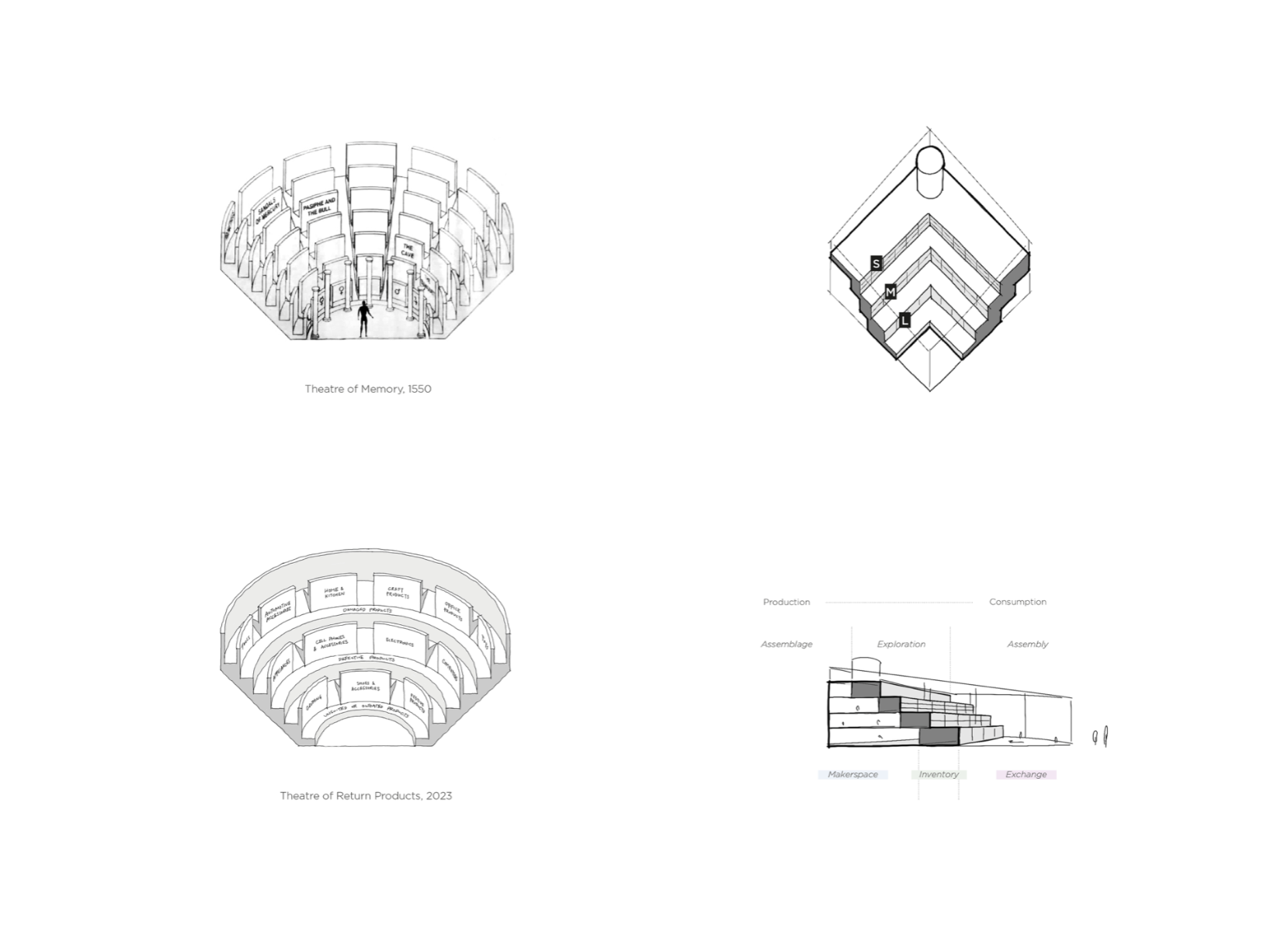
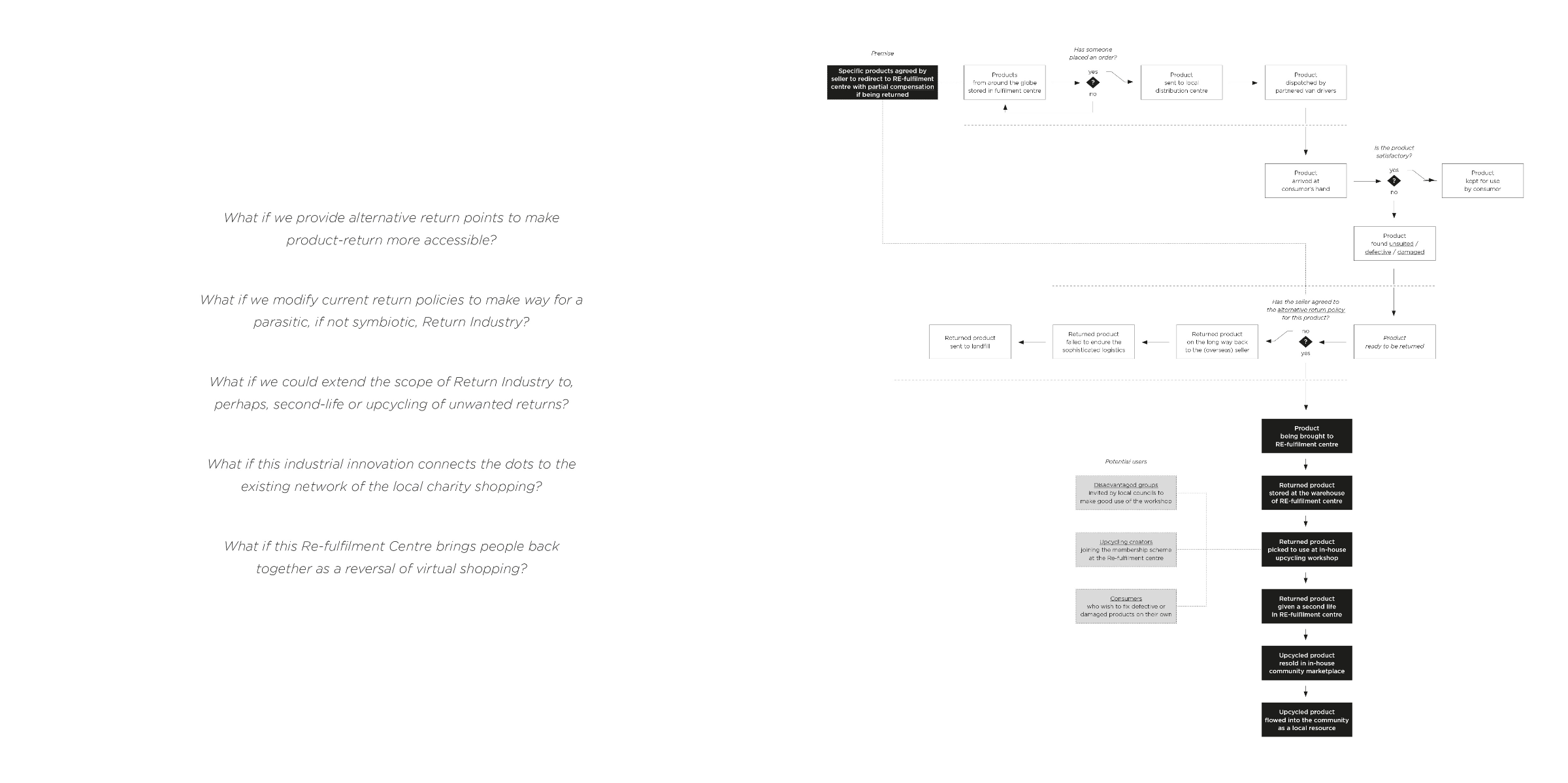
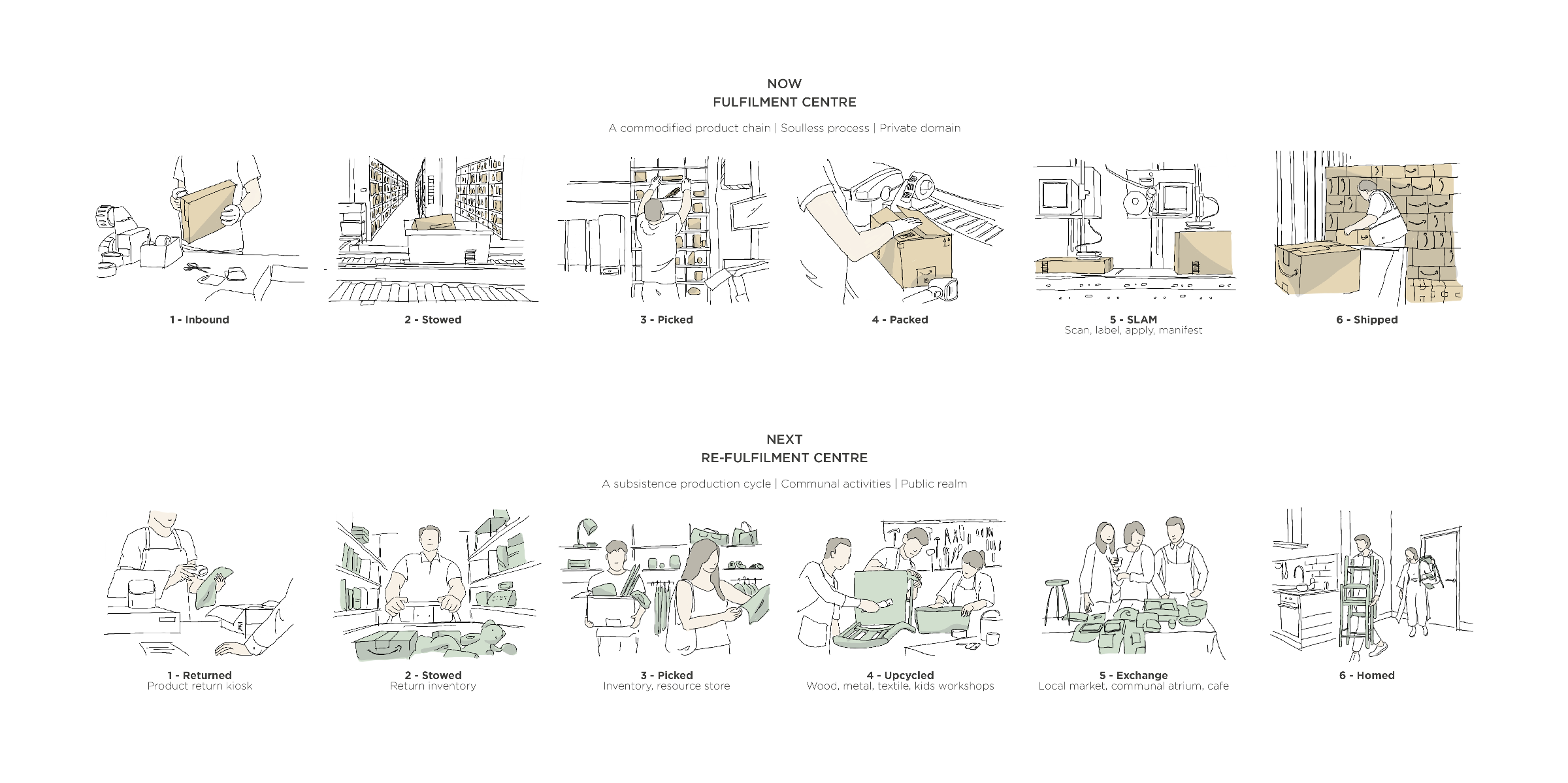
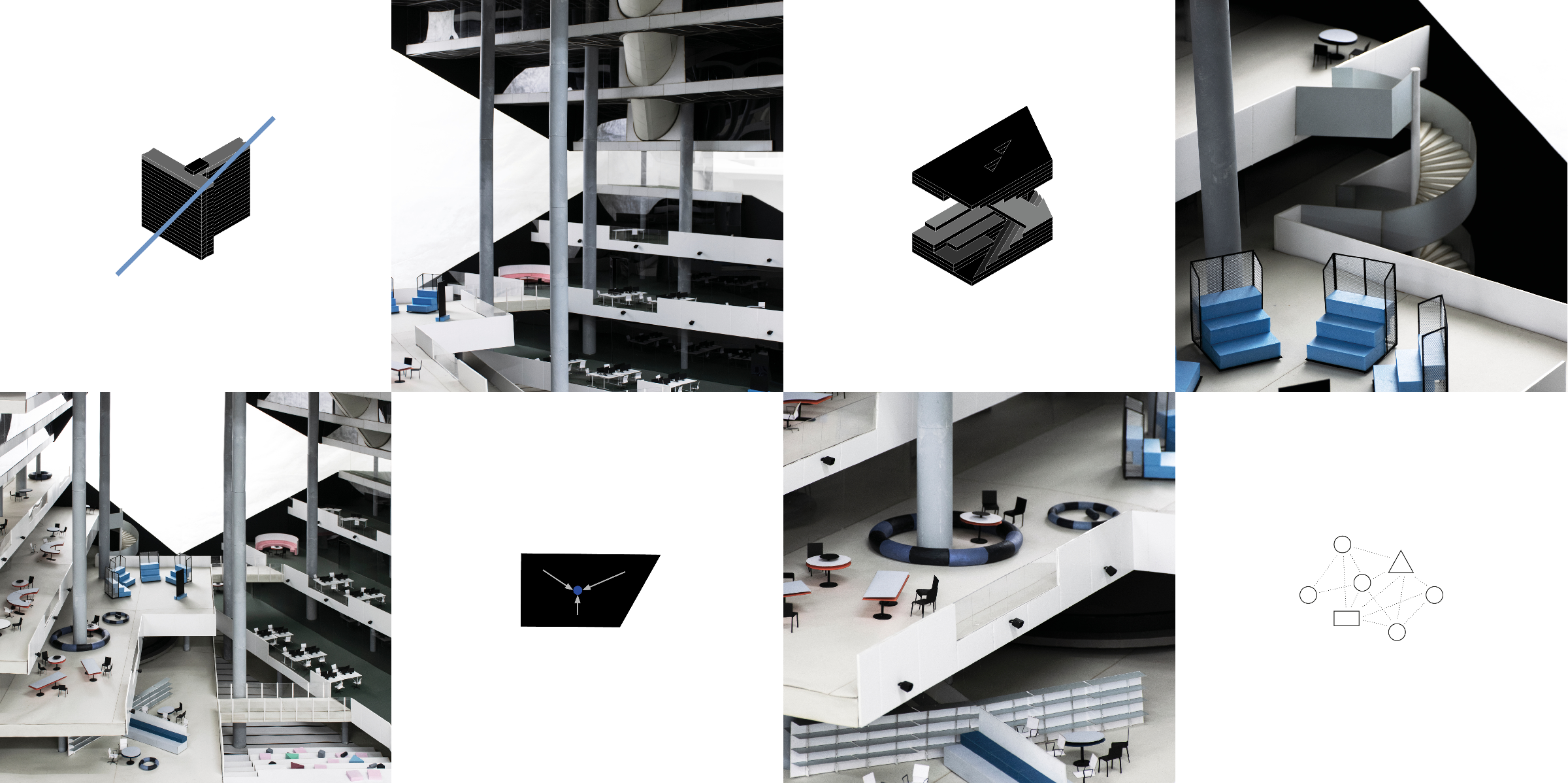
Returning products has become the norm of online shopping. Roughly 30% of the items are returned for various reasons - half of them get back to the suppliers, while the other half are dumped in landfills. The Re-fulfilment Centre proposes to turn the dramatic effects of the Return Culture – on the environment and on our relationship with objects – into a possibility of change. The idea is that retailers could get rid of unwanted returns with a partial compensation while the local communities could take advantage of the ample return inventory to create something useful and meaningful. The Re-fulfilment Centre is a new form of charity shopping, taking the shape of a more comprehensive in-house mechanism - from capturing returned goods, to upcycling them in the communal workshop, and reselling rejuvenated items on the local market. The building is made of three main elements. A light roof supported by a grid of light columns. A system of shelf- walls that support the internal horizontal slabs disposed in a terrace layout. The envelope of perforated metal sheets, which gives to the building an enigmatic post-industrial look. Entirely colonised by objects, the building is a theatre that showcases the spectacle of a new logistic that could give a different value to everyday objects. Envisioned as a reverse of online consumption, this new return industry can allow breaking away from consumerism and come together as a community of makers - a Re-fulfilment Centre that is truly fulfilling. The project challenges the “bizarre normal” of shopping culture, in pursuit of changing practices & collective engagement.
Competitions