Molly White
Textile Design BA (Hons)
Falmouth University
Specialisms: Textiles - Print / Textile Innovation/Textile Art / Textiles - Concept
Location: Falmouth, United Kingdom
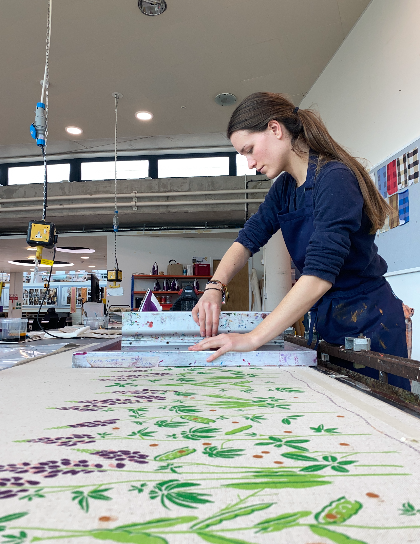

Molly White
First Name: Molly
Last Name: White
Specialisms: Textiles - Print / Textile Innovation/Textile Art / Textiles - Concept
Sectors:
My Location: Falmouth, United Kingdom
University / College: Falmouth University
Course / Program Title: Textile Design BA (Hons)
About
Molly White is a print designer with a strong sense of intellectual curiosity. Inspired by the natural world and a sense of place, she takes a thorough, research-led approach to her practice, immersing herself in the subjects that inform her concepts. Her work challenges conventions and explores alternative approaches to traditional print and surface pattern design. Sustainability is a key consideration in both her work and life, reflecting her connection to the natural world. Through print, she aims to inspire, educate and raise awareness, recognising the privilege of using her practice to communicate meaningful ideas.
The garden of england
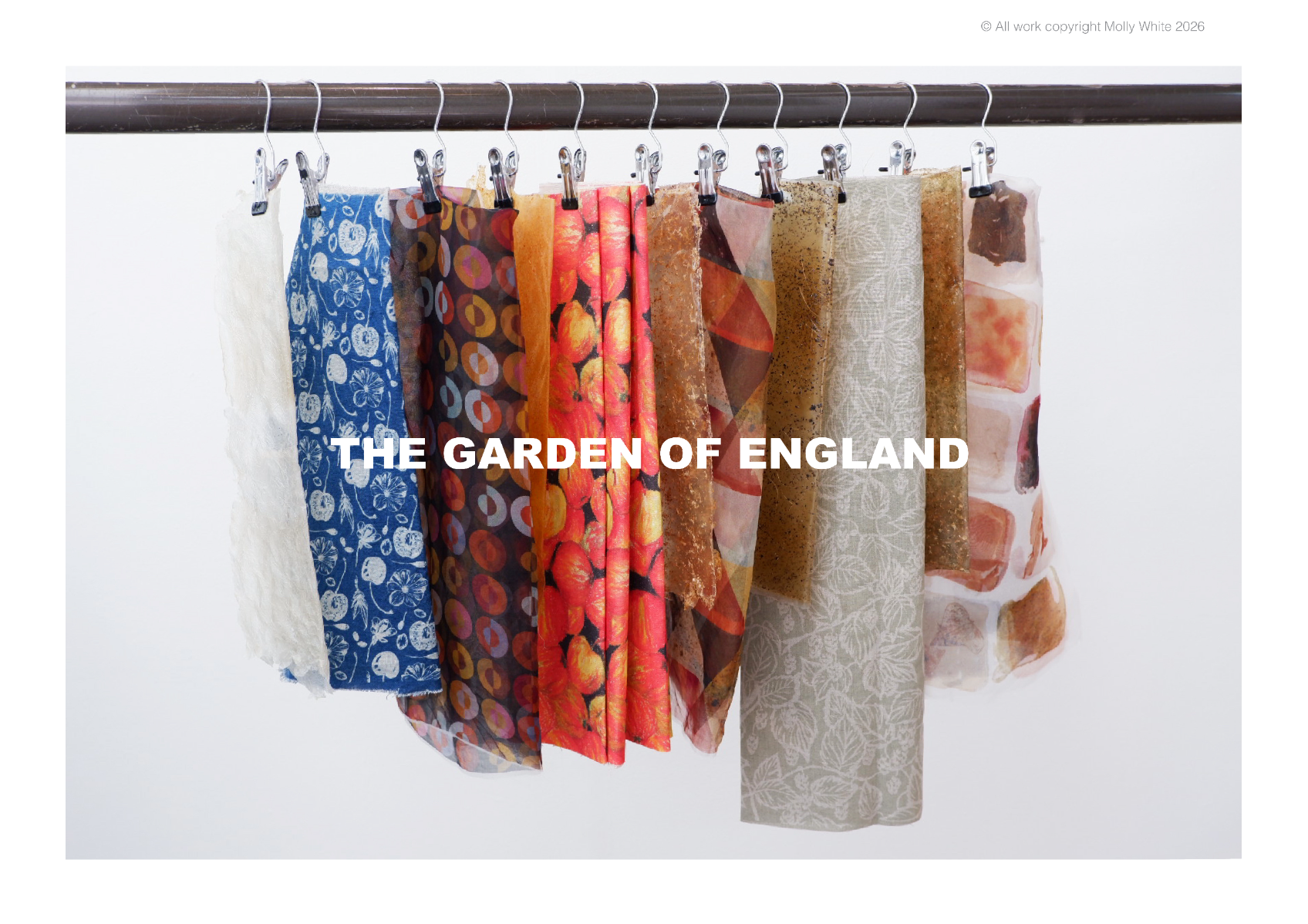
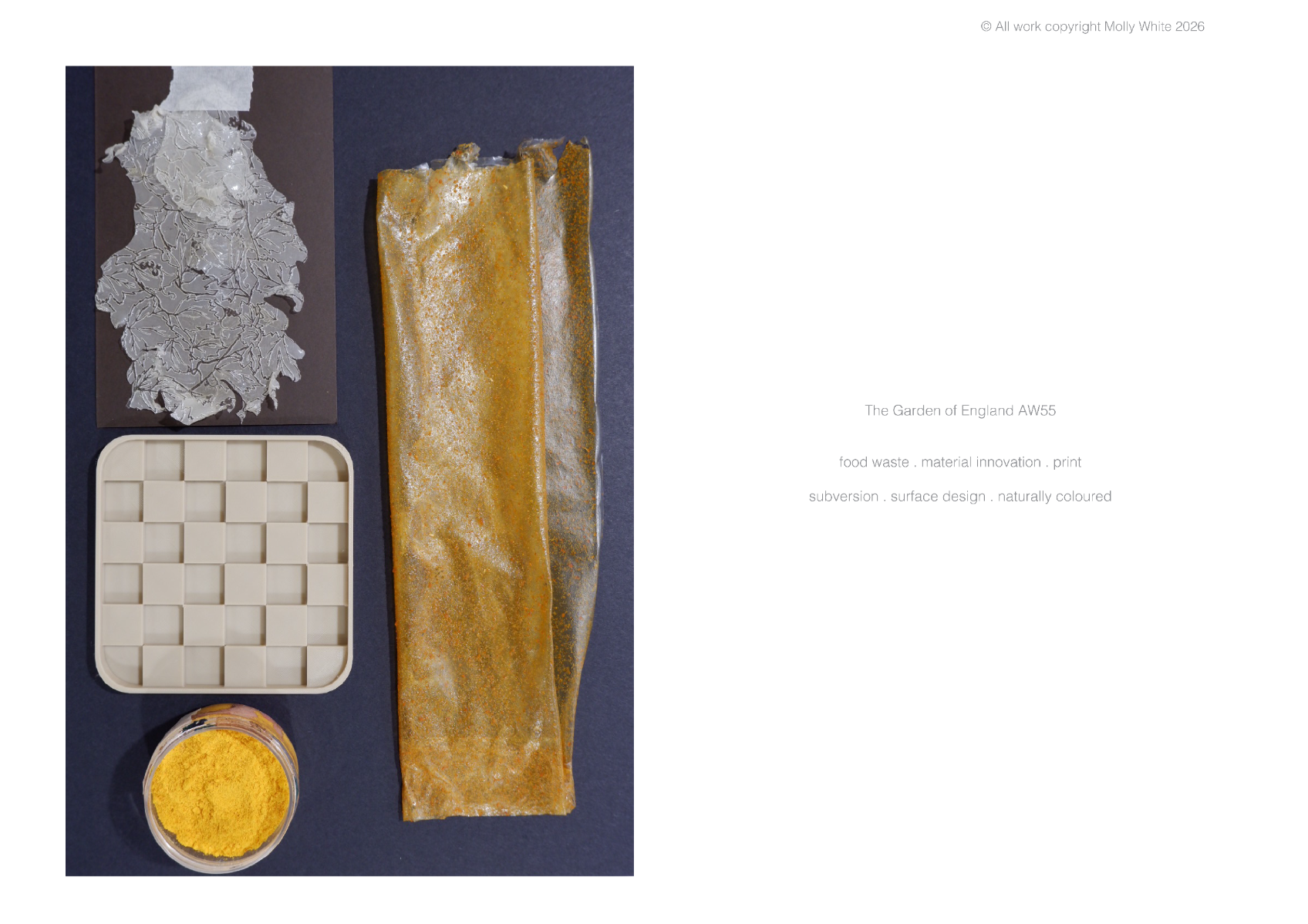
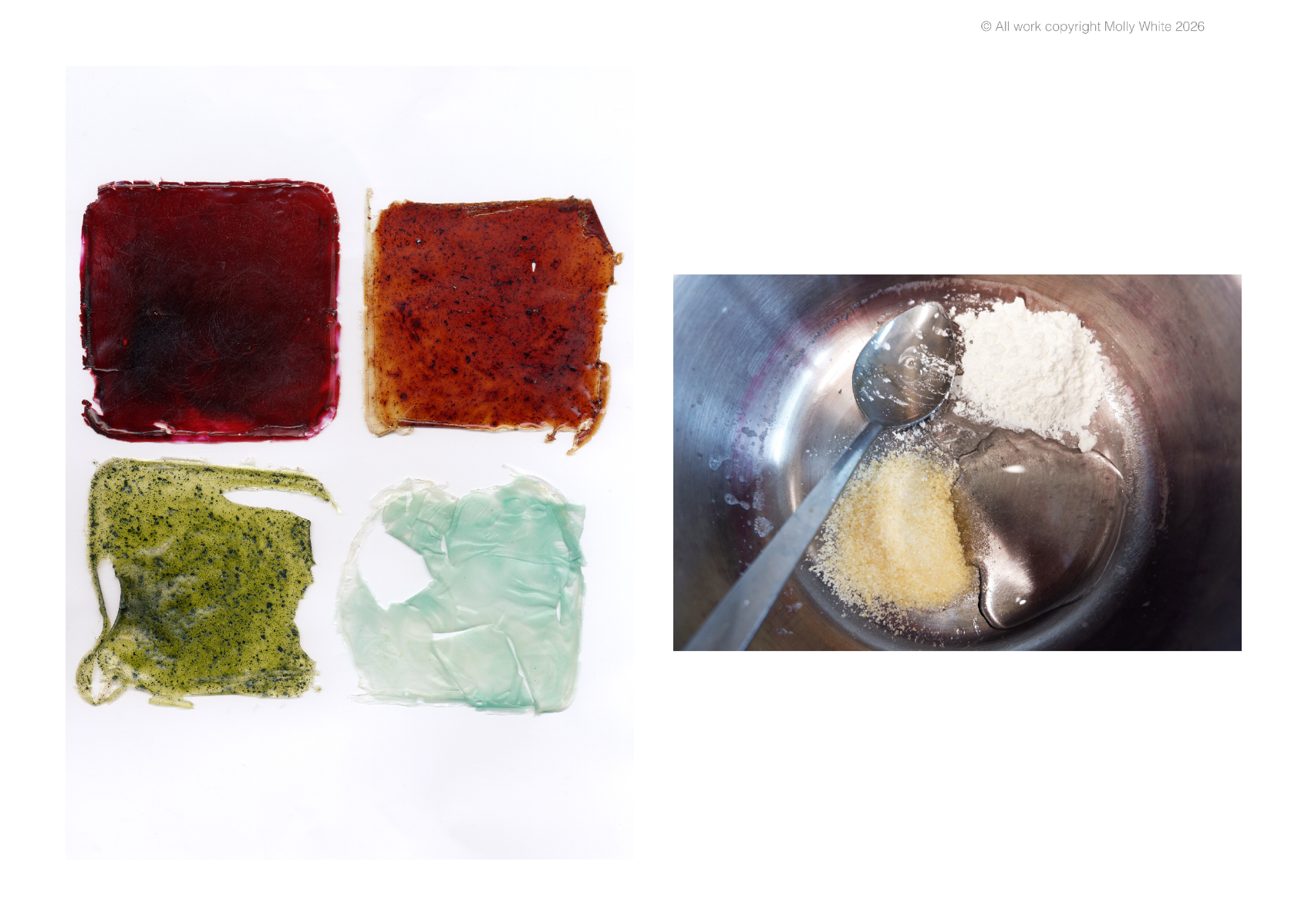
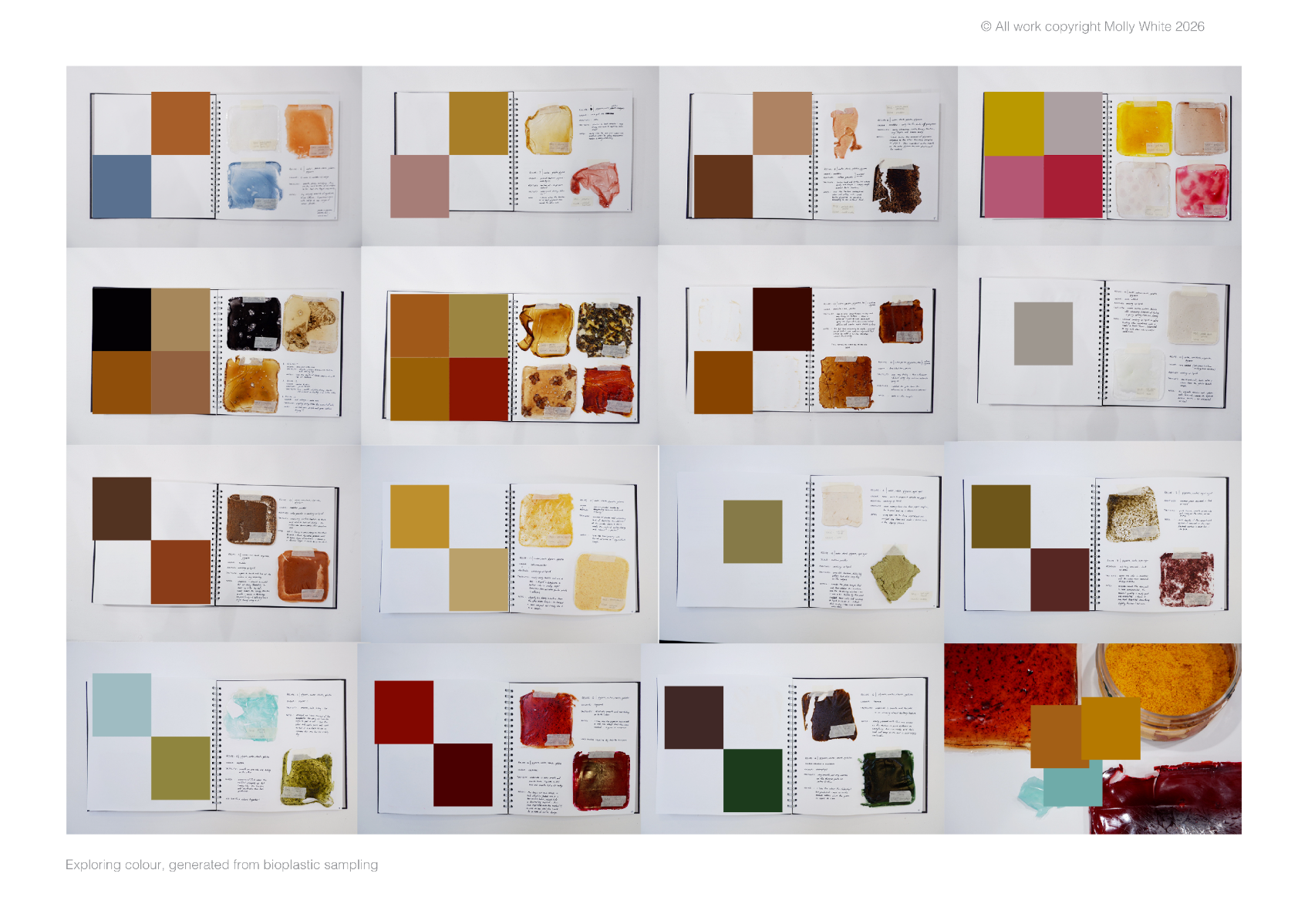
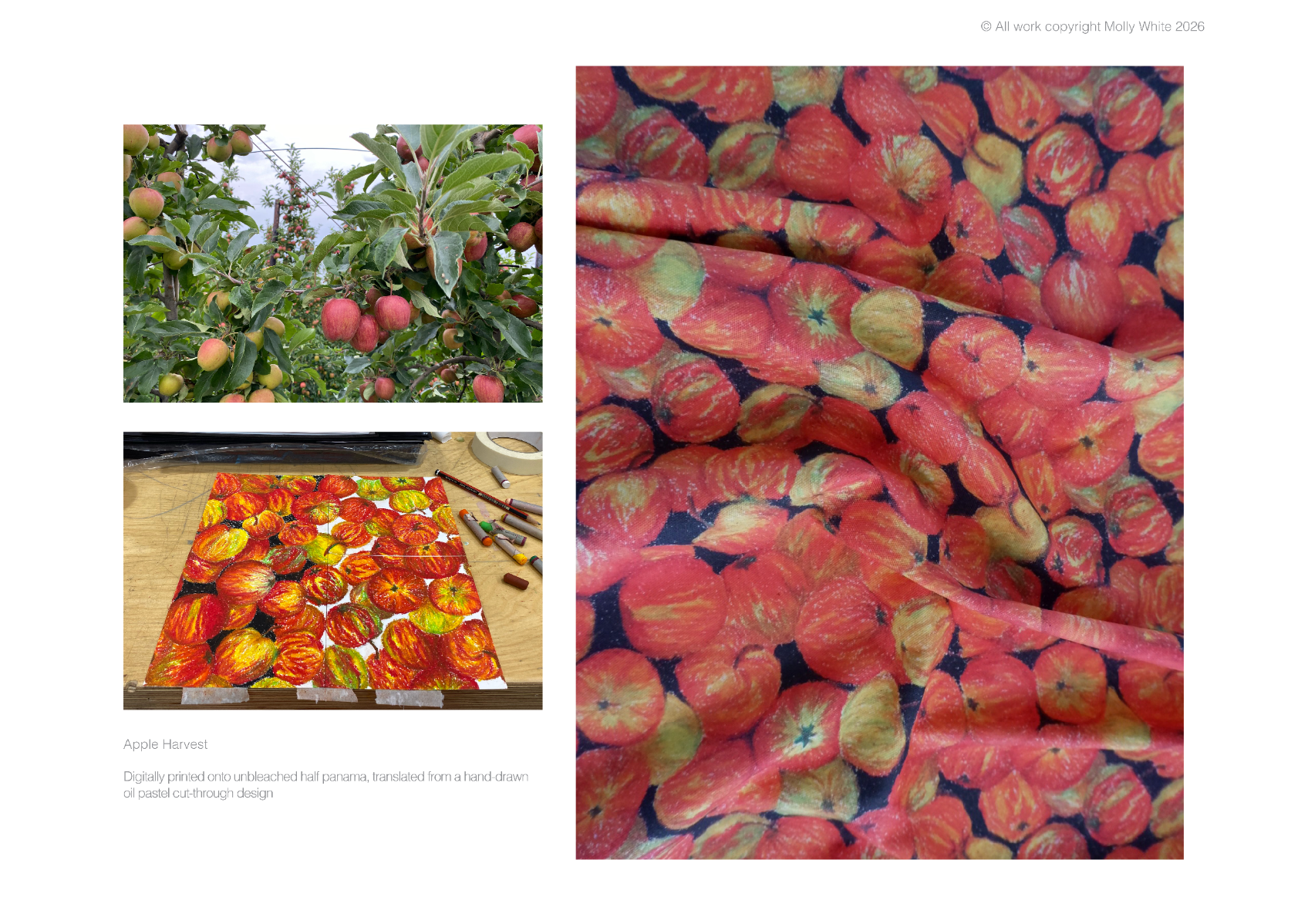
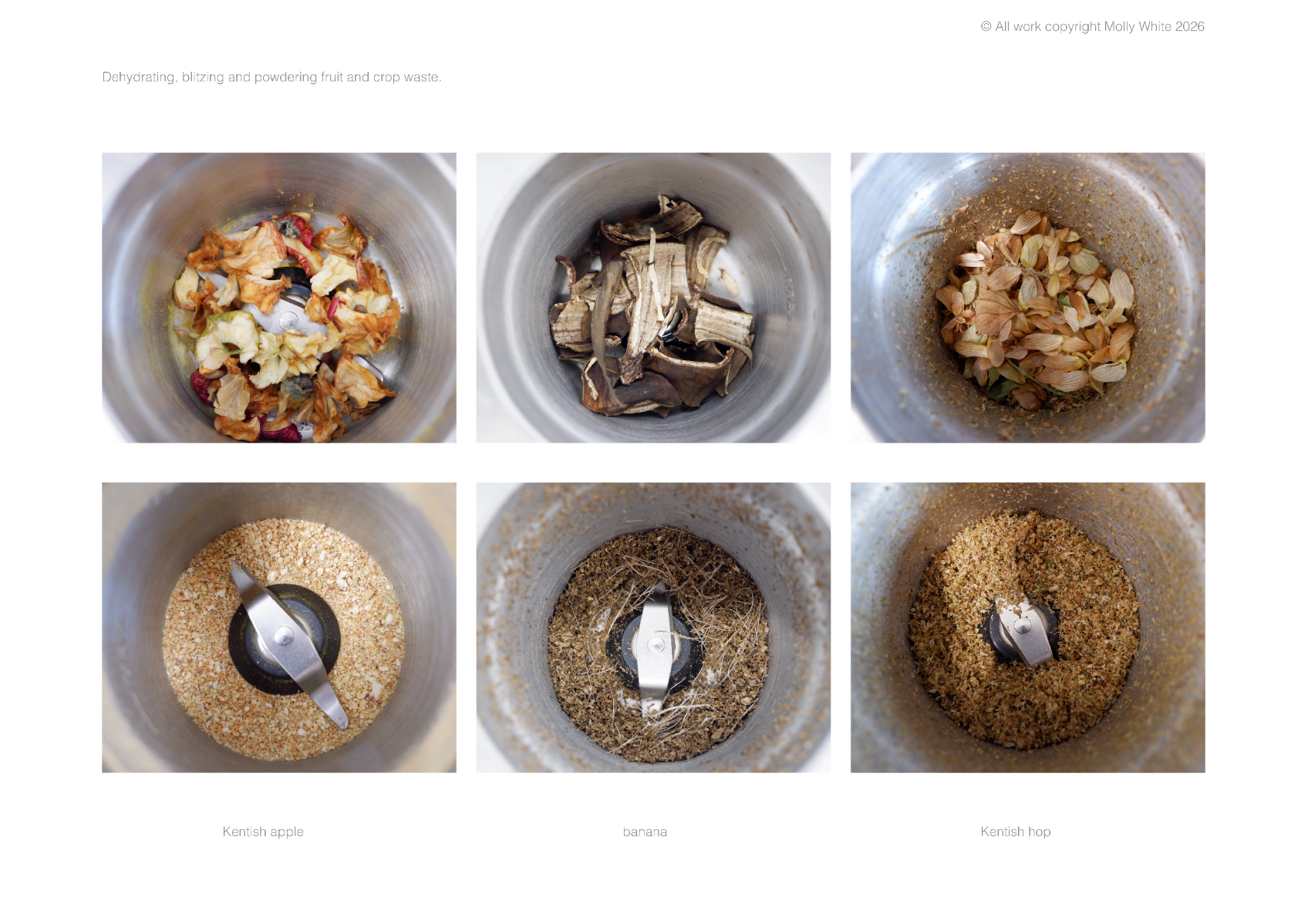
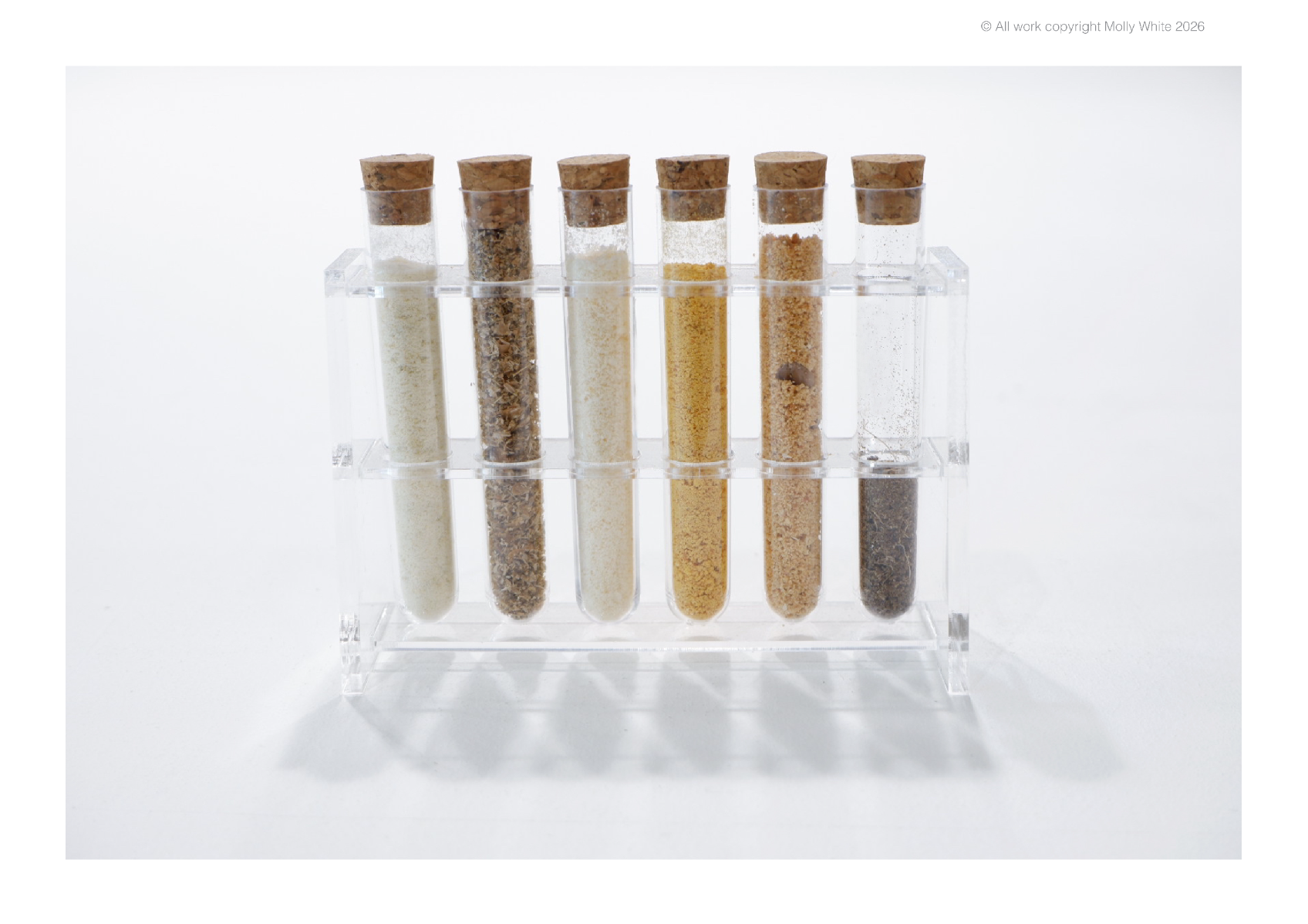
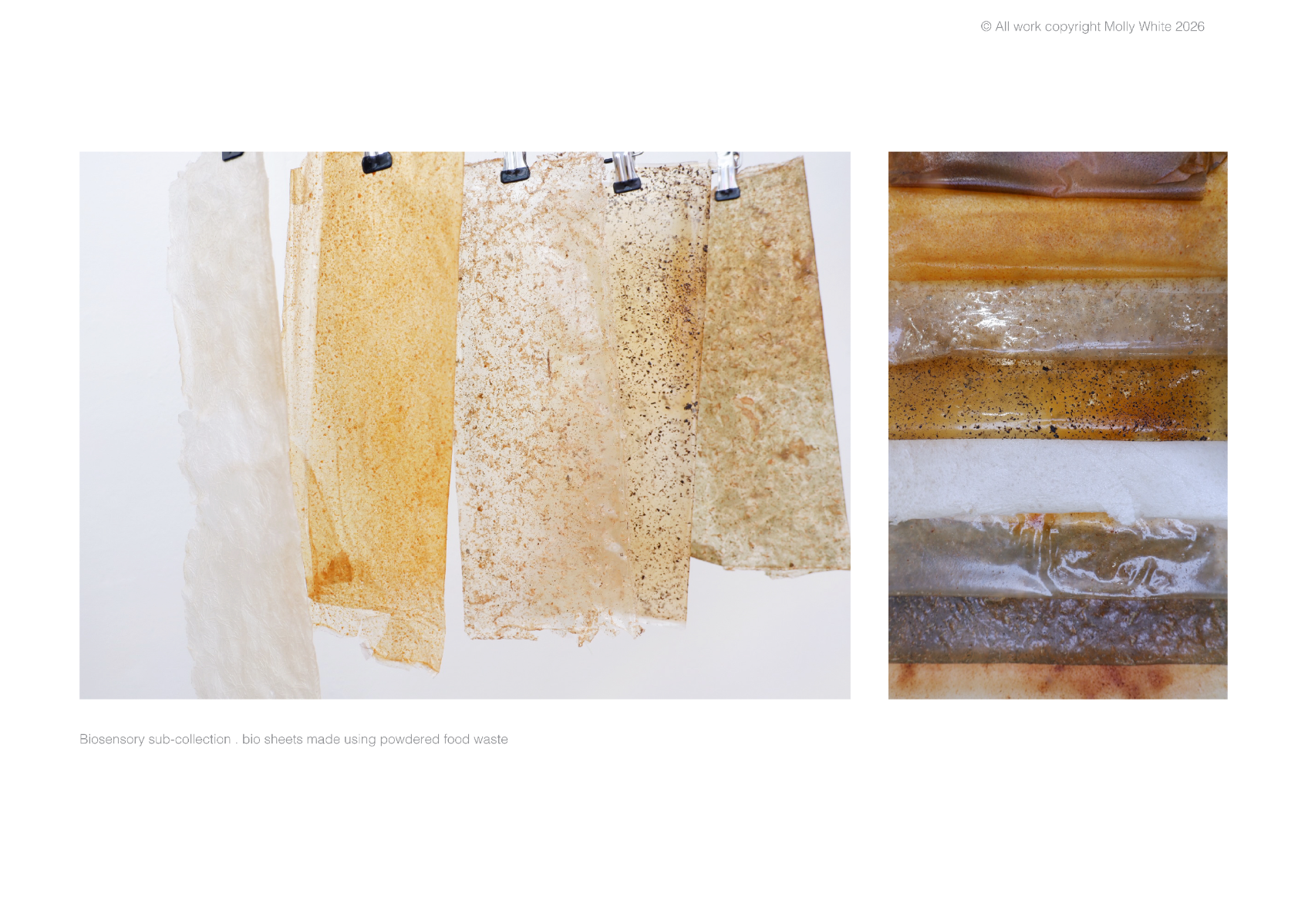
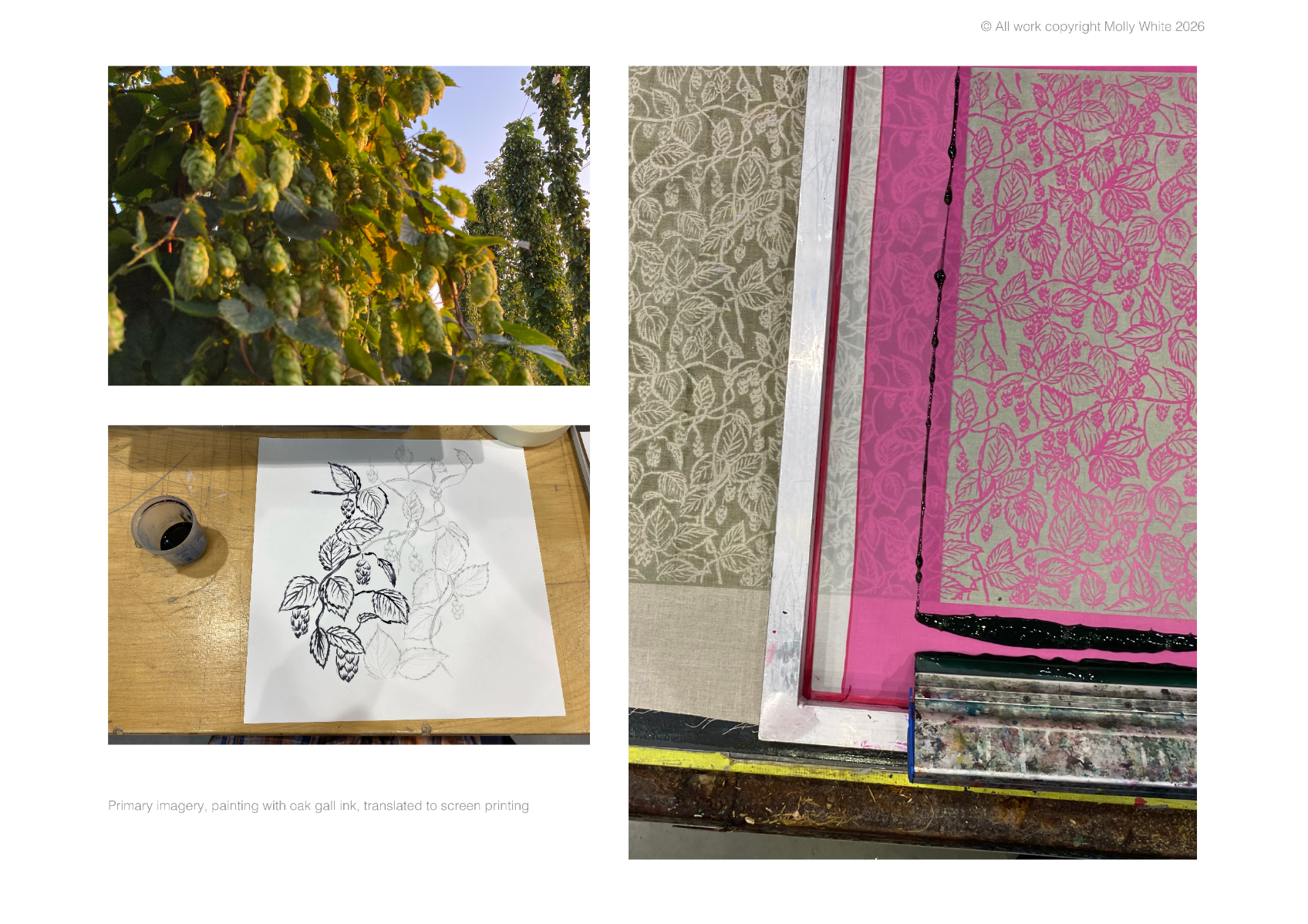
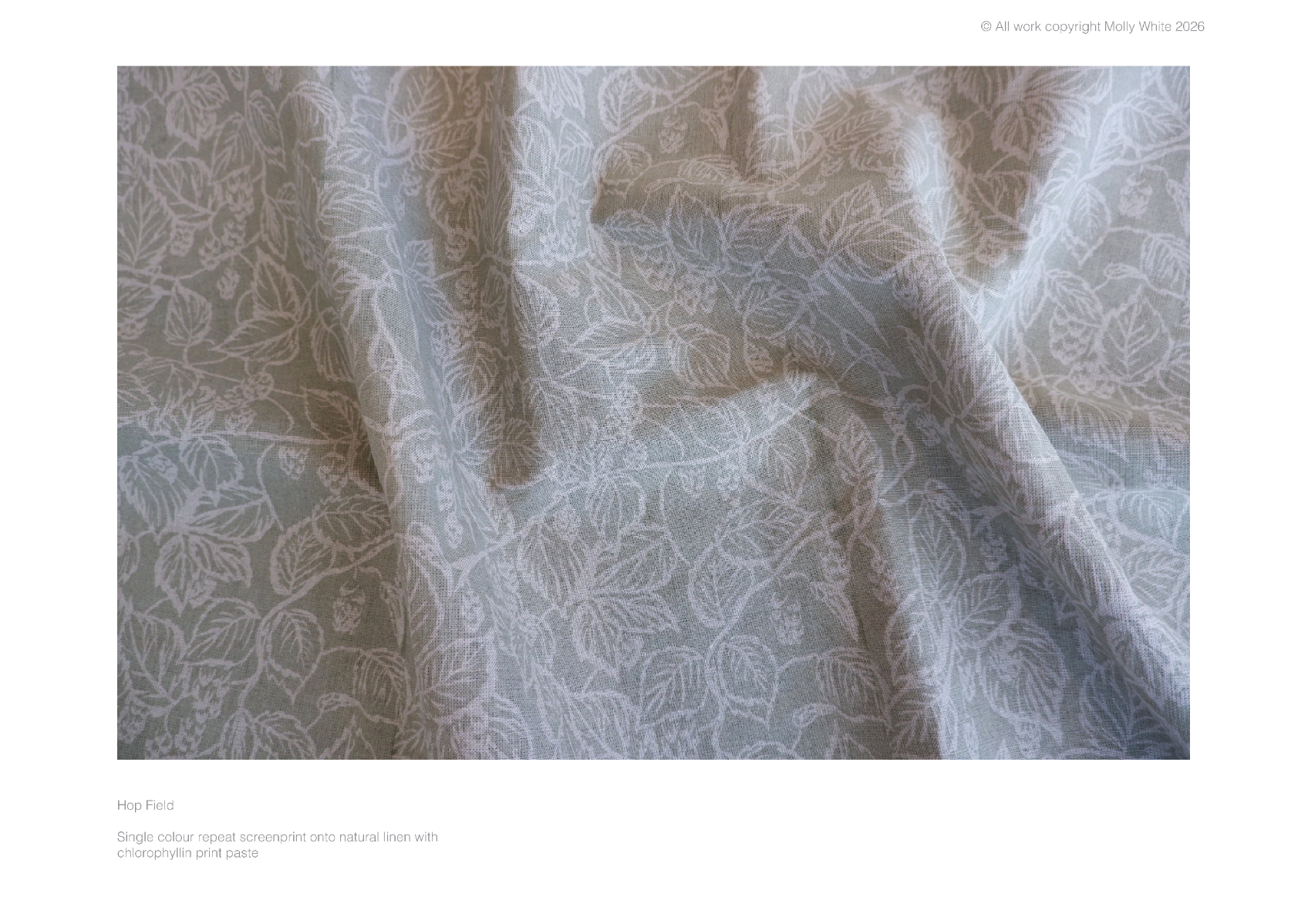
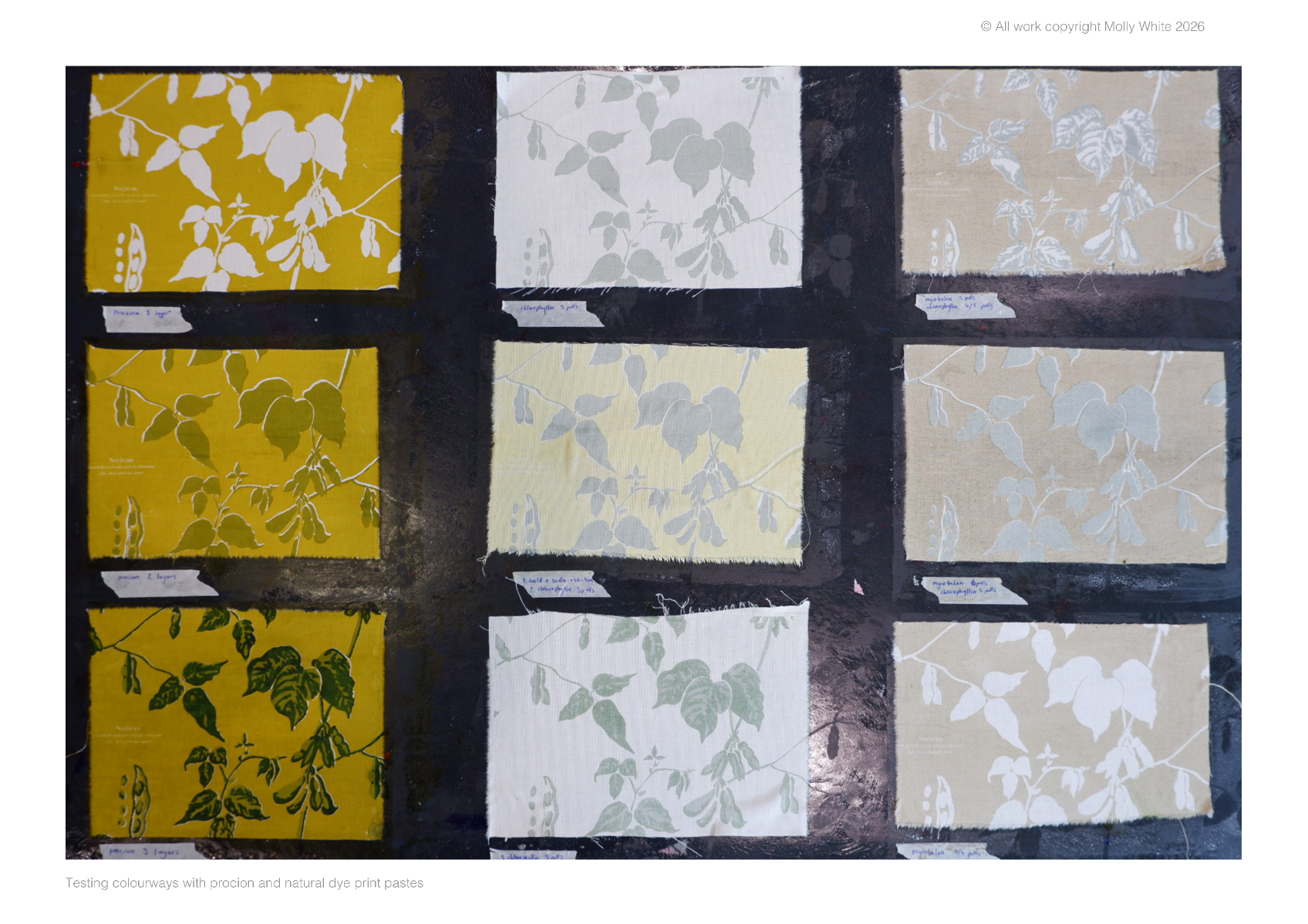
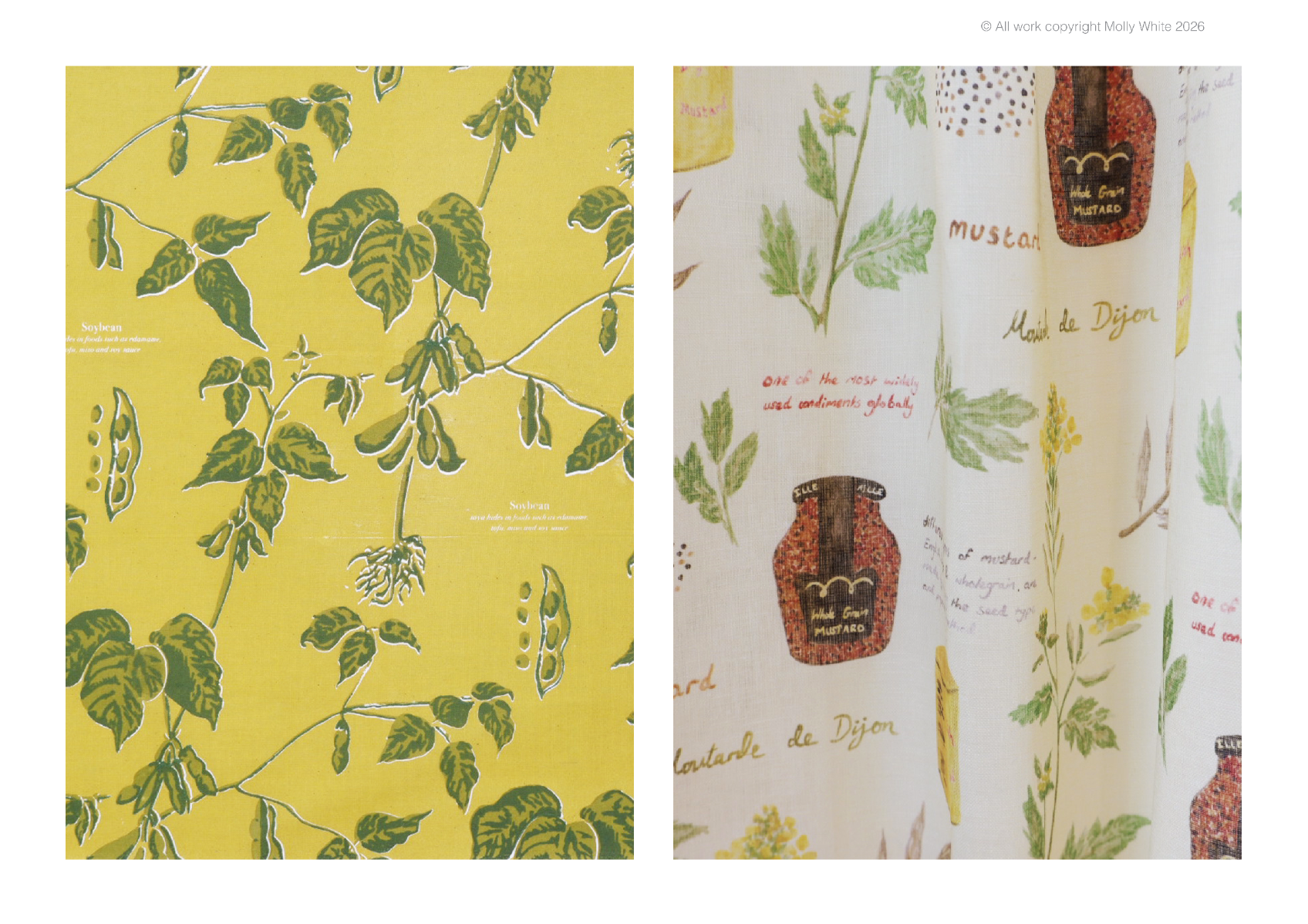
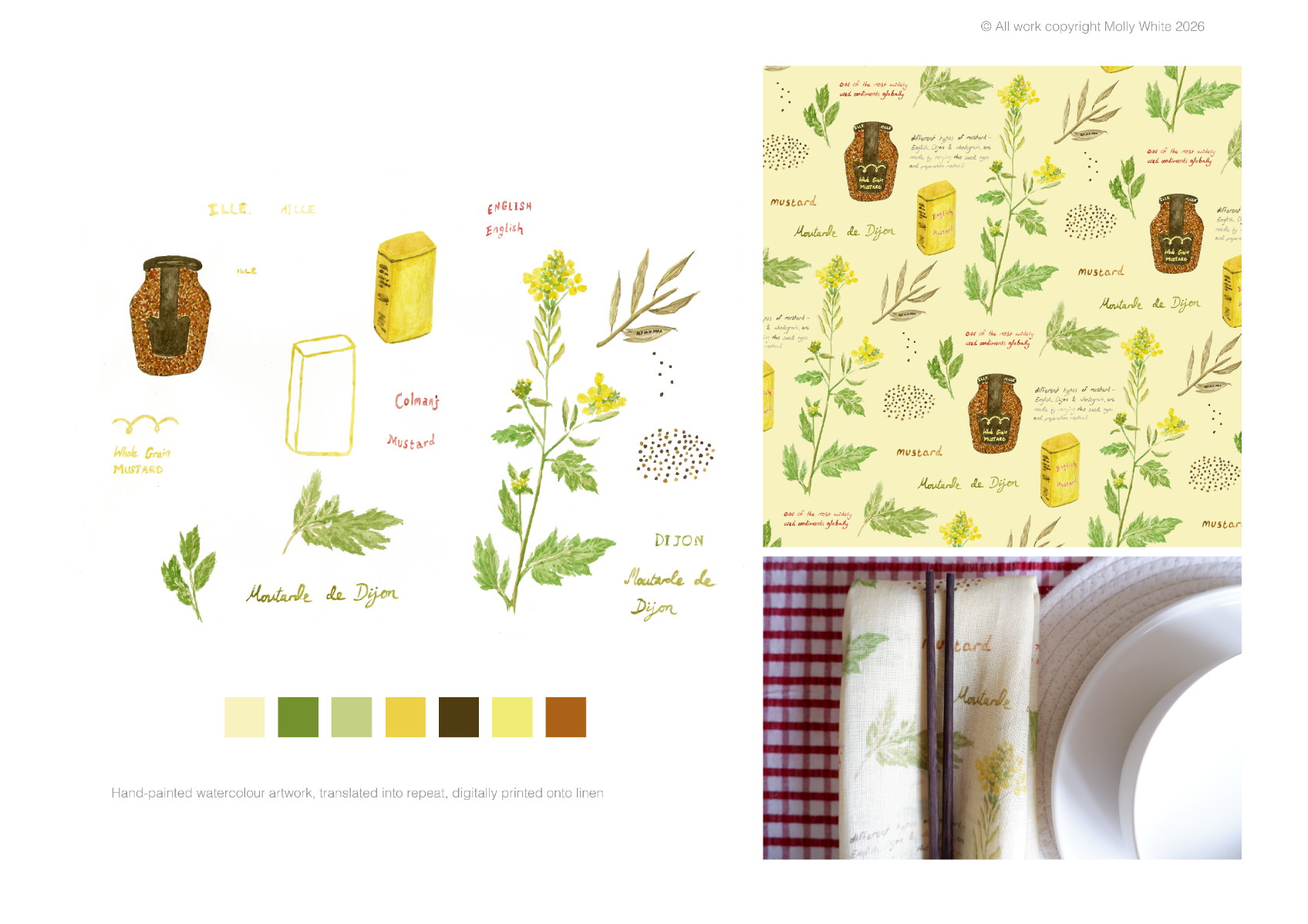
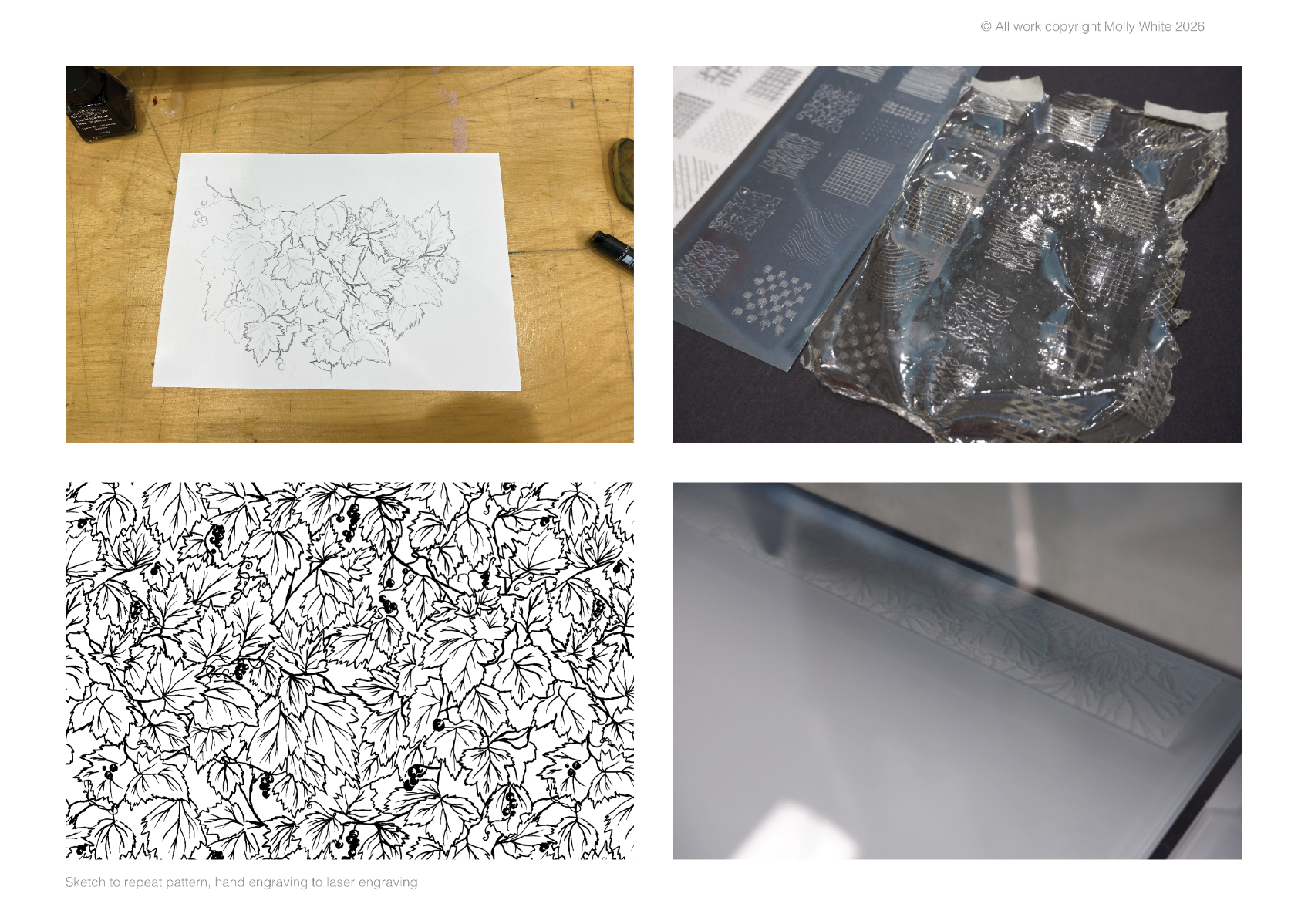
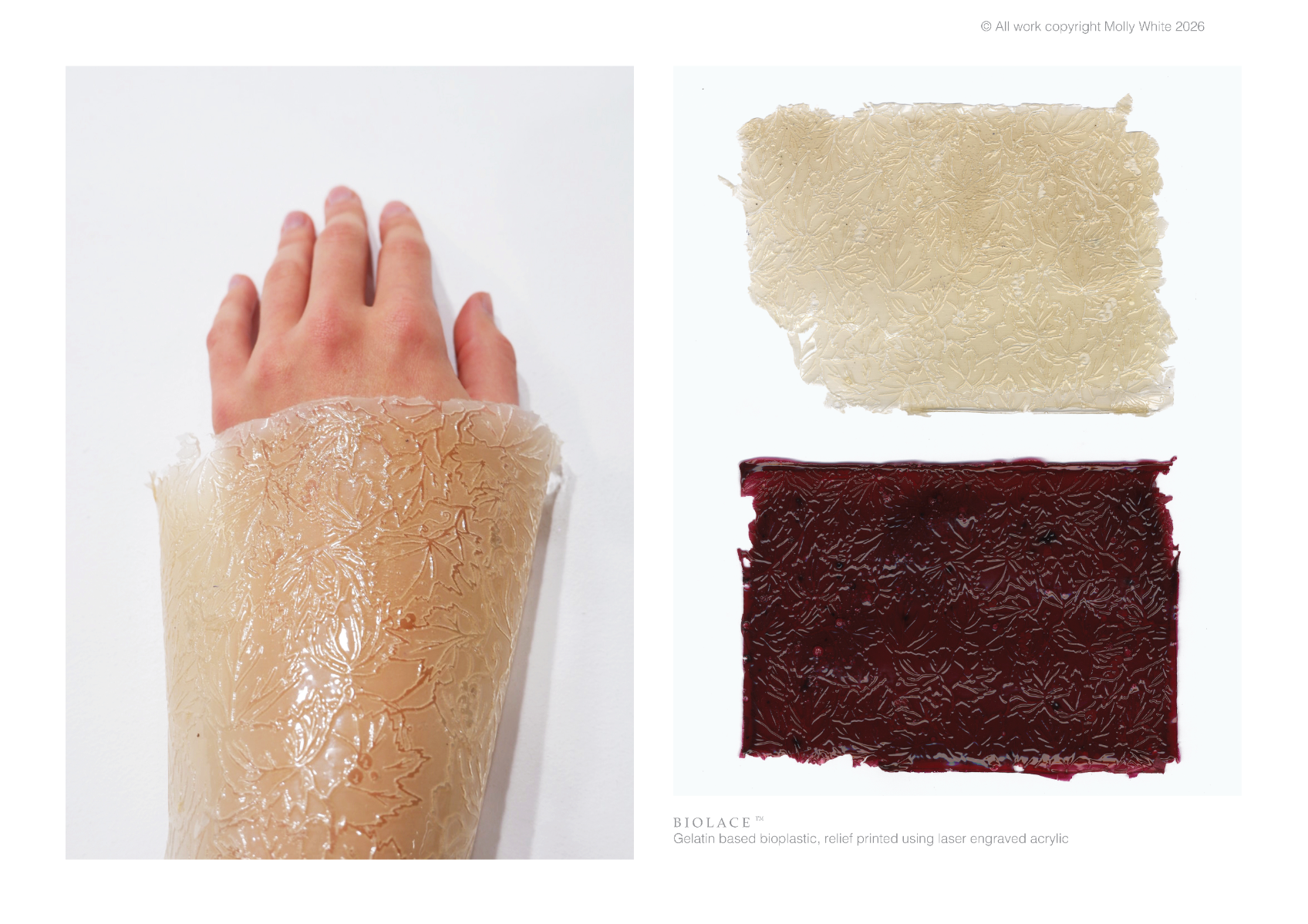
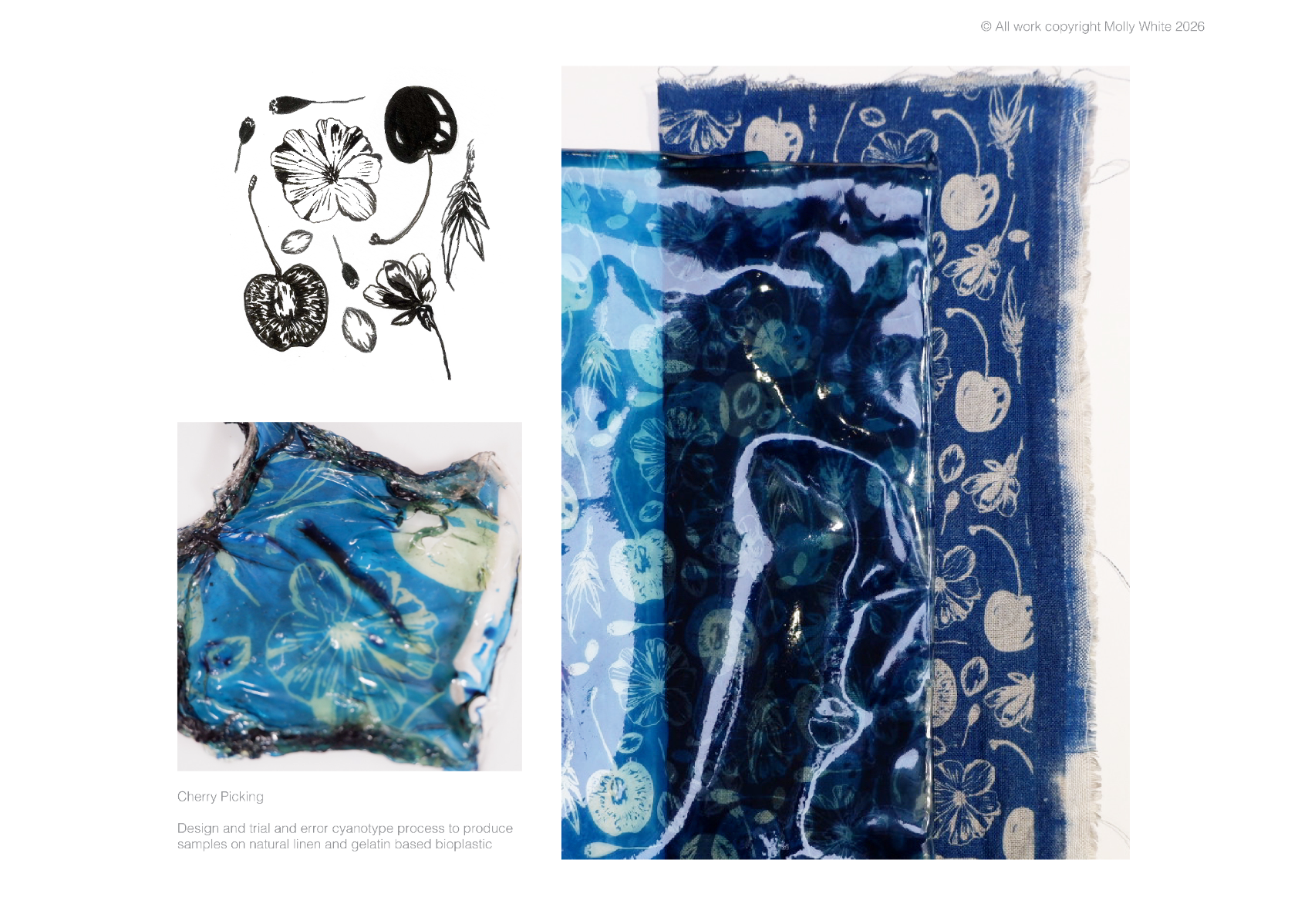
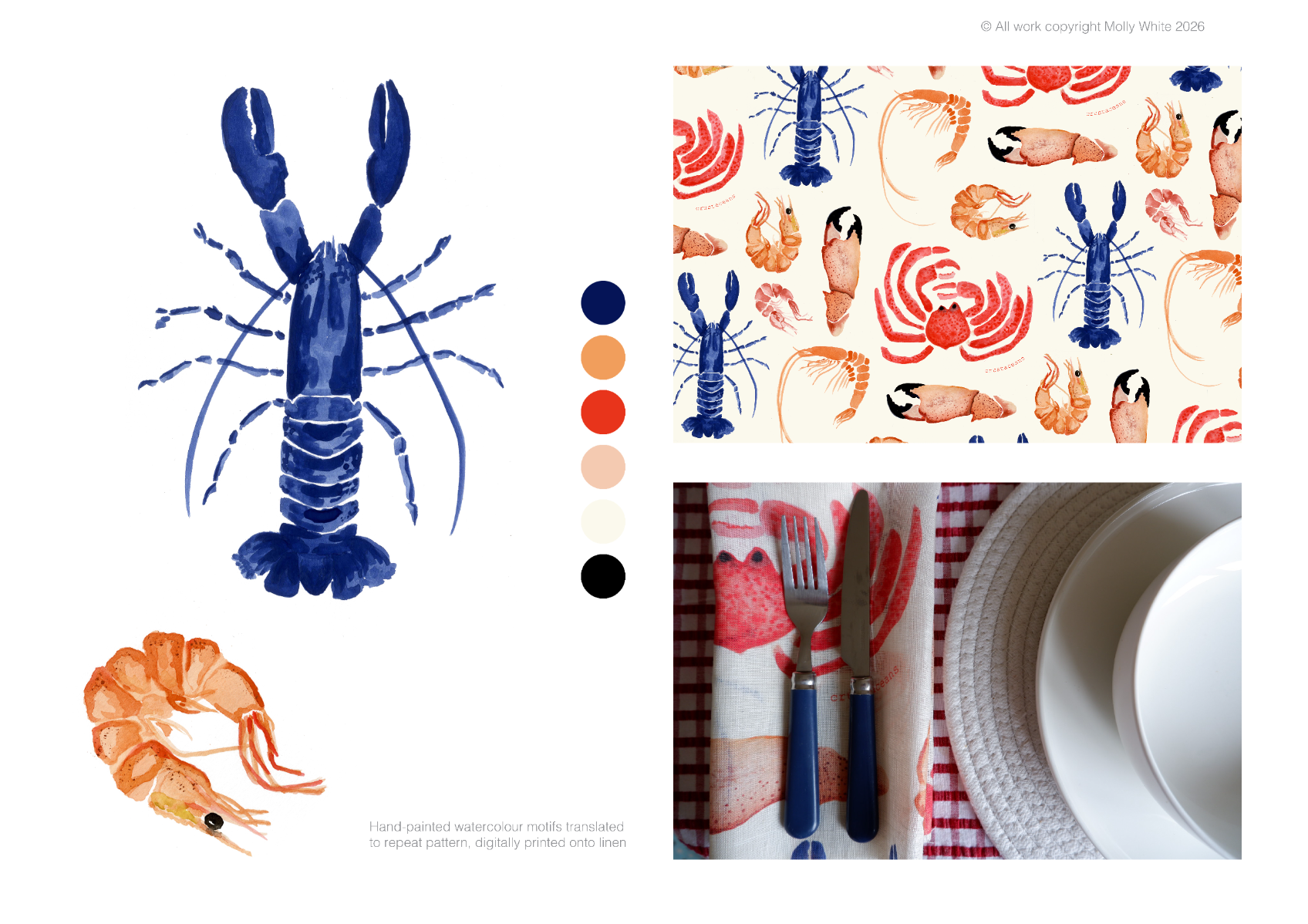
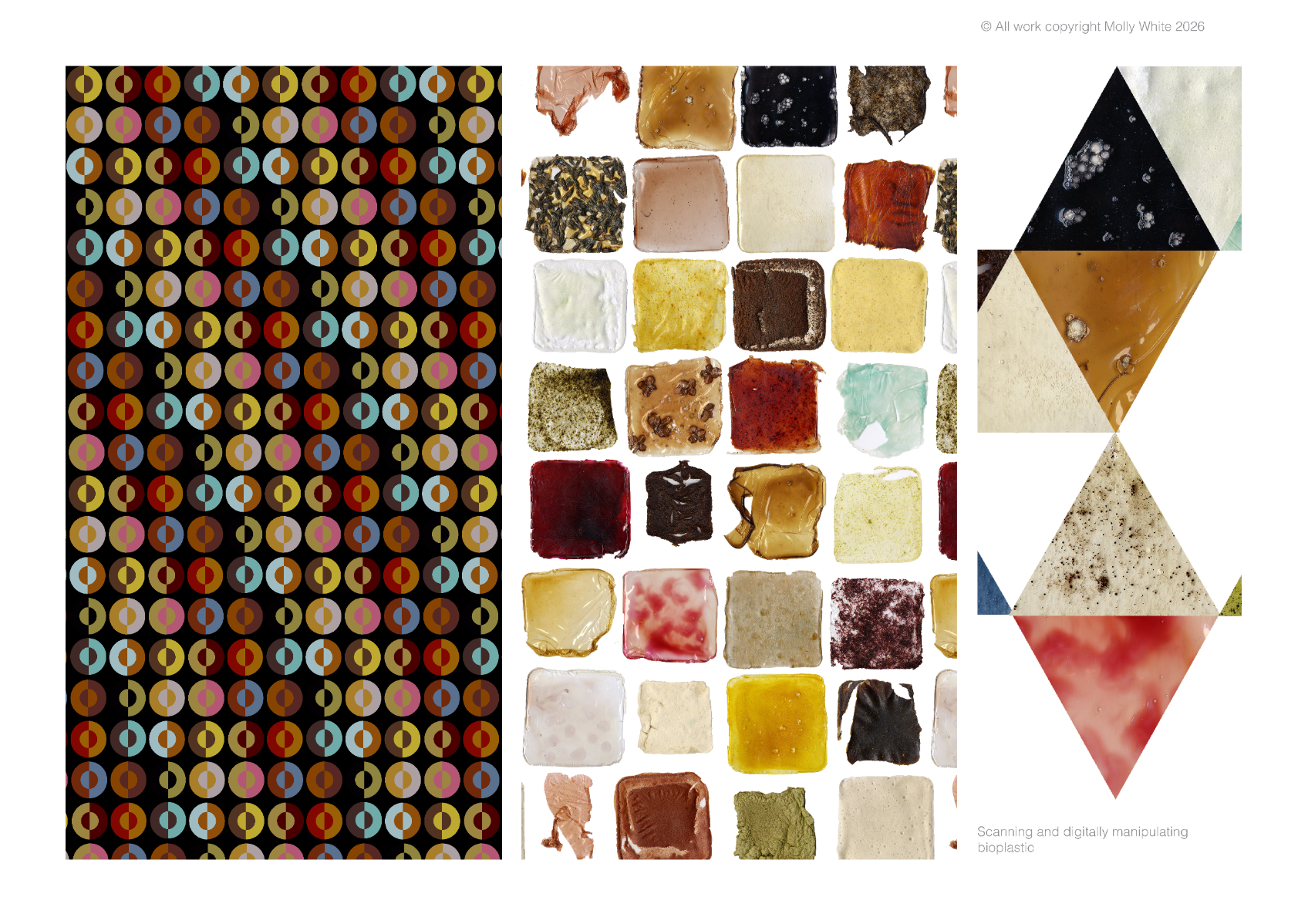
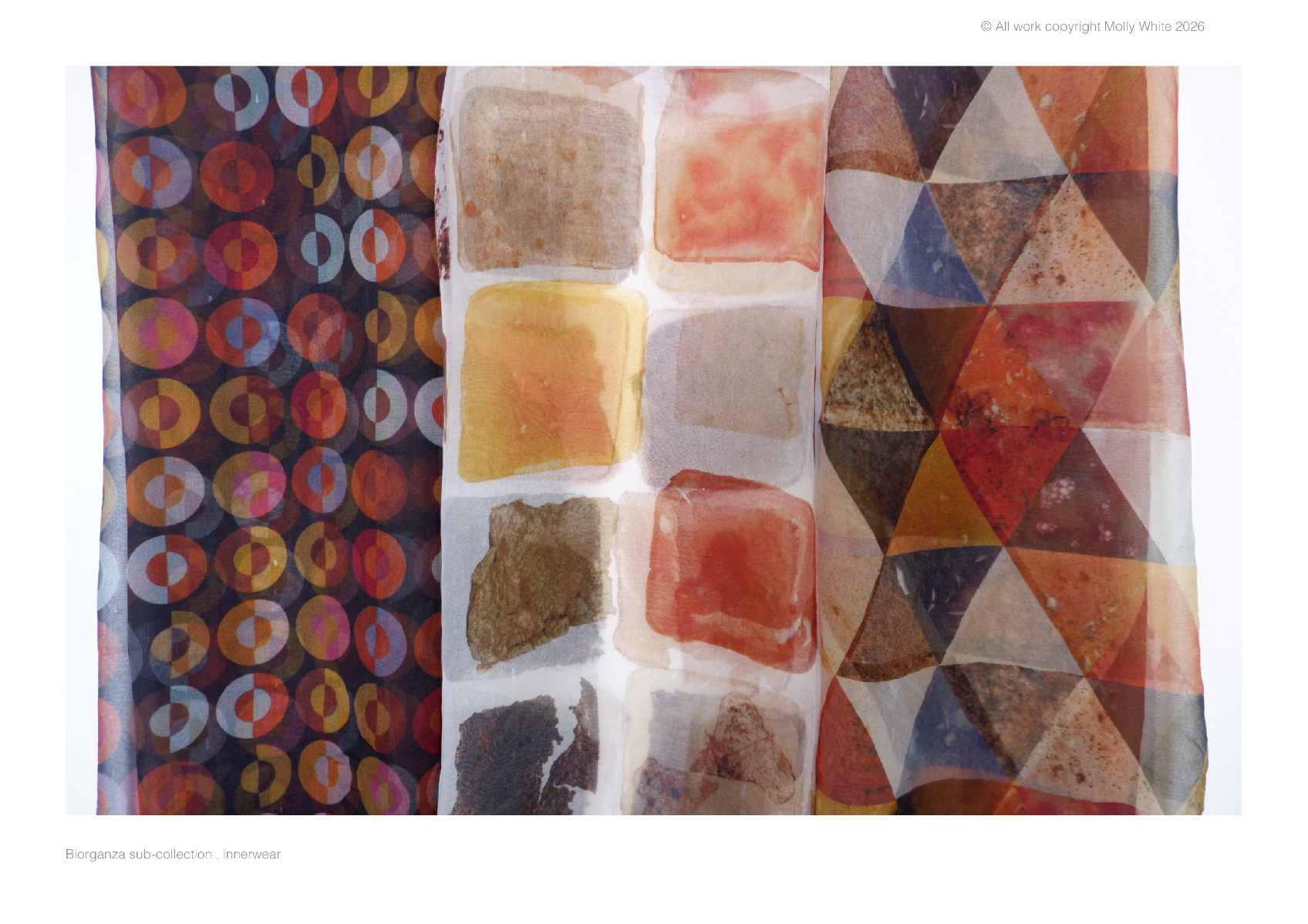
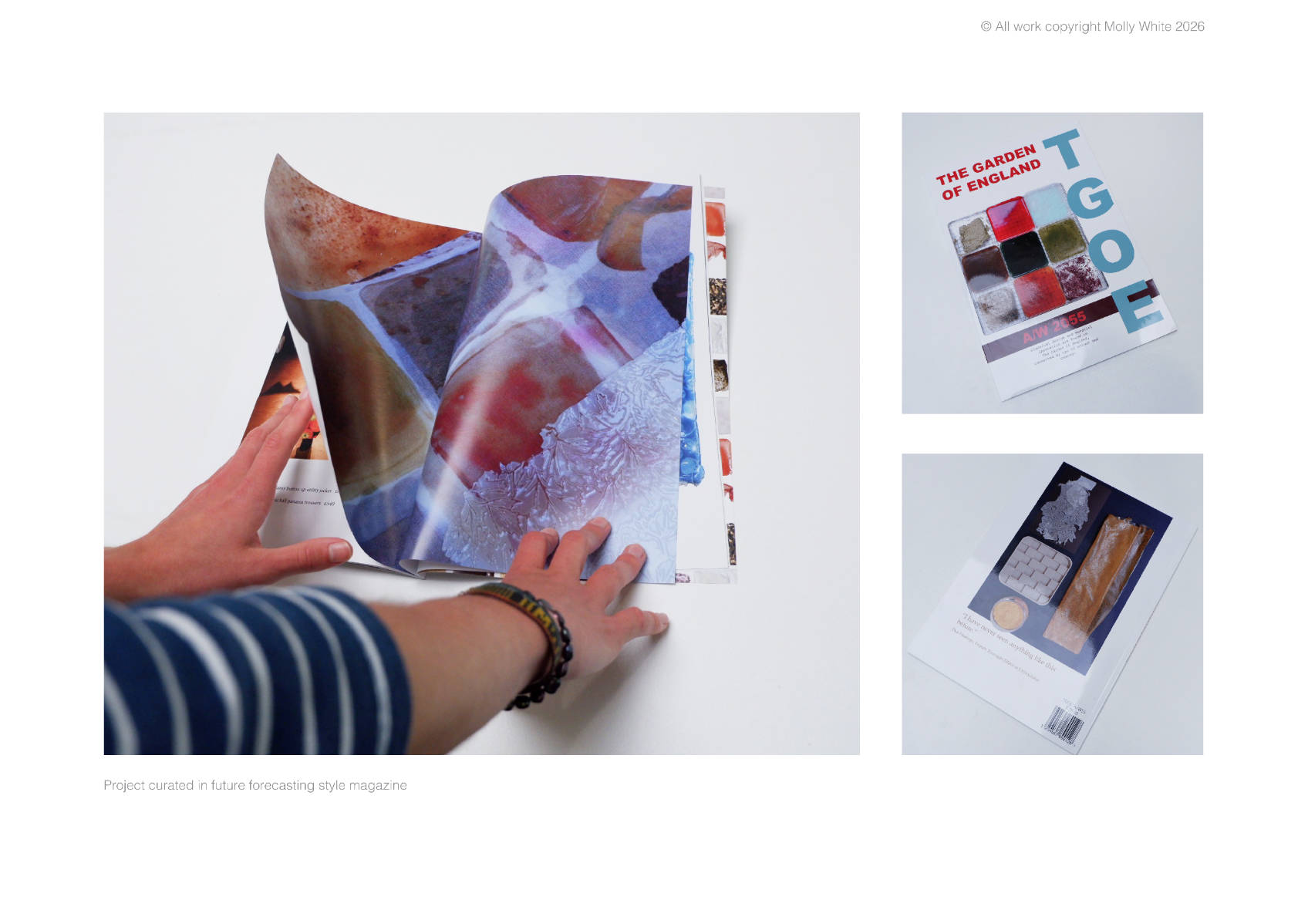
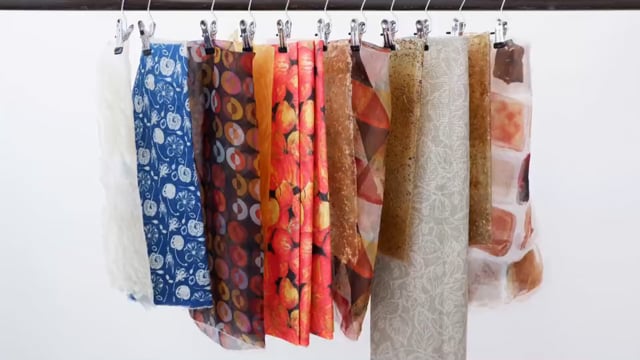
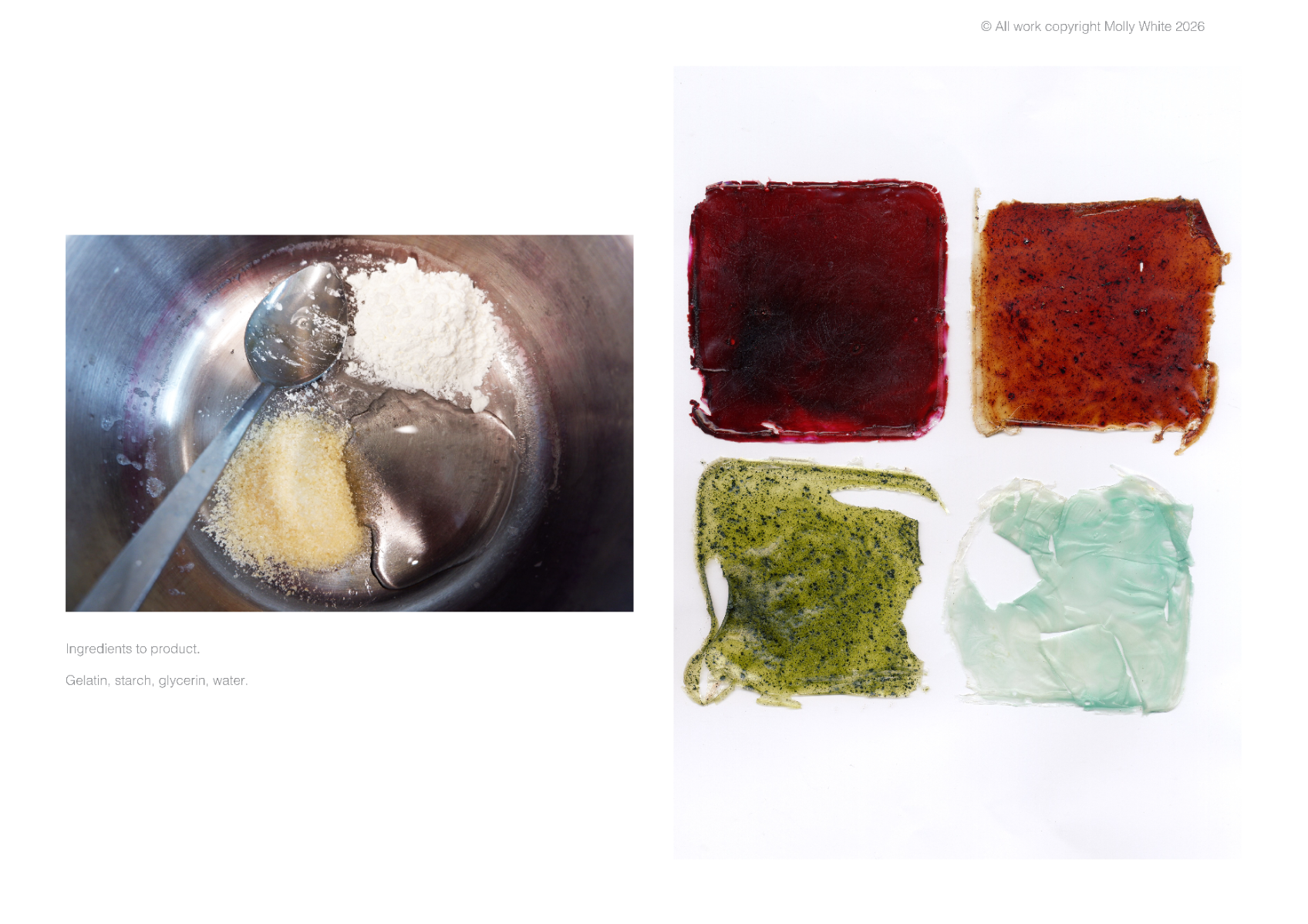
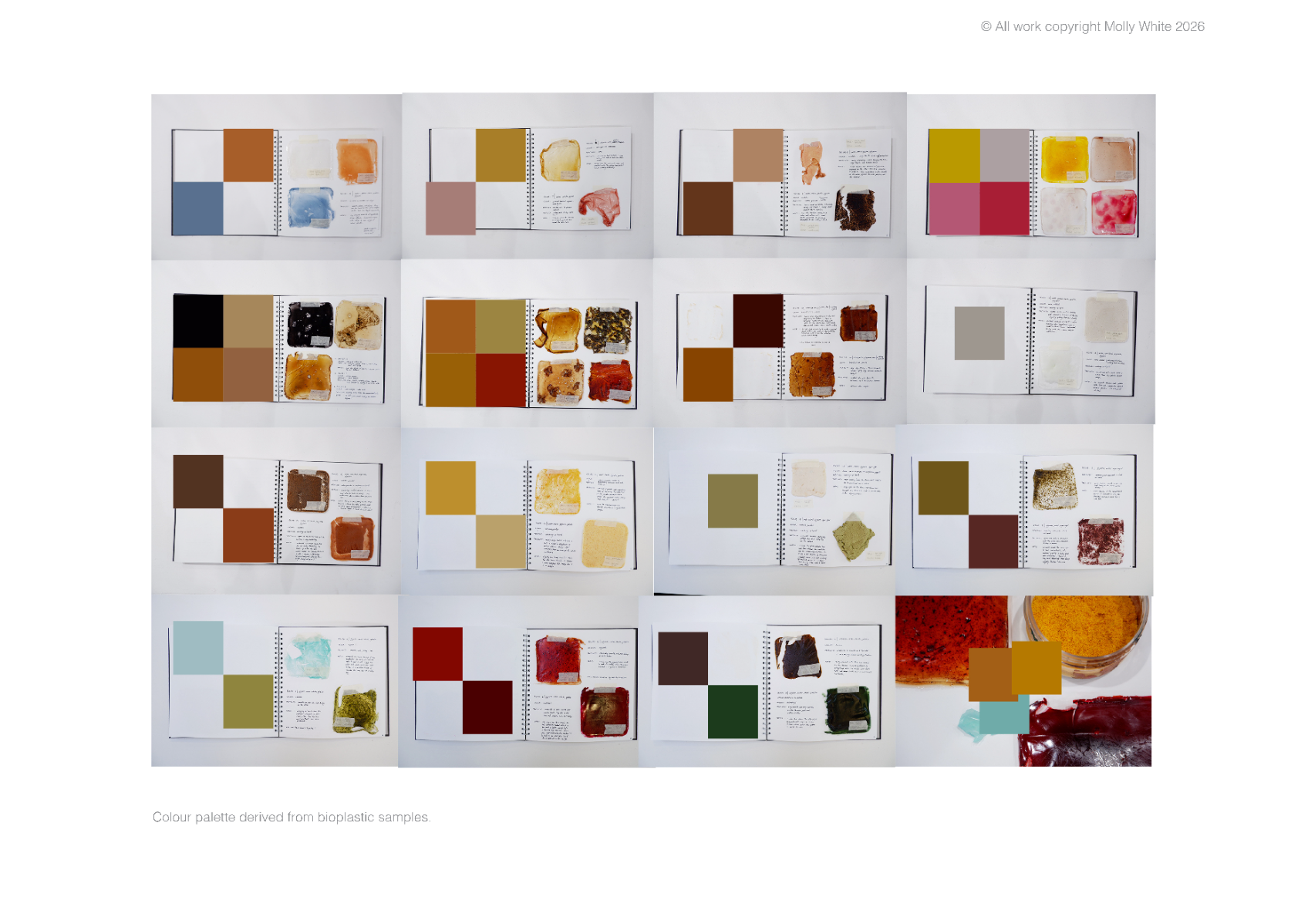
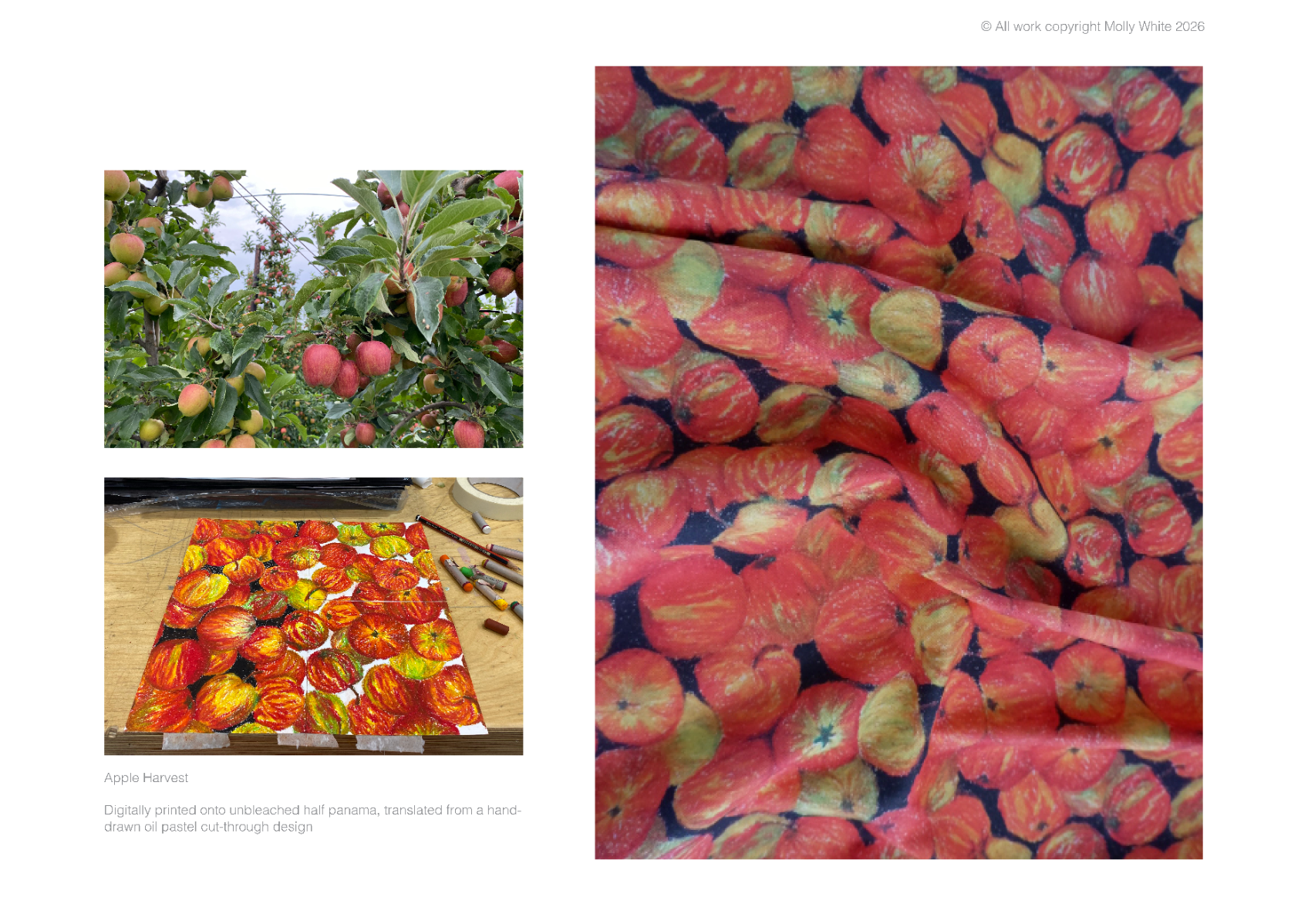
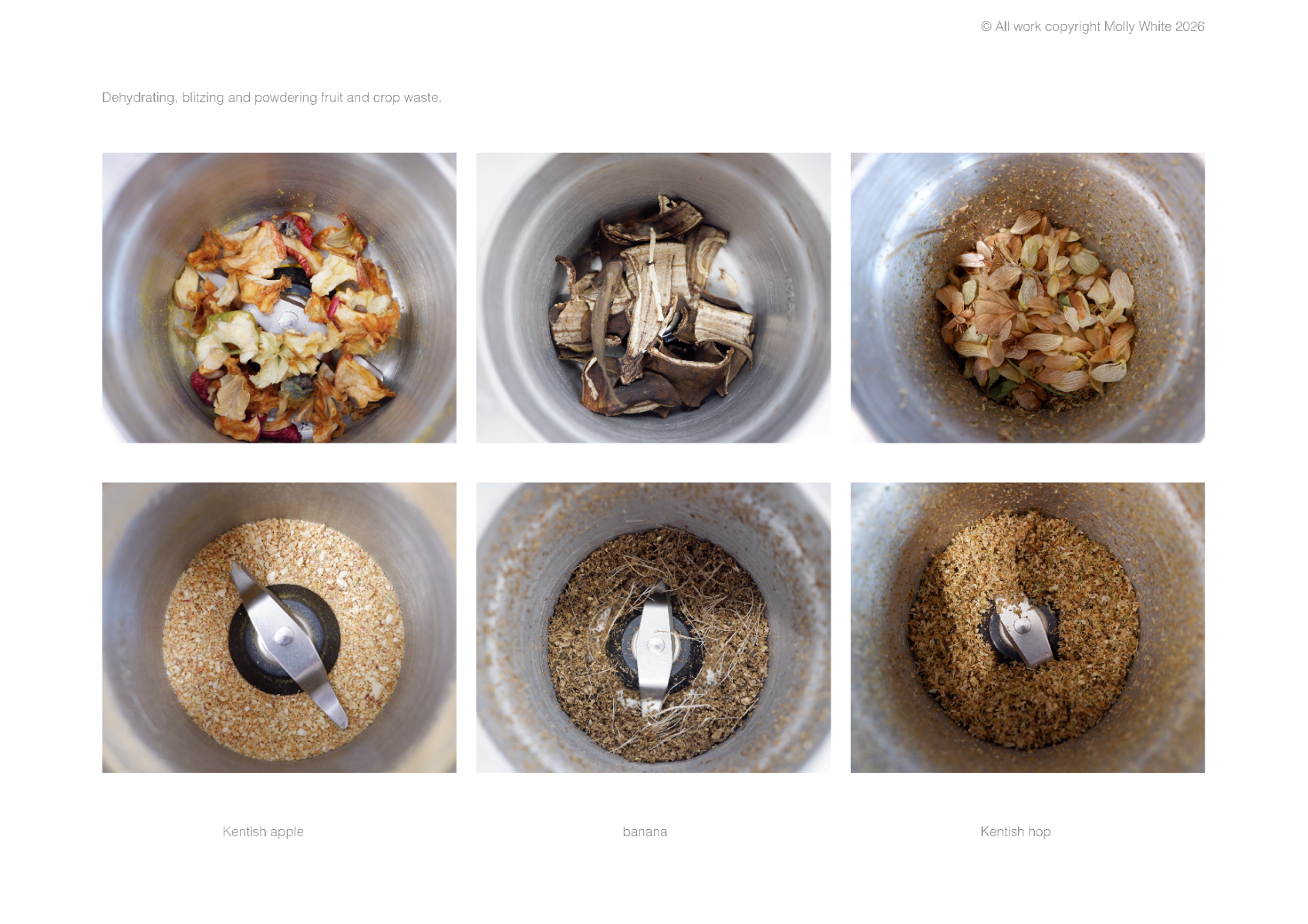
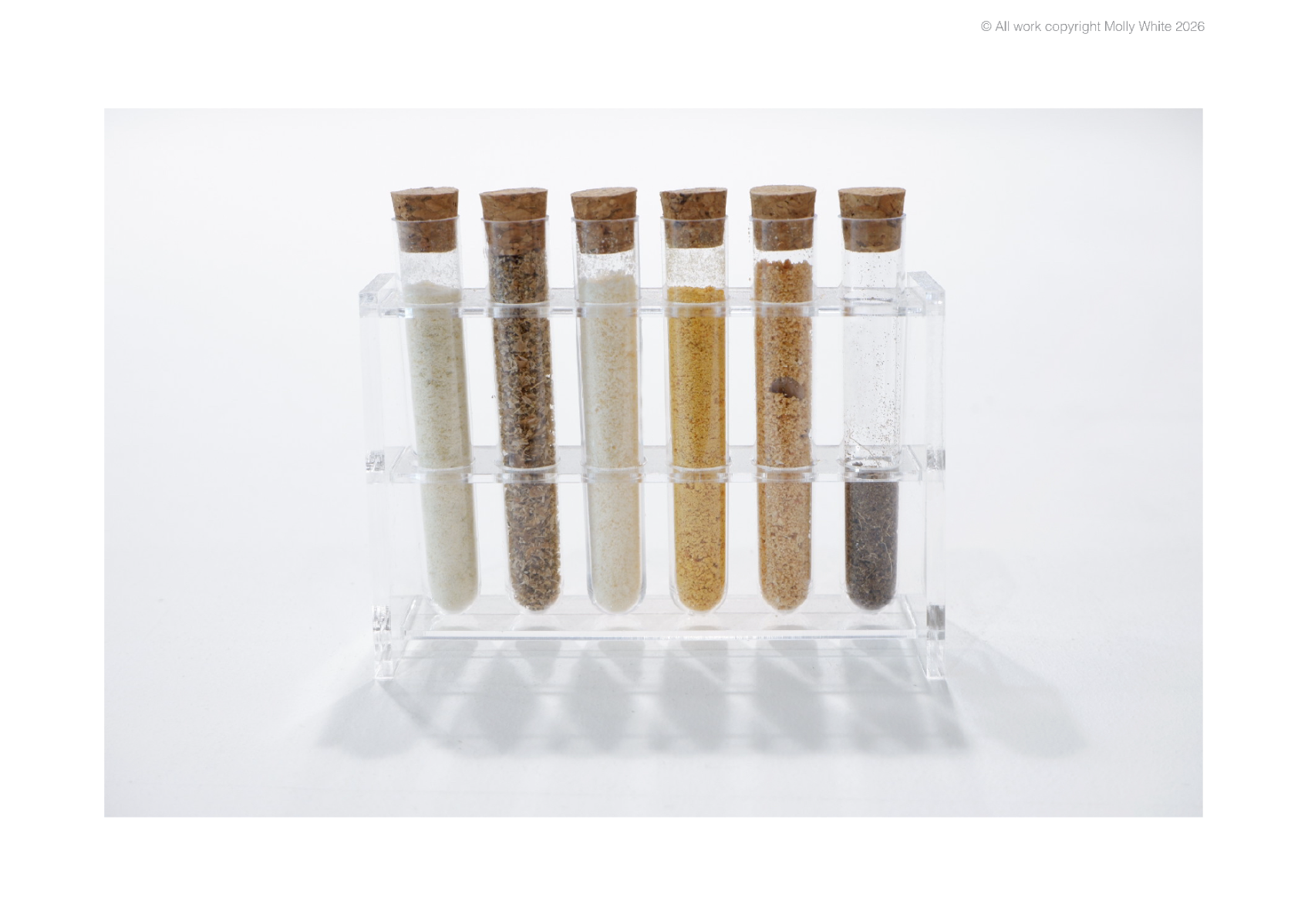
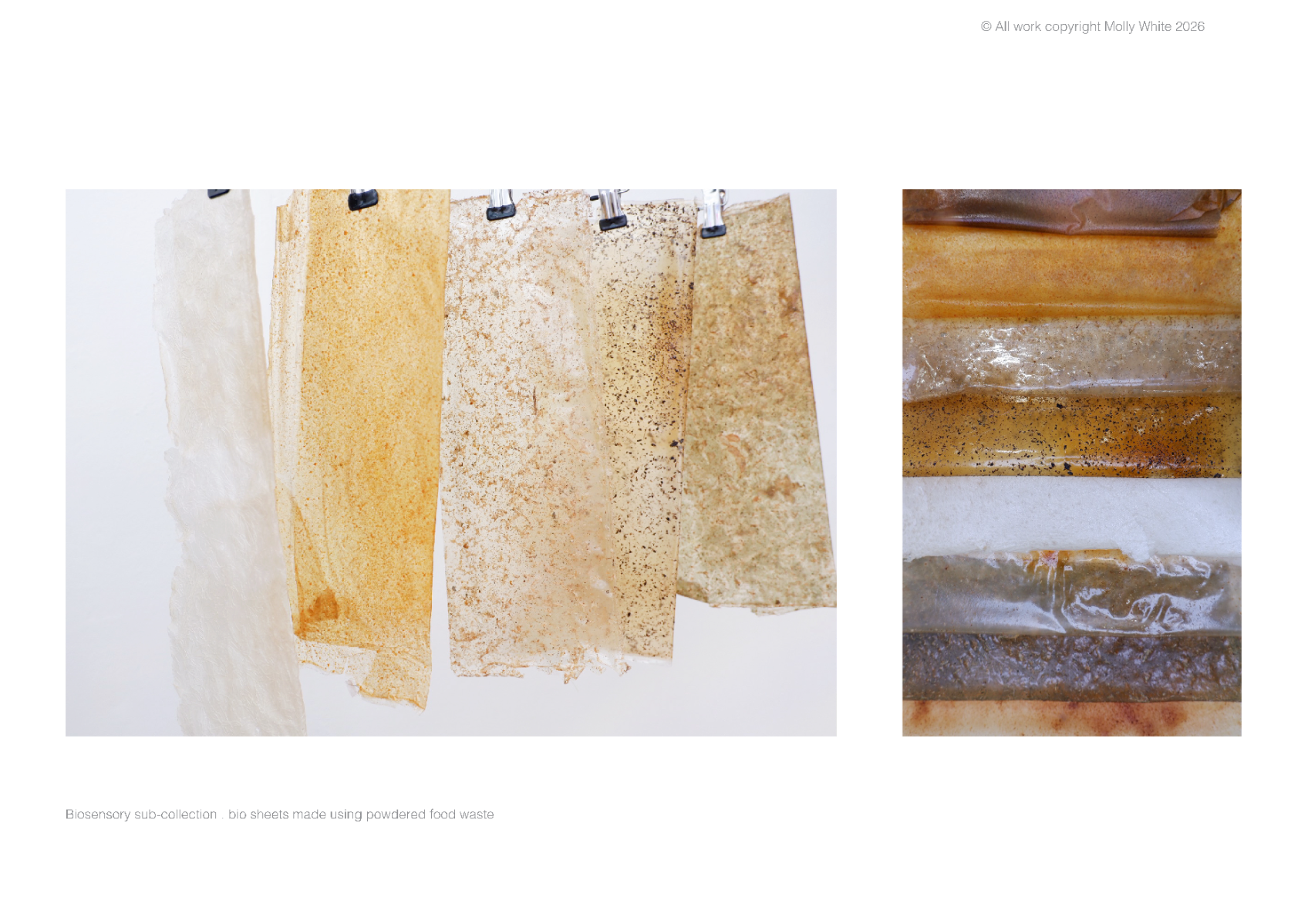
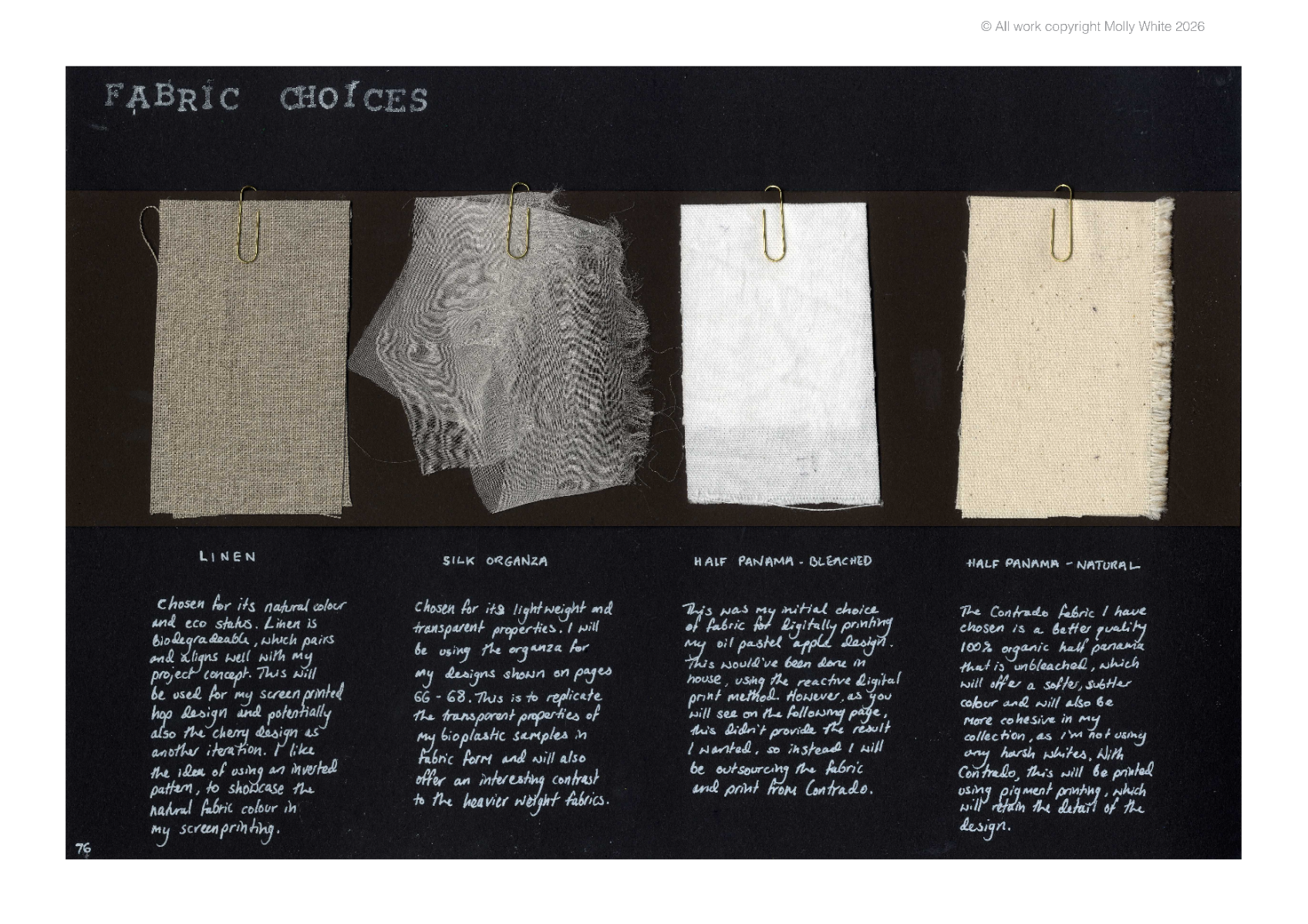
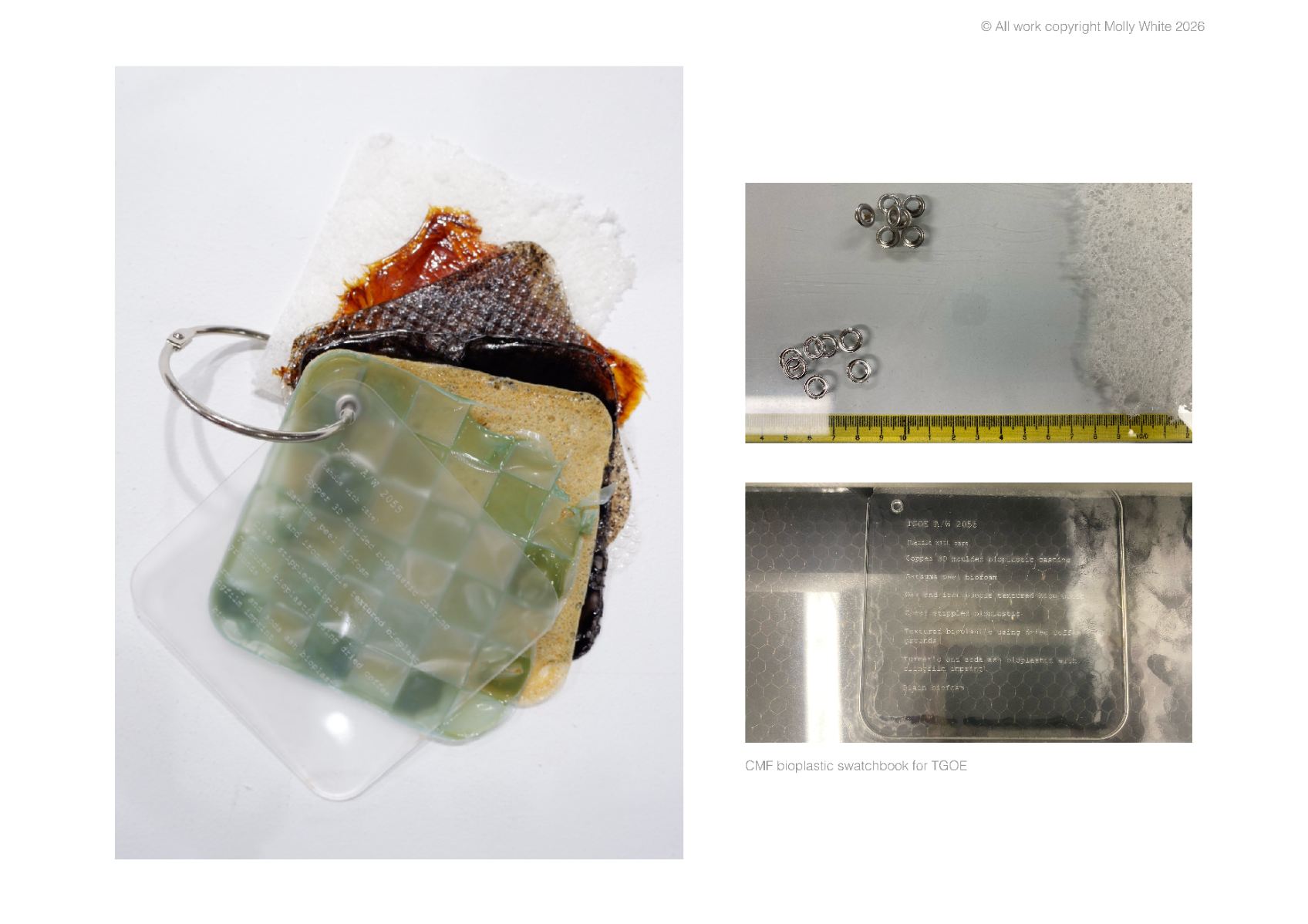
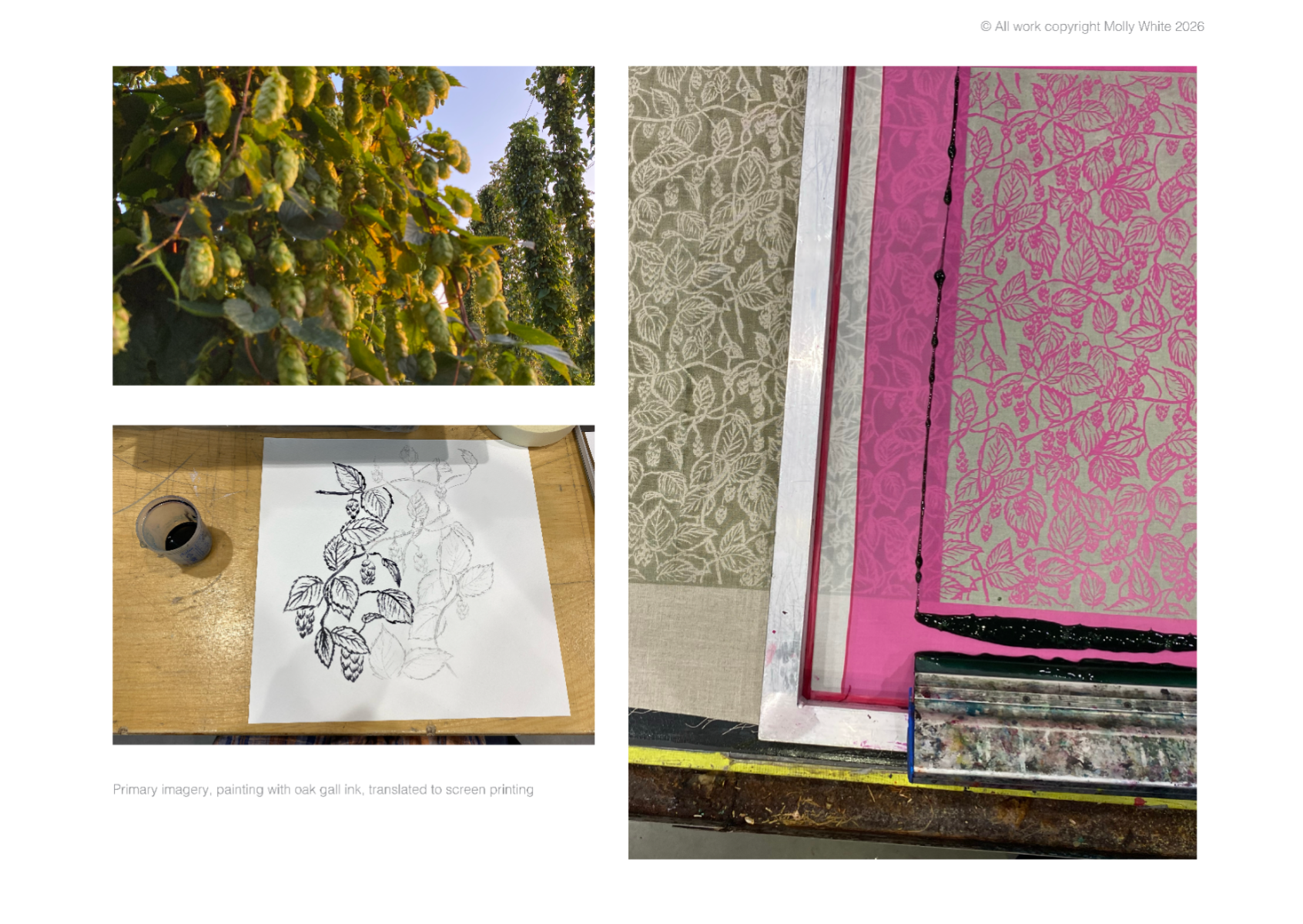
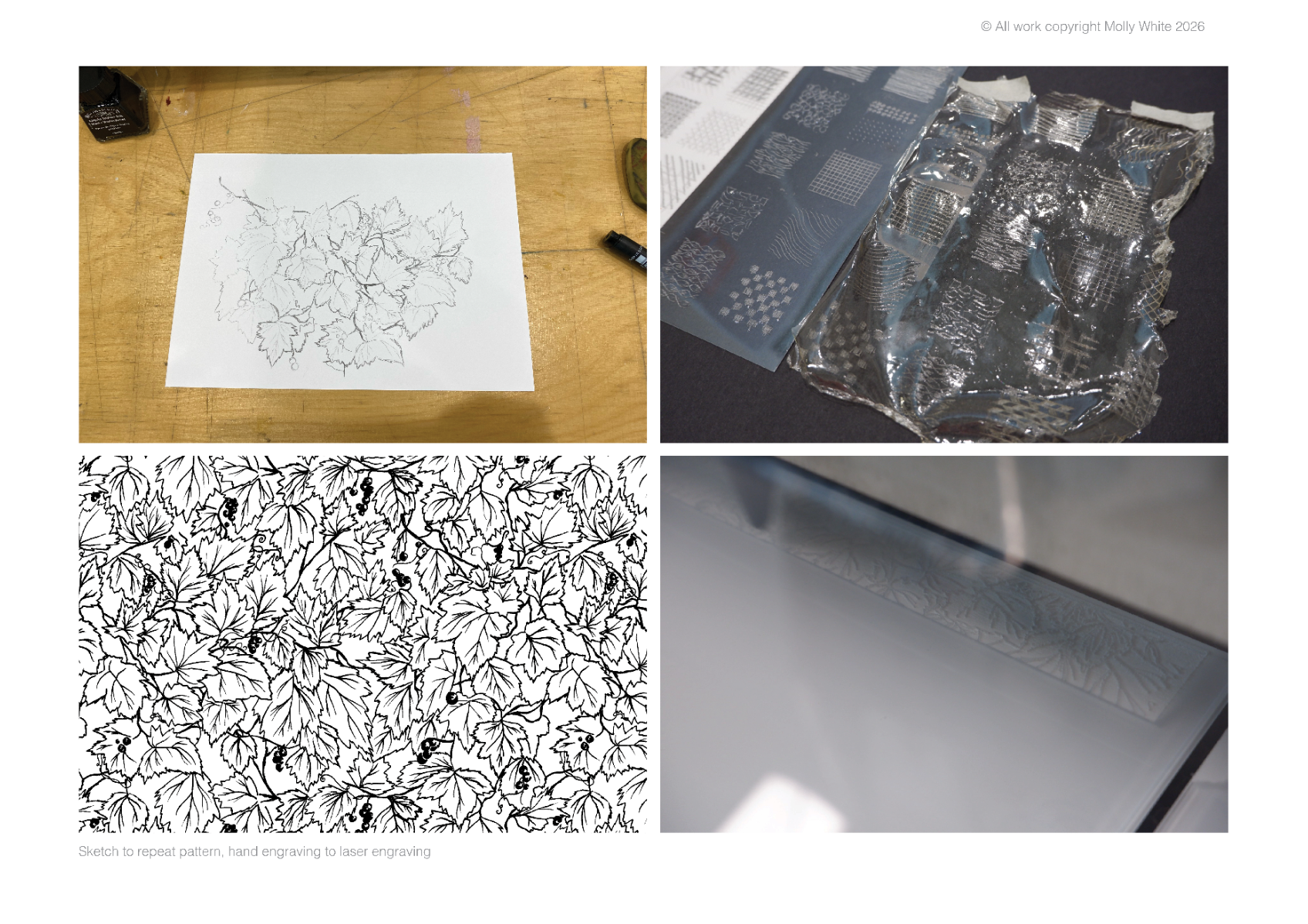
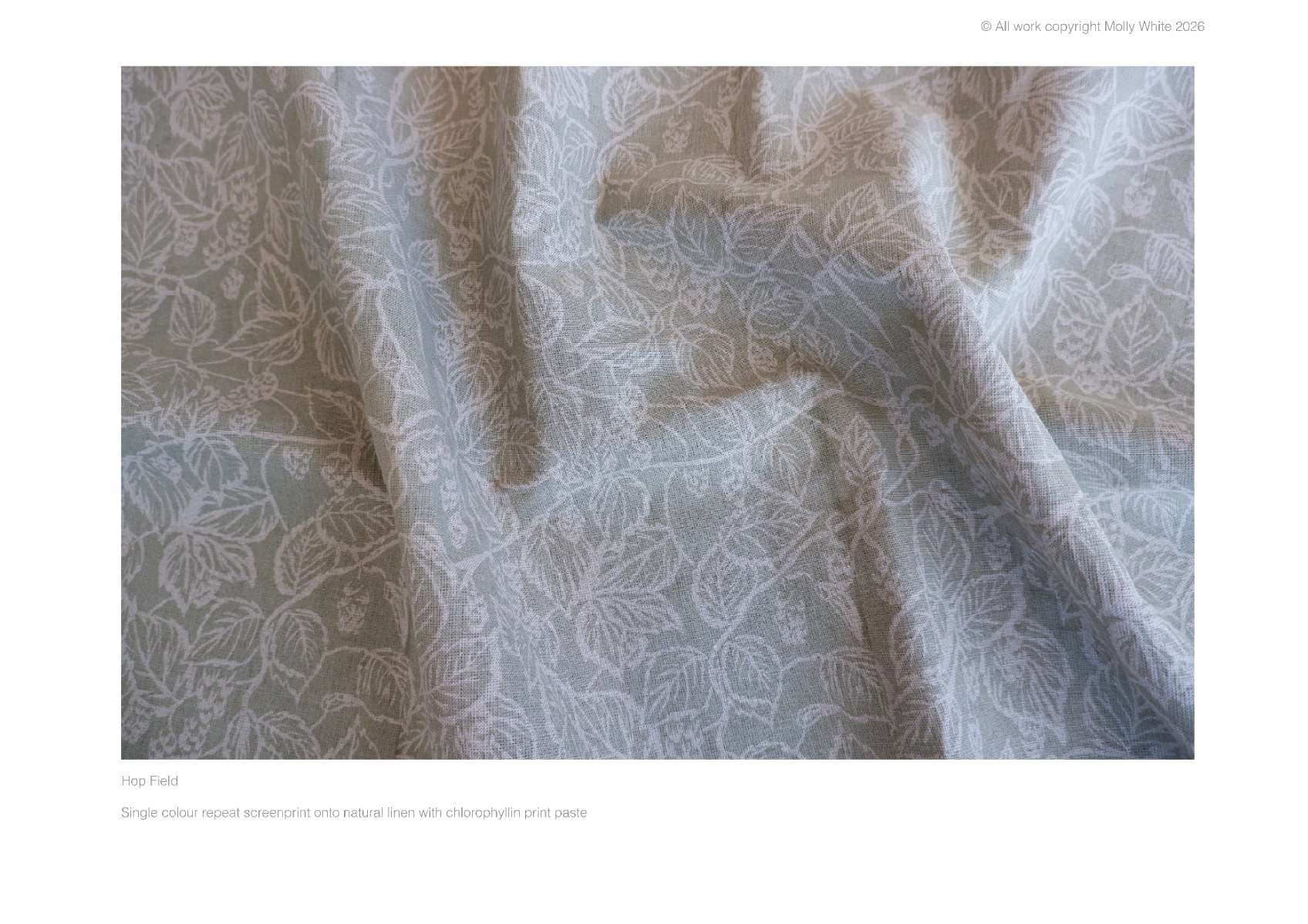
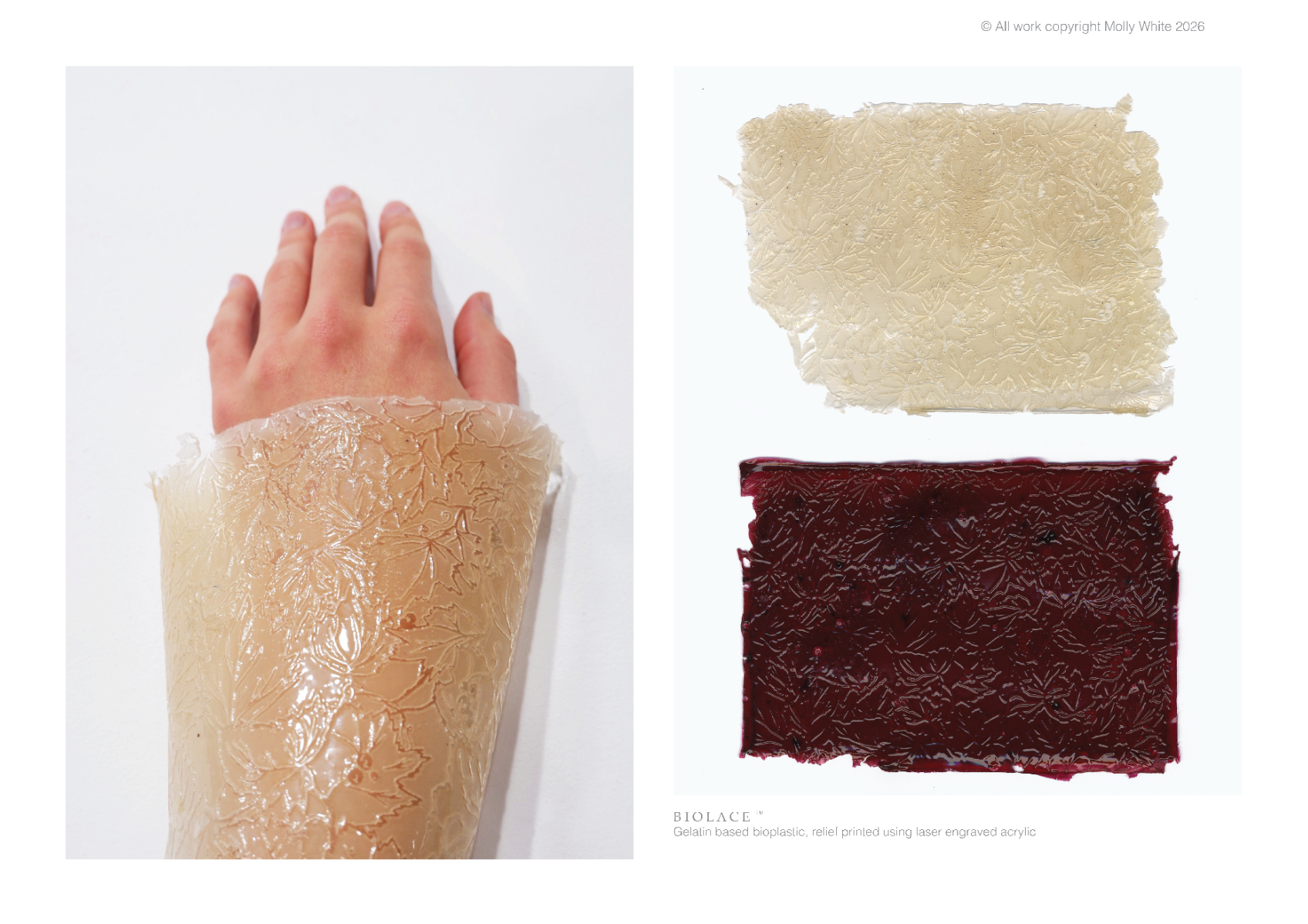
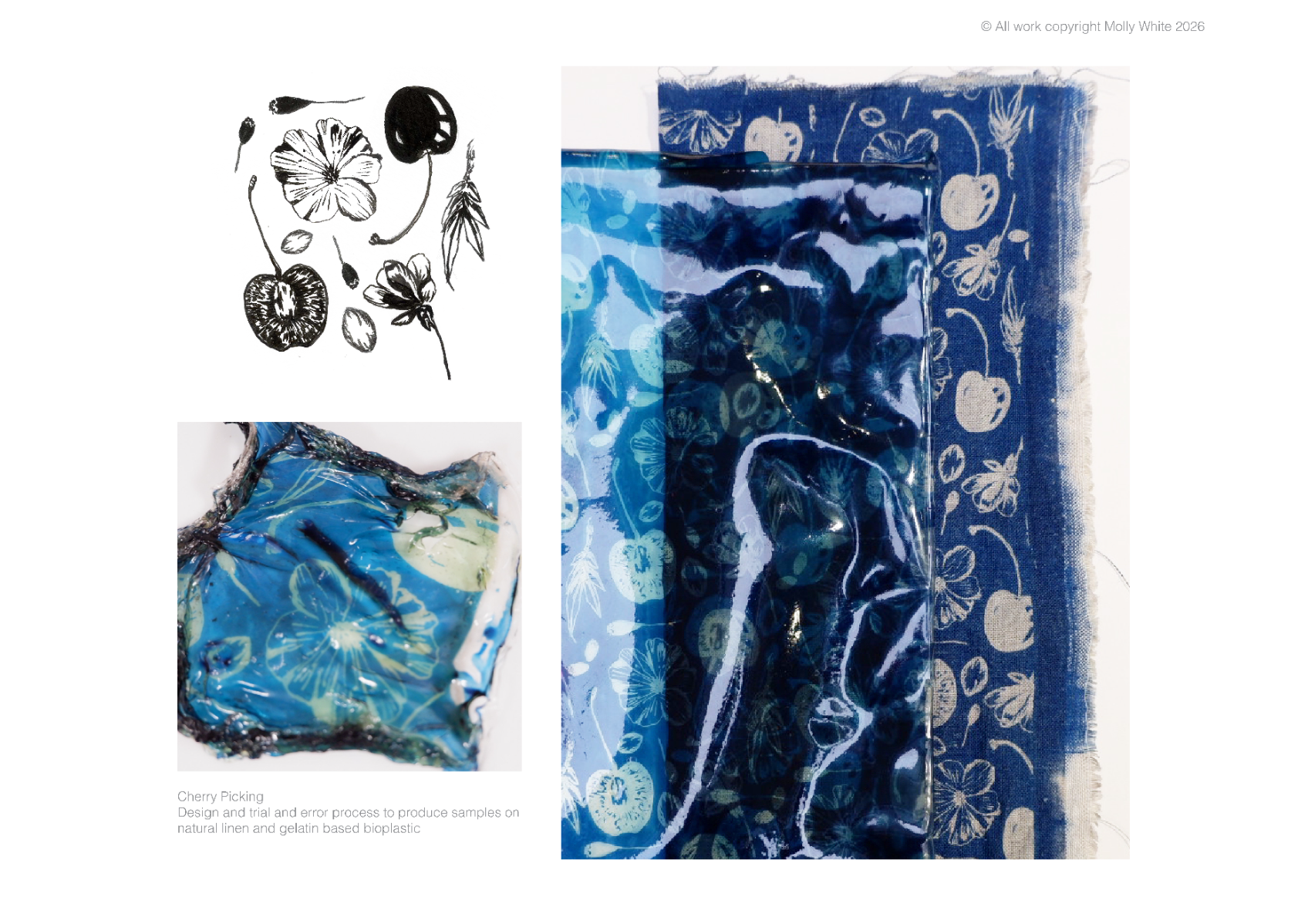
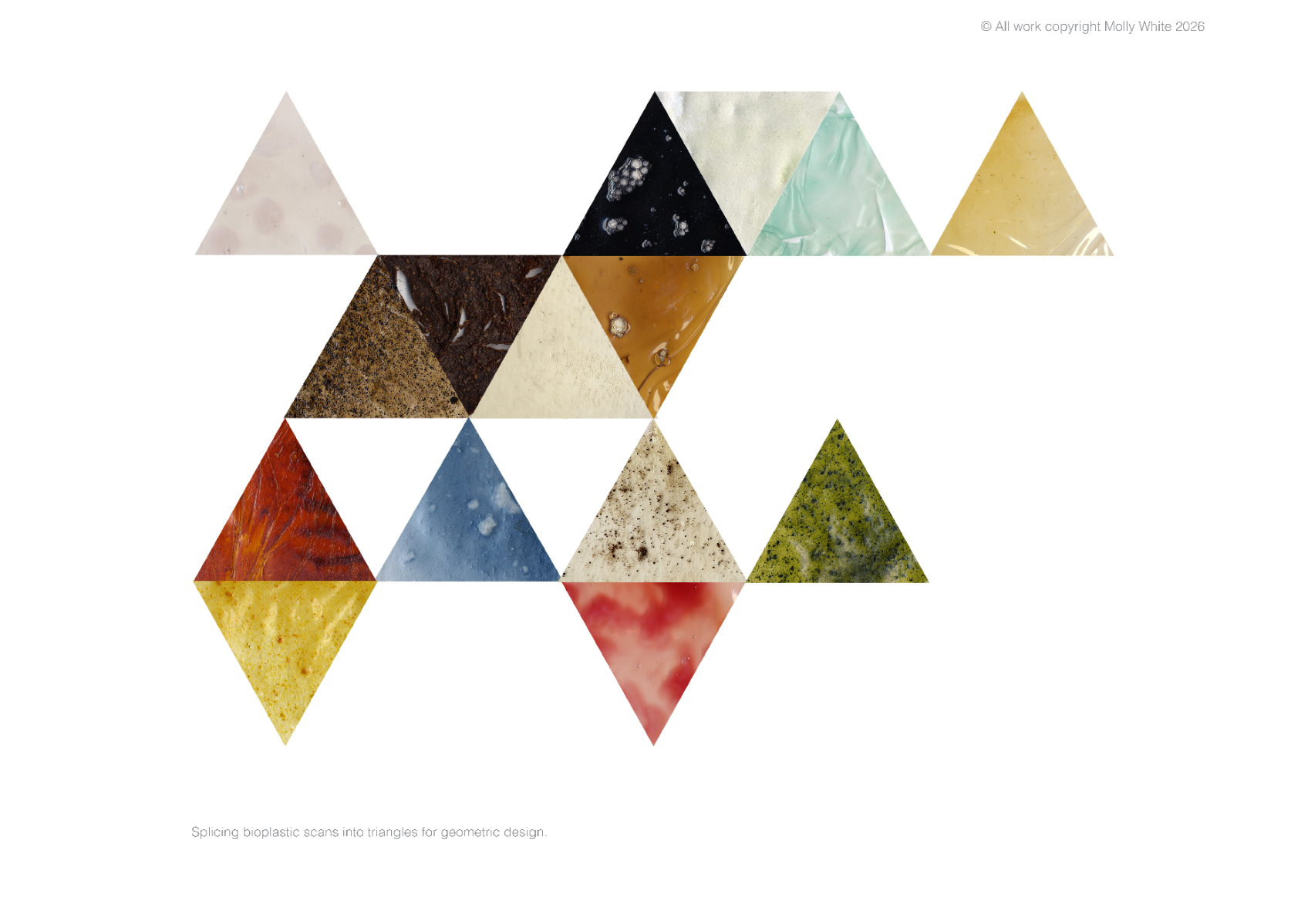
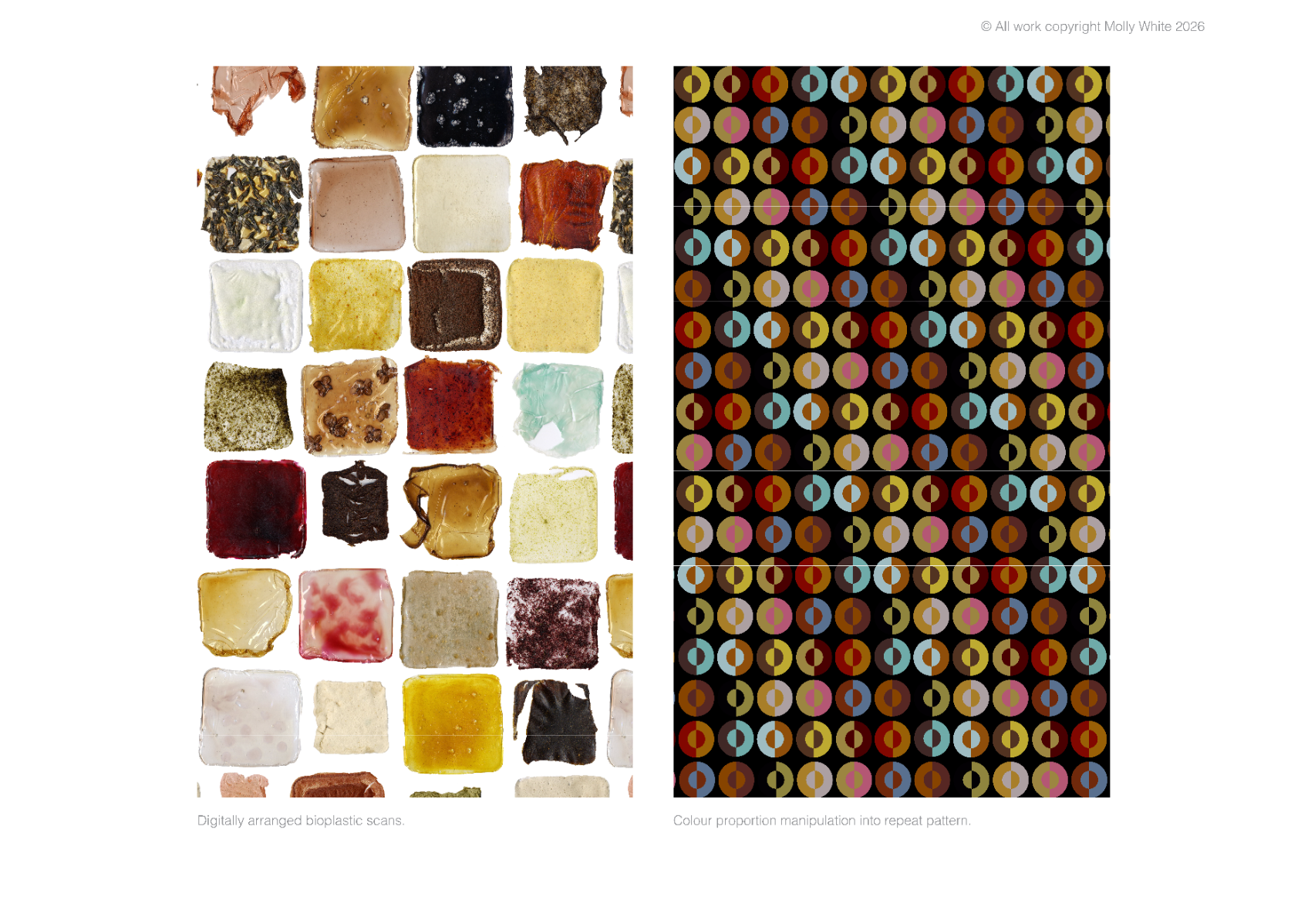
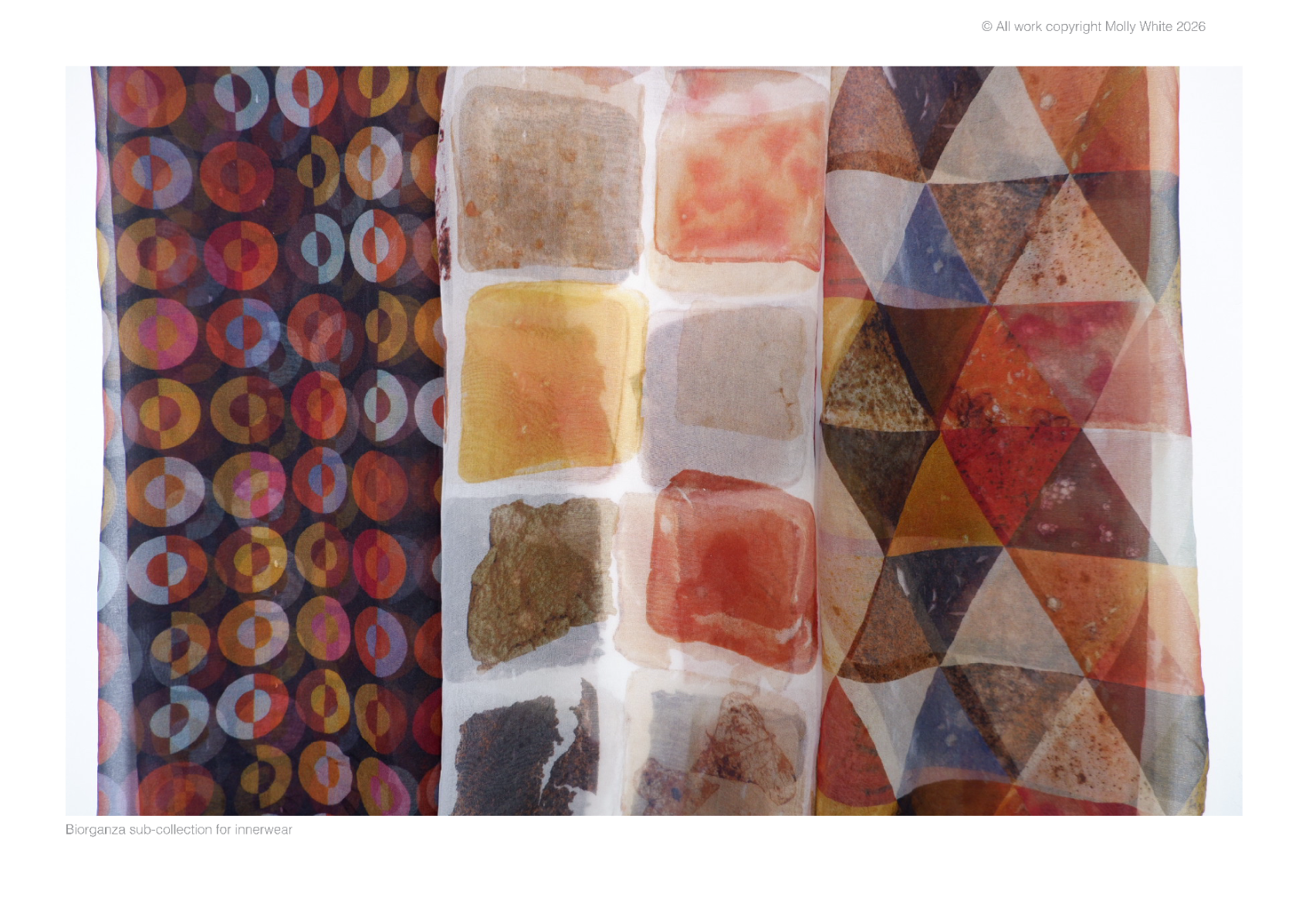
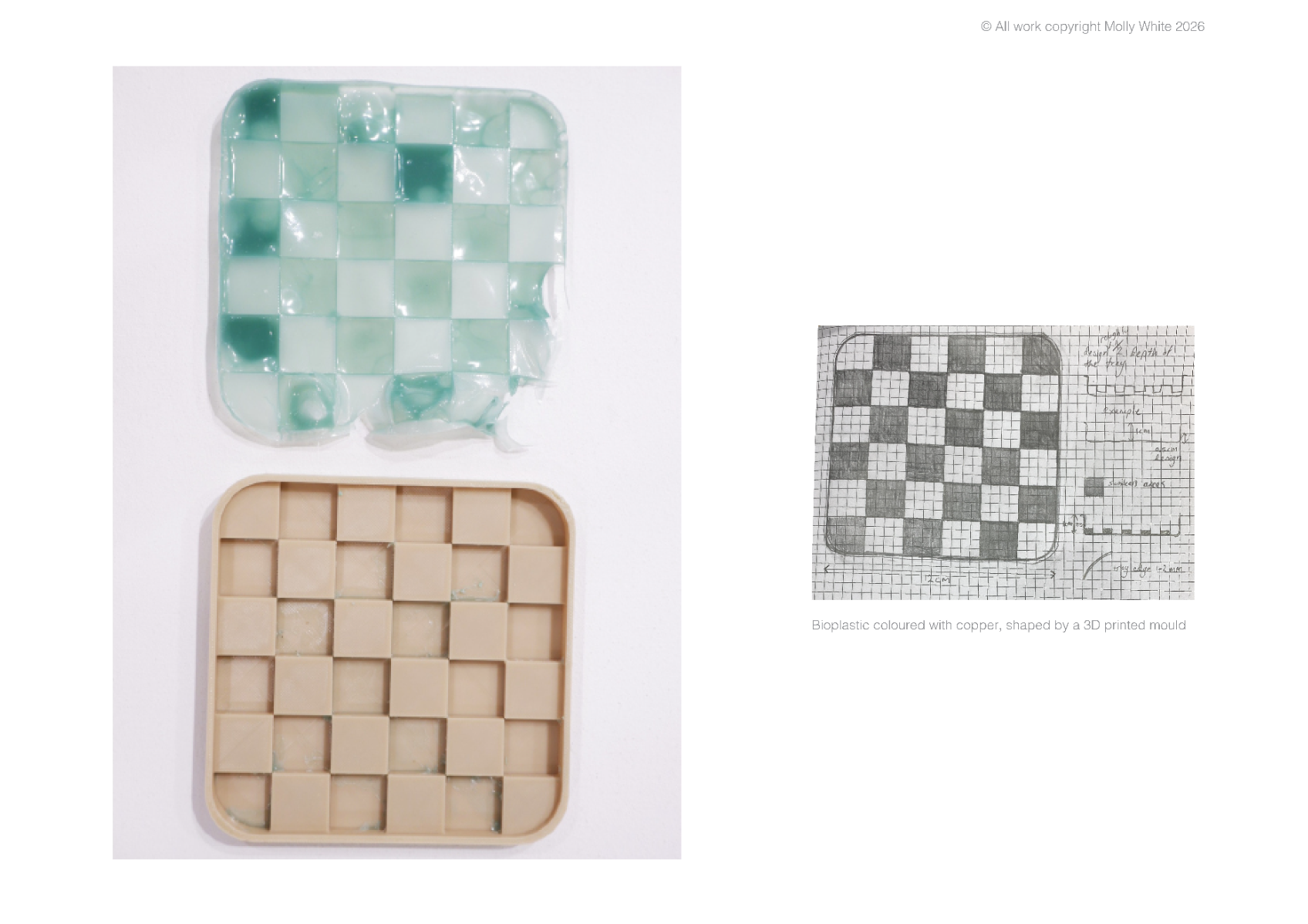
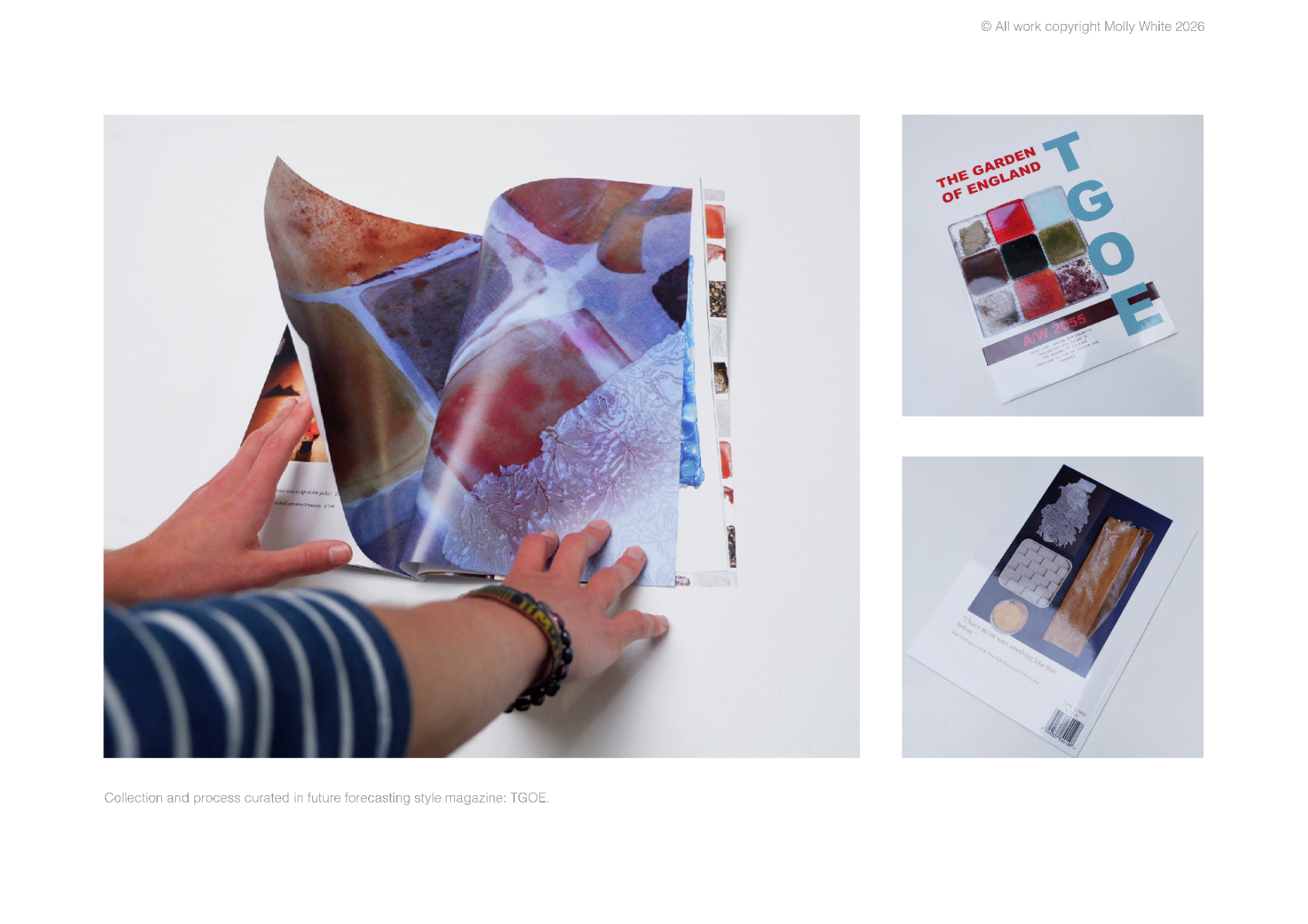
“The Garden of England” collection offers an insight to the future of sustainable couture by subversion of traditional textile design through experimental materials and processes. Kent is ideal for fruit and crop farming, hence its nickname ‘The Garden of England’, but with farming, waste occurs. This waste is dried and powdered and used as an additive, as well as natural pigments for bioplastics, which were developed through a hands-on ‘cooking’ process. Mustard, soya and crustacean themed designs, selected from an adjacent project: “Food For Thought” offer an insight into the educational aspect of my work, raising awareness about UK recognised food allergens. Digital and physical processes are combined by scanning and manipulating the bioplastics, printing these onto organza, whilst screen printing and cyanotype methods are contrasted with laser engraving and material innovation, creating new ways in which to consider surface pattern and textured forms. Oak gall ink and oil pastel are used to generate classical motifs, a contrast to the unconventional materials. The project is documented and curated in the TGOE magazine.
Competitions

TEX+ 2026
The garden of england
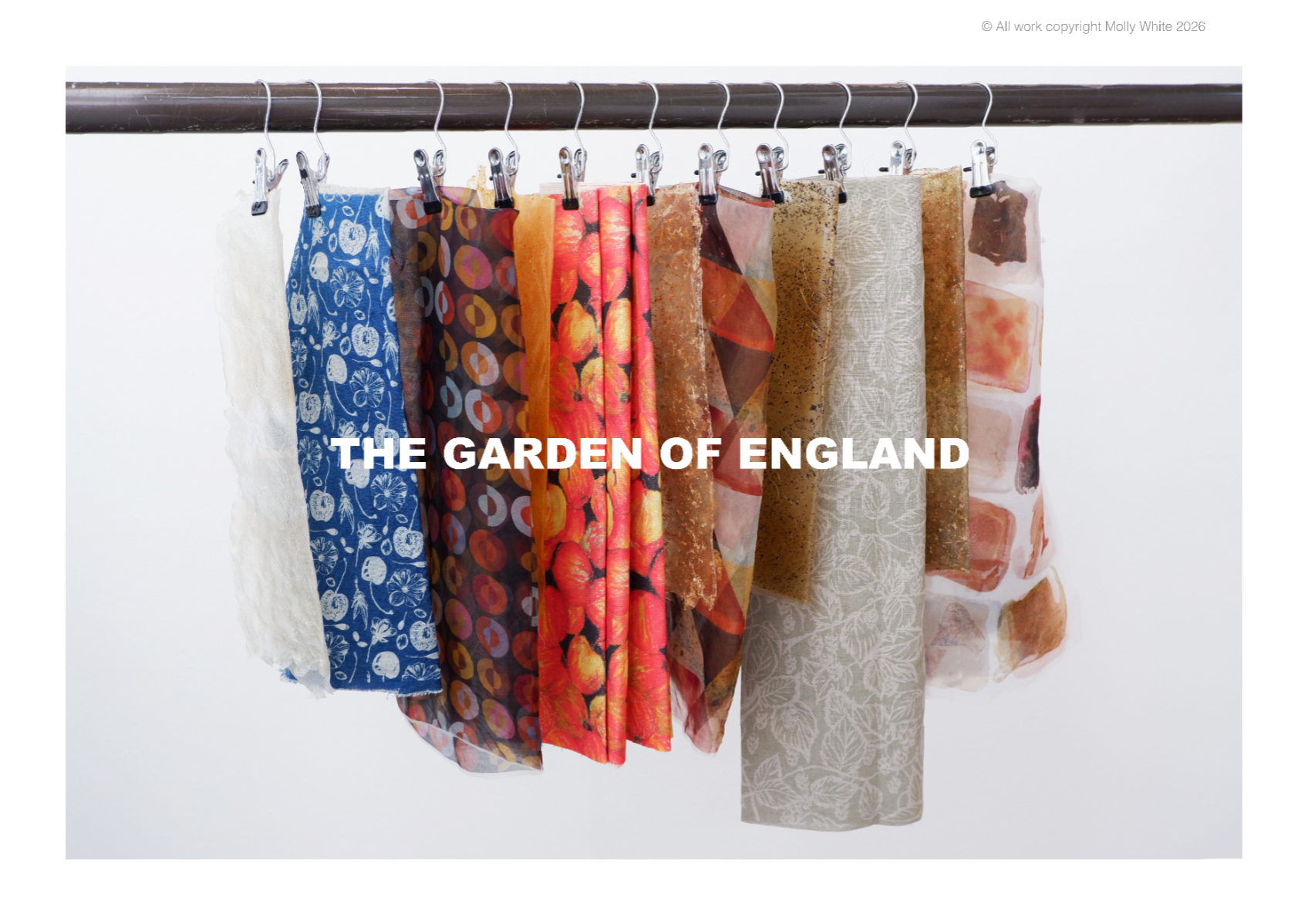
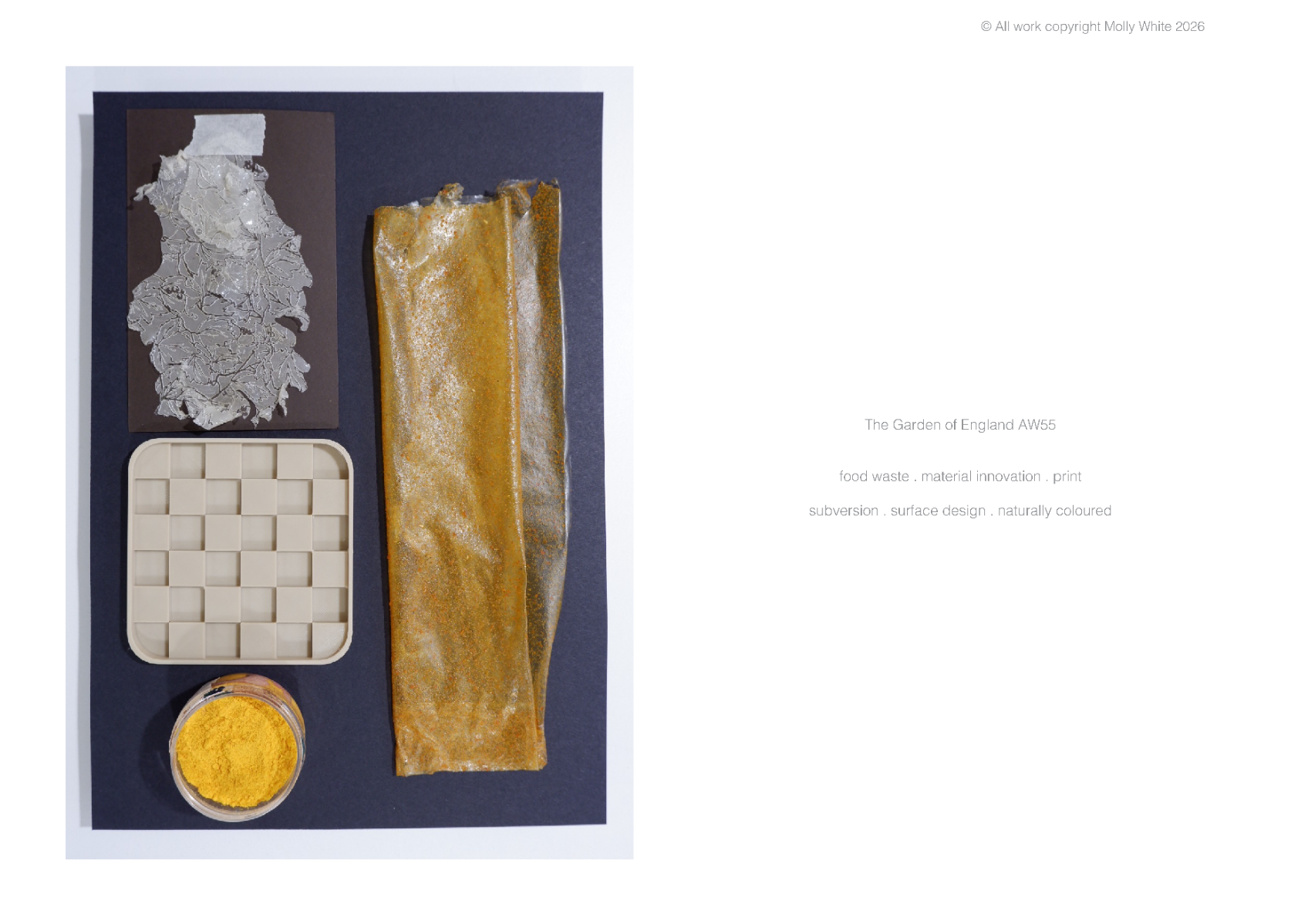
“The Garden of England” collection offers an insight to the future of sustainable couture by subversion of traditional textile design through experimental materials and processes. Kent is ideal for fruit and crop farming, hence its nickname ‘The Garden of England’, but with farming, waste occurs. This waste is dried and powdered and used as an additive, as well as natural pigments for bioplastics, which were developed through a hands-on ‘cooking’ process. Digital and physical processes are combined by scanning and manipulating the bioplastics, printing these onto organza, whilst screen printing and cyanotype methods are contrasted with laser engraving and material innovation, creating new ways in which to consider surface pattern and textured forms. Oak gall ink and oil pastel are used to generate classical motifs, a contrast to the unconventional materials. The project is documented and curated in the TGOE magazine.